
Has the Easy-Money Era in the Crypto Industry Ended? Four Schemes to Drain Market Liquidity

In recent years, various schemes have repeatedly appeared in the crypto market. I believe they play a key role in 'why there are almost no longer easy ways to make money as before,' and these opportunities are unlikely to return.
Machine translated. Refer to the original for accuracy.
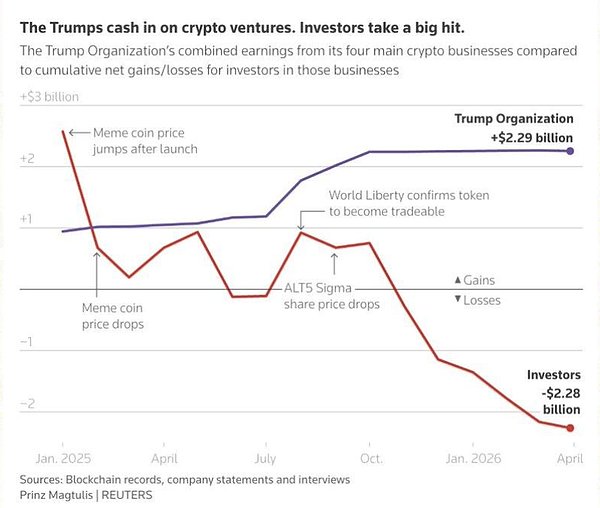
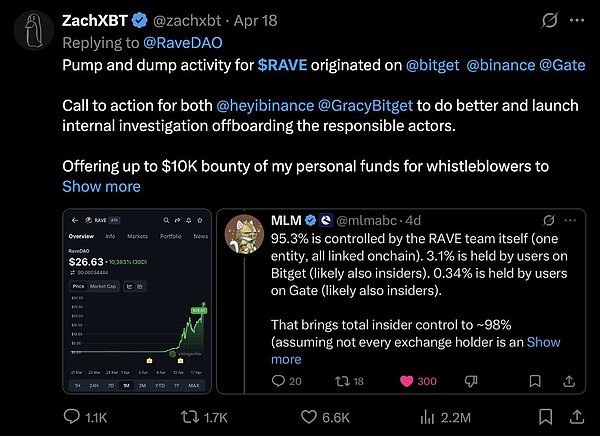
Author: Paul Klay; Translator: AididiaoJP, Foresight News In recent years, various schemes have repeatedly appeared in the crypto market. I believe they play a key role in 'why there are almost no longer easy ways to make money as before,' and these opportunities are unlikely to return. I am not talking about Bitcoin prices or trading volumes, nor am I a crypto analyst; the following are just personal opinions. Easy money is only possible when others are willing to spend. The vast majority of crypto market participants are gamblers. Sure, there are real technologies and practical use cases, but those who participate in everything and treat crypto as a full-time job are, to some extent, all gamblers. So as long as you are a bit smarter than others, get information earlier, and sell to later investors, who ultimately sell to retail investors, you can make money. Even if you are not the first to enter, there are still quite good opportunities to make money. After these people earn money, most will reinvest directly back into crypto. Just like in a casino, they move their money to other opportunities that they think can earn more. All this happens relatively organically. Everyone earns money, and everyone loses money. There is no specific group of people continuously taking away all the profits. We know that in traditional casinos, it is the casino owners who make money. So a few groups of people decided to become casino owners themselves. They figured out how to profit from all the fluctuations and extract this money from the market. The best part for them is that in the casinos they build, there is almost no possibility of losing money. They are simply exploiting people's greed. Next, I will talk about the four largest and most common schemes that I believe play a decisive role. Trump and Insider Trading Trump realized he had a huge opportunity to influence the crypto and stock markets and actively utilized it. Here, I focus on crypto because it is smaller, more volatile, and easier to manipulate. When you are the one determining the direction of the market, you and those around you have a huge informational advantage. The so-called schemes are straightforward: judge which direction is more profitable, build positions, and make money as much as possible within the limits of market liquidity. Keep going until people no longer believe in you, no longer react to your statements, or until there is no liquidity to extract. The problem is that the market is not infinite. The number of gamblers is limited, and their money is also limited. When insiders exploit their ability to influence the market, they can extract huge amounts of money, concentrating wealth into a small group of people, who may not reinvest the money back into crypto. Furthermore, Trump and his family issued several tokens, but that is another matter. So, the victories celebrated by the crypto community during the election may ultimately turn into its worst nightmare. Crypto Crime Essentially the same idea, but you're not influencing prices because you are the President of the United States; you’re doing so because you control most of the token supply, and your coin has futures trading on major exchanges. The steps are as follows: create a project, raise funds from well-known investors, use that money to elevate trading volume and fan base, showcase non-existent revenues, then raise another round and negotiate with major exchanges. If you can immediately get futures trading, that’s great. If not, keep raising volume until you do. Now you have a machine that looks like it's printing money endlessly. When there is futures trading and you control most supply, you can monitor how many people are shorting and how many are going long. You choose the side that favors you, buy or sell enough to trigger the opposite side's collapse, then pocket the profits. Repeat as many times as you can until the token is delisted or the scheme fails. To operate on a large scale, you need futures trading on major exchanges because that’s where the volume comes from. No matter how good the project actually is, as long as the token has futures on Binance, it can attract hundreds of millions in trading volume. Severely Overvalued Projects Not Matching Revenue Crypto is still a relatively young industry, and projects often receive very high valuation multiples. Many people also don’t really understand what others are saying. Countless technologies, projects with grand visions, etc., is very normal. Like other industries, most projects with invalid assumptions will eventually shut down, while a few will drive the market forward. But there are two key differences in crypto: How revenue is generated. Because of the nature of the market—most people come looking for easy money opportunities, and also because of how many founders and marketers position projects, ultimately almost everyone's real motivation is to make money rather than solve problems. Founders promise users potential rewards through airdrops, encouraging them to use the technology. People do use it, but not because the technology solves their problems, but because they expect to make money. Founders take these metrics to attract investors, raising huge sums of money before finally issuing tokens. After distributing rewards to users, activity sometimes declines by hundreds or even thousands of times, as people only use the product in anticipation of financial rewards. Token issuance. In other industries, projects that fail simply shut down. Investors lose money, and founders waste time. But in crypto, even if the idea completely fails, weaker regulations and oversight may allow you to continue claiming that everything is fine, building a persuasive narrative, and issuing tokens at seriously inflated valuations entirely disconnected from the project's actual value. And people will buy. Founders make money, and investors either recover part of their investment or even make a profit, even though the project should have been shut down. This is essentially an IPO without equivalent regulation or meaningful due diligence. You can issue whenever you want, just pay to get on exchanges, and the level of scrutiny can be surprisingly low. A colleague of mine created a product I like a lot, @valueverse_ai, which compares actual income to valuations to identify undervalued projects. This helps explain why the charts for so many crypto tokens mostly trend downward after launch, with a few exceptions sometimes resulting from manipulation rather than real demand. Meanwhile, many projects generating genuine income don’t even issue tokens. Returning to market fundamentals, this model works effectively while new entrants are constantly joining. But theoretically, it cannot sustain itself long-term without creating real value. Everyone wants to make money, but someone always has to lose. So founders begin to churn out projects, using token issuance as their exit liquidity. I know many teams have issued tokens and are still doing so, several projects a week. Just imagine. Several projects each week. They simply package, fabricate appealing metrics, pay influencers for promotion, and then profits are pocketed. Running away. In the previous examples, we talked about severely inflated valuations. A project that should be worth $10 million is valued at $1 billion. This is just mass issuance of meme coins. Many teams are doing this. Their chances of losing money can be extremely low because they control the supply and can crash their own holdings. Even if only 1 out of 100 tokens takes off, they can still make big profits. That’s just how it is. Similarly, there’s no creation of real value. You’re just given an opportunity to fulfill your gambling instinct, just like in a casino. The difference is that a traditional casino may sometimes lose money in the short term. Here, operators can arrange things with almost no downside risk. And your odds might be worse than in a casino. As a result, the market is increasingly shifting towards institutional players and products with real use cases. Simply attracting a compelling story no longer works as it used to, and the majority of easy money-making opportunities have also ceased to be effective. You might say the industry has matured, and I agree. But at the same time, a relatively small group has siphoned off massive funds, and the market feels nothing like in the early days. This is unavoidable because this model was fundamentally unsustainable from the start. At the same time, I believe this industry has great potential, and I am confident it will continue to grow in the long run, just not in the same way as before. In the past, the industry was filled with extremely incompetent people who built ecosystems with no idea how to run a business, yet everyone was giving them money. They subsequently hired some of the most unqualified experts I’ve seen, paying them some of the highest salaries I’ve encountered. Most of those people have now left, which is a good thing. Money is no longer given to everyone for no reason. This creates incentives to build real businesses that solve genuine problems. And that should ultimately have a very positive impact on the industry.

Details compiled from public sources. Always do your own research.