
Variational Valued at $1.5 Billion Post-Funding: What Sets It Apart

Decentralized derivatives trading protocol Variational has announced the completion of a $110 million Series B financing, reaching a post-money valuation of $1.5 billion. This article outlines the specific information about Variational from aspects such as project background, founding team, token economics, and unique features.
Machine translated. Refer to the original for accuracy.
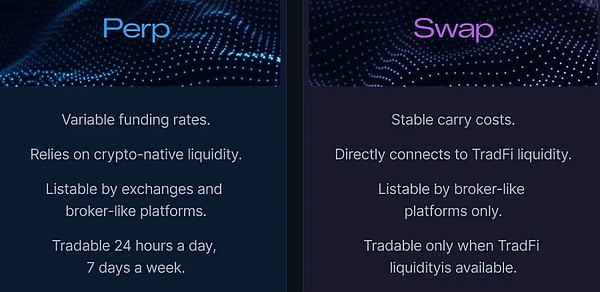
Tao Zhu, Golden Financial Abstract: On November 18, 2026, decentralized derivatives trading protocol Variational announced the completion of a $110 million Series B funding, achieving a post-money valuation of $1.5 billion. This article will organize specific information about Variational from aspects such as project background, founding team, token economics, and unique features. I. Variational Completes $110 Million Series B Funding On November 18, Variational officially announced the completion of a $110 million Series B funding, with a post-money valuation of $1.5 billion. This round of financing was led by Bain Capital Crypto, with participation from Dragonfly, HSG, Peak XV, 50T Funds, and other institutions. According to Variational’s announcement, the funds will mainly be used to increase the open contract limits on the Omni platform, expand the trading categories of stocks, indices, commodities, and foreign exchange, and further expand the liquidity cooperation network with traditional financial institutions. Variational stated that since its launch in 2025, its trading platform Omni has accumulated a trading volume of over $475 billion, with more than 100,000 accounts and an open contract size exceeding $1.3 billion. Currently, traditional financial market assets account for more than half of the daily trading volume on the platform. It is worth noting that Variational has previously secured multiple rounds of financing: in October 2024, Variational completed a $10.3 million seed round; in May 2026, it completed a $50 million Series A financing, led by Dragonfly. II. Overview of Variational 1. Introduction to Variational Protocol According to the introduction on Variational's official website, Variational is a protocol for on-chain derivatives trading, covering cryptocurrencies, stocks, commodities, and foreign exchange. By aggregating the deepest liquidity possible from centralized exchanges (CEX), decentralized exchanges (DEX), and traditional financial (TradFi) traders, Variational directly connects DeFi to the global economy. Variational Protocol currently supports two applications: Omni (a zero-fee personal trading venue) and Pro (a customized derivatives settlement layer for institutions). Omni is an application built on the Variational protocol. It allows users to trade perpetual contracts between the cryptocurrency market and traditional markets within the same cross-margin account. Zero Fees: Omni does not charge trading fees. By vertically integrating liquidity providers on the platform, Omni retains the market-making profits that would otherwise be taken by external market makers, thereby generating revenue. Traditional Financial (TradFi) Level Liquidity Depth: Omni’s liquidity providers directly connect with centralized exchanges (CEX), decentralized exchanges (DEX), and traditional financial traders, providing the narrowest bid-ask spreads possible in various cryptocurrency or traditional financial markets. Hundreds of Trading Markets: By accessing existing liquidity (instead of building a new order book from scratch), Omni can support many more trading markets than traditional order book exchanges. The platform currently has over 500 cryptocurrency and traditional financial markets online, with more markets continuously joining. Pro's mission is to eliminate these inefficiencies and significantly simplify the process of institutional OTC derivatives trading; by improving the price discovery mechanism and enhancing market accessibility, it aims to unlock billions of dollars in trading scale. Pro automates the entire process of institutional trading—from order placement, clearing to settlement—and shifts the entire process on-chain. Institutions can create highly customized derivatives, set specific margin and clearing rules, hold collateral in independently managed on-chain contracts, and utilize Variational Oracle for pricing. Pro can provide the same level of customization as direct channels while achieving the high efficiency of automated on-chain systems. 2. Who are the Founders of Variational? Variational was co-founded by Lucas Schuermann and Edward Yu. The two met while studying engineering at Columbia University; in 2017, they founded their own hedge fund — Qu Capital. In 2019, Qu Capital was acquired by Digital Currency Group, after which Lucas and Edward respectively took on the roles of Vice President of Engineering and Vice President of Quantitative Trading at Genesis Trading. Lucas Schuermann and Edward Yu In 2021, after processing hundreds of billions of dollars in trading volume at Genesis Trading (then one of the largest cryptocurrency trading platforms), Lucas and Edward left to establish their proprietary trading firm — Variational. After raising $10 million and successfully operating trading strategies for several years (having connected to almost all centralized and decentralized exchanges in the field), Lucas and Edward decided to use Variational's trading profits to develop the Variational Protocol. 3. Variational Roadmap Q2 2024: Omni Testnet goes live Q3 2024: New order types: Take Profit/Stop Loss (TP/SL) and limit orders Automated listing engine Q4 2024: Isolated settlement pools Portfolio and Markets pages Security audits Load testing and scaling in production environment Q1 2025: Omni Private Mainnet goes live Omni Referral Program launches in limited capacity Q2 2025: Leaderboard page Profit and Loss (PnL) display cards Omni Referral Program fully launches Q3 2025: Configurable leverage Display of estimated liquidation prices Support for setting Take Profit/Stop Loss (TP/SL) trigger prices (based on latest transaction price, mark price, or index price) Major UI overhaul ('Omni v2') Q4 2025: Quote mechanism upgrade to narrow the bid-ask spread New order type: Trigger order Open reward collection feature for referrals Support for dragging to adjust Take Profit/Stop Loss/Limit/Trigger orders on charts Launch Omni points program Completed roadmap items: Open read-only Omni API Optimize mobile experience Support CSV format data export Launch RWA (Real World Assets) market and integrate native crypto liquidity ('Phase 1') Optimize data analysis functions of the 'Portfolio' page Major UI overhaul ('Omni v3') Isolated margin mode Protocol statistics page Launch Swap function ('Phase 2') Omni Public Mainnet goes live 4. Swaps — Bringing traditional financial liquidity on-chain Variational will launch Swaps in September 2026, with the first offerings being Gold XAU and Nasdaq-100 index US100, attempting to directly bring the liquidity of traditional financial institutions into the on-chain derivatives market. The Swaps product is a key tool for achieving Variational's long-term vision: through a unified cross-asset margin account covering cryptocurrencies, stocks, commodities, indices, and various currencies; this account can provide execution quality comparable to that of traditional prime brokers while enabling the instant settlement features inherent in DeFi. According to Variational, there are several key differences between swaps and perpetual contracts (perps): Significantly narrowed bid-ask spreads: Swaps hedge directly through traditional financial dealers rather than relying on aggregated crypto-native liquidity, resulting in a much tighter bid-ask spread compared to perpetual contracts, with deeper liquidity. This advantage is particularly notable when order sizes are large or trading volumes of the underlying asset are low. Higher open interest (OI) limits: We have signed relevant agreements, locking in over $1 billion in open interest (OI) capacity in the swaps market. As OLP establishes connections with more traditional financial partners, these limits will continue to increase. Stable financing costs: Most swap contracts do not adopt floating financing rates but instead set predictable holding costs (based on USD borrowing rates, currently an aggregated cost of about 4.5%), while users also have the opportunity to earn dividend income. Trading periods: Initially, the trading periods for swap contracts will align with traditional markets (for example, $XAU-SWAP will suspend trading for 1 hour each day). We are actively negotiating agreements with other platforms that operate outside trading hours, aiming to achieve around-the-clock quoting for OLP swap contracts in the near future. Leveraging a model similar to Variational brokers: Swap contracts fall under over-the-counter (OTC) instruments. Such instruments cannot be offered on exchanges based on Central Limit Order Books (CLOB); however, OLP's unique capacity as a counterparty to traditional financial dealers (TradFi dealers) enables it to facilitate the trading of such contracts on-chain. 3. Variational Token and Airdrop Details On September 24, Variational announced its VAR tokenomics. According to official information, VAR is scheduled for a TGE in Q4 2026, at which time an initial airdrop representing 32% of the total supply will occur. Points will continue to be distributed weekly leading up to the TGE. The specific allocation is as follows: Initial Airdrop [32%]: Airdropped based on the proportion of points held by users. This portion of tokens will be 100% unlocked at TGE. Ecosystem Reserve [18%]: Reserved by the Variational Foundation to support ecosystem growth, with specific allocations determined by the foundation. Team and Investors [50%]: Reserved for investors and current and future team members involved in building Variational. This portion of tokens will be locked for 12 months post-TGE, then gradually unlocked over at least three years. Team members are also required to adhere to their respective vesting arrangements. The specific allocation ratio among team members and investors will be announced before the TGE. Variational plans to use all revenue entering the treasury for the repurchase and burning of VAR tokens. 4. Differences Between Variational and Other DEXs 1. Different Trading Models Hyperliquid utilizes an on-chain Central Limit Order Book (CLOB) model, where traders can submit limit orders or market orders, and the system matches buyers and sellers based on price and time priority; Jupiter Perps mainly adopts an AMM model, where liquidity pools serve as counterparties for user trades, with traders transacting with the liquidity pools; Variational's Omni uses an RFQ model, where users submit trading requests, and the platform provides quotes through Omni Liquidity Provider (OLP), enabling users to complete trades upon accepting the quotes. 2. Different Sources of Liquidity The liquidity of traditional DEXs usually comes from market makers on-chain order books or funds in AMM liquidity pools. Variational's core liquidity provider OLP not only quotes prices to users but also hedges its own risks through centralized exchanges, decentralized exchanges, and over-the-counter markets. 3. Different Types of Trades. Variational has just raised $110 million, which will primarily be used to increase the open contract limits on the Omni platform, expand trading categories in markets such as stocks, indices, commodities, and foreign exchange, and further broaden the liquidity collaboration network with traditional financial institutions. While Hyperliquid and Jupiter were mainly focused on crypto assets in the early stages, Variational is expected to become a bridge connecting the crypto market with traditional financial markets.


Details compiled from public sources. Always do your own research.