
Financing Innovation, Ecological Leverage, and Risk Boundaries in Anthropic's Prospectus
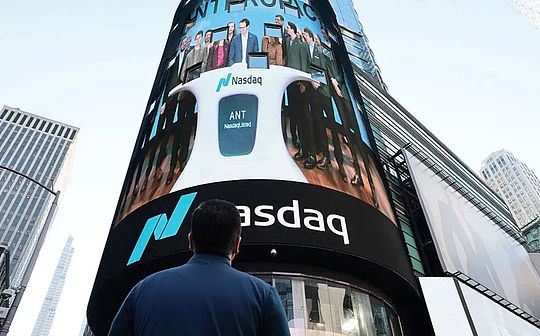
Dissecting the billion-dollar financing structure of Anthropic's prospectus, extracting four key insights on capital structure, and delineating its risk boundaries.
Machine translated. Refer to the original for accuracy.
Anthropic's rapid mobilization of massive capital, designing an asset isolation framework and governance system, provides a highly valuable reference for modern enterprise capital structure and financing engineering case studies. By Li Xue Nan and Wang Xiao Long Globally renowned AI company Anthropic has officially submitted its S-1 registration statement to the U.S. Securities and Exchange Commission (SEC) for its proposed listing on NASDAQ, with the stock ticker symbol “ANT.” If market expectations for a valuation of between $1.5 trillion and $2 trillion and a fundraising of approximately $100 billion hold, this could become one of the largest IPOs in public capital markets in recent years. As a cutting-edge technology company established only five years ago, the data revealed in the prospectus showcases unique financial characteristics: In the first half of 2026, the company achieved revenue of $16.286 billion, up approximately 1300% from $1.163 billion in the same period last year; however, at the same time, the company reported a net loss of $80.748 billion under Generally Accepted Accounting Principles (GAAP) for the first half of the year. It should be noted that the enormous net loss in the first half of the year was primarily affected by non-cash expenses such as changes in the fair value of financing instruments, which should not be equated with cash outflows during the same period. The company chose to measure certain convertible notes at fair value. When Anthropic's valuation rose from $380 billion to $965 billion, the fair value of the convertible notes and derivative instruments held by investors also increased, leading the company to recognize a fair value change loss of $72.388 billion in its income statement. According to the non-GAAP adjustment metrics disclosed by the company, if one fully excludes the fair value changes of financial instruments like convertible notes ($72.388 billion), other financial instruments' fair value changes ($8.720 billion), equity incentive expenses ($2.185 billion), and non-cash charitable donations ($126 million) and other non-cash items, Anthropic’s adjusted net profit for the first half of 2026 was actually +$2.671 billion (with adjusted operating profit at $1.618 billion, representing a profit margin of about 10%). The operating loss under GAAP during the same period was $693 million (in the second quarter, GAAP operating profit turned positive for the first time at $974 million). Discussing strategic investors such as Amazon and Google, as well as financial instruments like convertible bonds, naturally leads to topics regarding financing structure. For the majority of managers in traditional and high-tech enterprises outside of the AI sector, a computational ledger of over a hundred billion dollars may be challenging to replicate; however, Anthropic's approach of rapidly mobilizing vast sums of capital and designing asset isolation frameworks and governance systems provides a highly valuable reference for modern enterprise capital structure and financing engineering case studies. 1. Simplified Breakdown: Examining the Computational Power Ecology from “Commodities, Factories, and Markets” To understand the financial flow and business model of Anthropic, it is essential to clarify the operational logic of its industry chain. By stripping away the complex technical jargon, the entire AI industry chain can be simplified into the process of manufacturing and selling a special commodity: Core Commodity (AI Large Model Services): The Claude large model developed by Anthropic is essentially a digital intelligence commodity sold to enterprises and individual users. Manufacturing Facilities and Core Equipment (Chips and Data Center): The production of this intelligent commodity requires consuming vast computational power. Chip giants like NVIDIA and Broadcom act as specialized machine manufacturers for core equipment (NVIDIA provides standard GPUs, while Broadcom assists in designing specialized chips). Meanwhile, data center operators such as Equinix and Fluidstack build physical server rooms equipped with high-voltage power and strong cooling systems, together establishing a heavy automated factory for producing the commodity. Sales Marketplace (Cloud Service Platforms): Once the commodity is manufactured, channels are needed to sell it to end customers. Large cloud platforms such as Amazon AWS and Google Cloud act as comprehensive marketplaces. The prospectus indicates that approximately 48% of Anthropic's sales revenue in the first half of 2026 was generated through these cloud marketplaces sold to end enterprises. In this industry chain, there is a special phenomenon: Amazon and Google are not only large sales malls but also the world's main computing power factories and data center landlords. On one hand, they own the world's main data centers and self-developed chips (such as Google's TPU and Amazon's Trainium), providing computing power production; on the other hand, they control large enterprise-level cloud distribution channels. This multiple identity sets the stage for their unique financing design. II. Ecological Closed Loop: Deconstructing the Structured Financing of "Who Borrows Money, Who Owns, and Who Uses" According to traditional financial logic, a startup without a public credit rating, still operating at a loss and lacking substantial fixed asset collateral, would find it very difficult to borrow hundreds of billions of dollars in low-cost funding from the public bond market. However, Anthropic, through structured equipment leasing and supply chain collaborative financing, has built a capital closed loop with its ecological partners. In this system, the core is to separately arrange who borrows money, who owns, and who uses: (1) Cash Flow and Capacity Locking The company secures future capacity through leasing and long-term computing power procurement arrangements, reducing the cash demand for one-time equipment purchases; relevant equipment and capacity will be delivered in batches. According to the U.S. ASC 842 lease accounting standards, after leasing begins, the relevant right-of-use assets and lease liabilities must be legally disclosed in the consolidated balance sheet (as of June 30, 2026, the company has included operating lease liabilities of $1.079 billion and financing lease liabilities of $443 million in its balance sheet). The leasing arrangements help optimize current cash expenditures while locking in the current rights to use computing power and expansion capabilities. (2) Leading Party and Legal Status of SPV External financing SPV obtains financing provided by financial institutions, purchases equipment, and then leases it to the relevant lessee of Anthropic, with Broadcom providing an agreed residual value support. The external financing SPV is not a subsidiary of Anthropic but an independent legal entity established by external participants such as financial institutions and chip suppliers. For example, in the AI XPV chip financing plan launched in June 2026, an external institution spearheaded the establishment of SPV to raise funds for purchasing chips; while in the new $63 billion plan announced in October 2026, financing was arranged by Bank of America, Blackstone, Citigroup, and Morgan Stanley. Anthropic’s legal identity in these structures is that of the equipment lessee (leasing through its wholly-owned performance subsidiary). (3) Legal Relationship of Loans and Economic Substance Financial institutions lend money to SPV, which uses this money to purchase chips from vendors such as Broadcom, and then leases the chips to Anthropic's subsidiaries (the parent company Anthropic provides a performance guarantee). The rent paid by Anthropic is the main source for SPV to repay the loan. The legal debtor of the loan is SPV, but the computing power is used by Anthropic. If Anthropic defaults, Broadcom as the supplier has provided residual value guarantees (as of August 2026, Broadcom’s 10-Q disclosed that its maximum potential guarantee exposure was about $29 billion, which would cover the difference in asset disposal according to the agreement in the event of default), and cloud giants like Google also disclosed substantial data center rental guarantees and credit support arrangements. This structure disperses the ownership, usage rights, and risks of the chips among multiple parties. III. Core Extraction: Four Capital Structure Insights for Ordinary Enterprises In business history, it is not uncommon for order financing or buyer financing that promotes product sales through financial leverage. For instance, Dell lends to businesses to purchase servers, Boeing provides financing lease guarantees for airlines to buy planes, and GE Capital offers credit to medical device and engine buyers, all of which are very mature conventional business methods. However, the reason Anthropic’s financing has drawn widespread attention is that large cloud vendors and chip suppliers simultaneously collect investors, shareholders, creditors, suppliers, and distribution channels in the deal, showcasing new characteristics in transaction scale and synergy depth. Combining Anthropic's approach, four capital structure insights for ordinary enterprises can be distilled. Insight 1: Company credit is insufficient? Shift to "Asset and Project Credit" Independent Financing Anthropic's Approach: Anthropic combines parent company financing with structured financing at the equipment level; its revolving credit facility was expanded to $15 billion in September 2026. At the equipment level, an external financing SPV (Special Purpose Vehicle) obtains financing from financial institutions to purchase equipment, which is then leased to entities related to Anthropic, with Broadcom providing guaranteed residual value support. The assets are held by the SPV, and Anthropic pays rent as agreed, obtaining computing power while avoiding the parent company from undertaking significant direct bond leverage. Media reports indicate that early AI XPV priority tier financing had interest rates as low as 5.75%. Insight for Ordinary Enterprises: When a company's parent lacks creditworthiness, is unrated, or is in a loss period, forcing borrowing under the parent company often leads to high interest rates or stringent collateral requirements. Companies constructing new production lines, purchasing large equipment, or expanding into new businesses can spin these off into independent project companies or SPVs, financing independently based on future project cash flows and the assets themselves through project financing, equipment leasing, or asset securitization. Supported by project cash flow, asset disposal value, and credit enhancement conditions, project companies and structured financing tools help broaden financing channels. The degree of risk isolation and financing cost depends on guarantees, recourse, and consolidation arrangements. Insight Two: Turn Upstream and Downstream Partners into Ecological Collaborators—Cleverly Utilizing “Supplier Financing” Anthropic's Approach: Partners participate in financing in various ways: strategic investors provide funds, chip suppliers offer residual value support, and some cloud vendors also support infrastructure construction through data center-related arrangements. Anthropic secured future large orders to encourage partners to use their own credit to help reduce project financing costs. Insight for Ordinary Enterprises: When a company has strong orders or market prospects but lacks construction capital, it should focus on its upstream and downstream partners. By signing long-term purchase agreements, it can obtain supplier offers for seller deferred payment, equipment residual value guarantees, or supply chain credit endorsements. For suppliers, providing moderate credit enhancement is an effective tool to lock in core major customers and boost their own sales. Insight Three: Decoupling Control from Capital Scale Anthropic's Approach: Strategic investors participate in financing through non-voting preferred shares, convertible notes, and other tools, with some securities intended to convert into Class N common shares during related listings. Founders plan to hold Class F shares through Founder LLC, controlling 50.1% voting rights on matters for common shareholders; the company introduced a long-term interest trust in 2023, which normally allows them to elect a majority of the board of directors through Class T shares after the IPO. These arrangements are planned to be formally implemented before the IPO is completed. Insight for Ordinary Enterprises: Large-scale financing does not equate to losing control. Companies can use multi-class equity structures (AB shares/proprietary control shares), non-voting preferred shares, and voting right delegation in legal design to separate the dividend rights of capital from the decision-making control of the company to some extent, steadily maintaining control over the company’s direction while bringing in massive funding. Insight Four: Beware the Off-Balance Sheet Leverage Trap Behind Minimum Guarantee Long-Term Contracts Anthropic's Approach: According to media reports citing confidential drafts, Anthropic's future commitments with six partner-related infrastructure expenditures could reach up to $518 billion over the next decade (of which approximately 80% are irrevocable or subject to guaranteed payments as agreed). In the public S-1, as of June 30, 2026, its fixed and minimum purchase commitments amounted to about $265.6 billion, with approximately $321.4 billion in future leasing obligations not yet initiated. These guaranteed payment commitments essentially transform future purchase demands into rigid off-balance sheet leverage. Insight for Ordinary Enterprises: Many enterprises, during industry upcycles, tend to sign long-term contracts with minimum guarantee nature to lock in capacity or enjoy favorable discounts. Entrepreneurs must be clear that these off-balance procurement commitments essentially constitute rigid liabilities. Once the industry downturn occurs or business shifts, guaranteed payments can quickly turn into a significant burden on cash flow, requiring preemptive cash flow stress tests under extreme scenarios. Financial Deep Dive and Risk Considerations: Underlying Logic and Risk Points After understanding the innovations in capital structure, a deep analysis of the underlying financial data in the prospectus and the deeper risks of this special financing model helps business decision-makers comprehensively evaluate its applicable boundaries. After the release of the prospectus, market analysts and institutional investors (such as Steve Eisman) analyzed and commented on the financial details of Anthropic. Public S-1 data shows that revenue growth in the second quarter of 2026 outpaced the growth of compute and infrastructure costs (with revenue being 2.08 times the compute and infrastructure costs), and the GAAP operating profit in the second quarter also turned positive for the first time (at $974 million). However, as previously committed capacity becomes available, if revenue growth does not match, future profits and cash flows may come under pressure. According to media reports, the ratio of revenue to compute costs in the third quarter dropped to 1.70 times, and revenue growth slowed to approximately 45% quarter-over-quarter. This unique financing and performance structure also presents notable risk characteristics. Interconnection of credit and operational risks: Such arrangements may cause the operational risks of customers to be transmitted to the credit risks of suppliers; in this case, it is particularly concerning due to the huge amounts involved and the concentration of trading relationships. Broadcom provided substantial residual value guarantees, and Google provided a floor for data center rent. If terminal demand slows, making it difficult for Anthropic to fulfill, supporters may face shortfall liability or takeover responsibilities. Liquidity pressure from unlaunched capacity: Up to $321.4 billion in unlaunched compute contracts will gradually be delivered over the coming years. If enterprise customers shift from early exploratory investments to strict ROI (return on investment) reviews, or if market competition squeezes gross margins, if compute revenue growth does not keep pace with the rolling out of capacity, irrevocable minimum contracts could turn into rigid liabilities that severely encroach on cash flow. Market risk of chip residual value: The reduction in SPV financing costs depends somewhat on guarantees of chip residual value. However, AI chip technologies are iterating rapidly, and the second-hand trading market is relatively small; when pressured by technological iterations and second-hand market liquidity, whether the equipment recovery value can cover the remaining financing exposure is still uncertain. In addition, media outlining the 94-page risk warnings in the prospectus have logically deduced the extreme risk points mentioned: To seize the AI market, Anthropic placed large compute orders in advance, and should it encounter competitors with more cost-effective models, it may need to significantly enhance efficiency to cope with debt pressure; as automation tools deeply participate in development, if the speed of code review cannot keep up, systems may exhibit unpredictable autonomous behaviors; should extreme security incidents occur, potential losses could even exceed the coverage limits of the global insurance industry. This apocalyptic causal deduction belongs to the media’s logical interpretation, but the serious warning in the prospectus about catastrophic AI risks and insufficient insurance capacity truly reflects the severe security boundaries faced by the commercialization of cutting-edge technology. Reshaping the capital perspective: From "replicating financing miracles" to "understanding underlying logic" Ultimately, the focus of these structures and insights is not to compel companies to rigidly replicate a financing miracle worth hundreds of billions. It must be candidly stated that for the vast majority of traditional and high-tech companies outside the AI space, Anthropic possesses extremely unique industry advantages, a giant ecosystem, and capital attention. If one detaches from their own industry position and development phase to mechanically copy its complex SPV structure, or inappropriately apply its non-voting equity design, it would not only face substantial reality constraints, but could even fall into a financial crisis by misapplying these principles. The true value this prospectus brings to ordinary business managers lies in understanding the underlying business logic and capital thinking. Breaking the single financing mindset: No longer limiting financing to seeking bank loans or equity exchanges for cash. Instead, shift focus towards one’s position in the supply chain; Re-examining upstream and downstream ecosystems: Delve into relationships with suppliers and clients, exploring whether pure buy-sell relationships can be upgraded through long-term orders, seller deferred payments, or credit endorsements into an ecological financing body that shares risks and benefits; Achieving the separation of credit and assets: Understand the decoupling logic of who borrows, who owns, and who uses money. When expanding new projects or making heavy asset investments, effectively utilize project companies and structured tools to a degree that separates corporate credit from project asset risks, thereby protecting the health of the corporate balance sheet. The business world does not have perfect templates that can be mechanically replicated. Borrow stones from other hills to sculpt one’s own jade. Profoundly understanding the underlying design thinking of capital structures, and innovating and making choices based on one’s own supply chain realities, while being bold in expansion yet safeguarding cash flow, is the wisdom that corporate managers can derive from this capital feast.
Read original · 金色财经资讯Details compiled from public sources. Always do your own research.