
Why It's Getting Harder to Make Money in the Crypto Market
The era of easy money in the crypto market is over; insider trading, controlling supplies, and token issuance arbitrage have drained liquidity, forcing the industry to return to real value.
Machine translated. Refer to the original for accuracy.
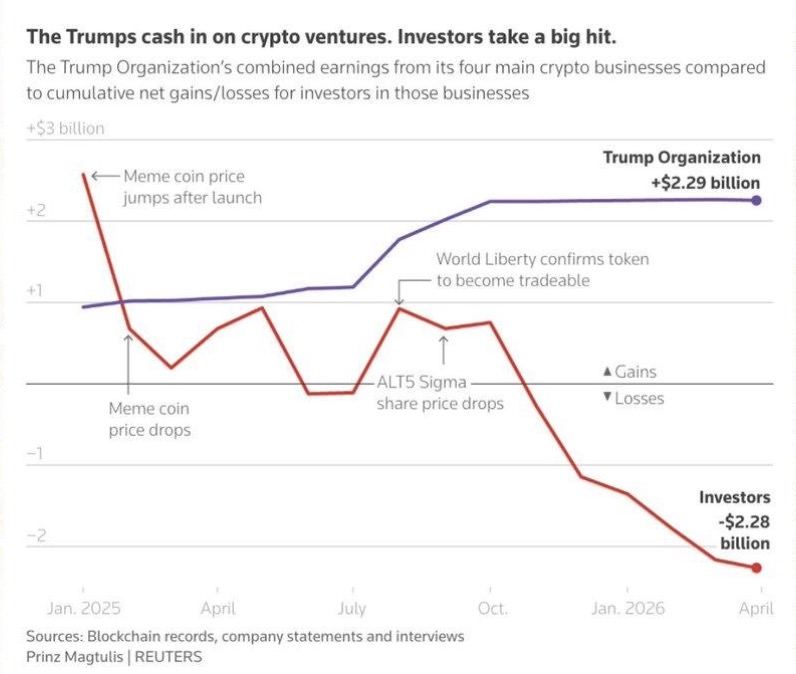
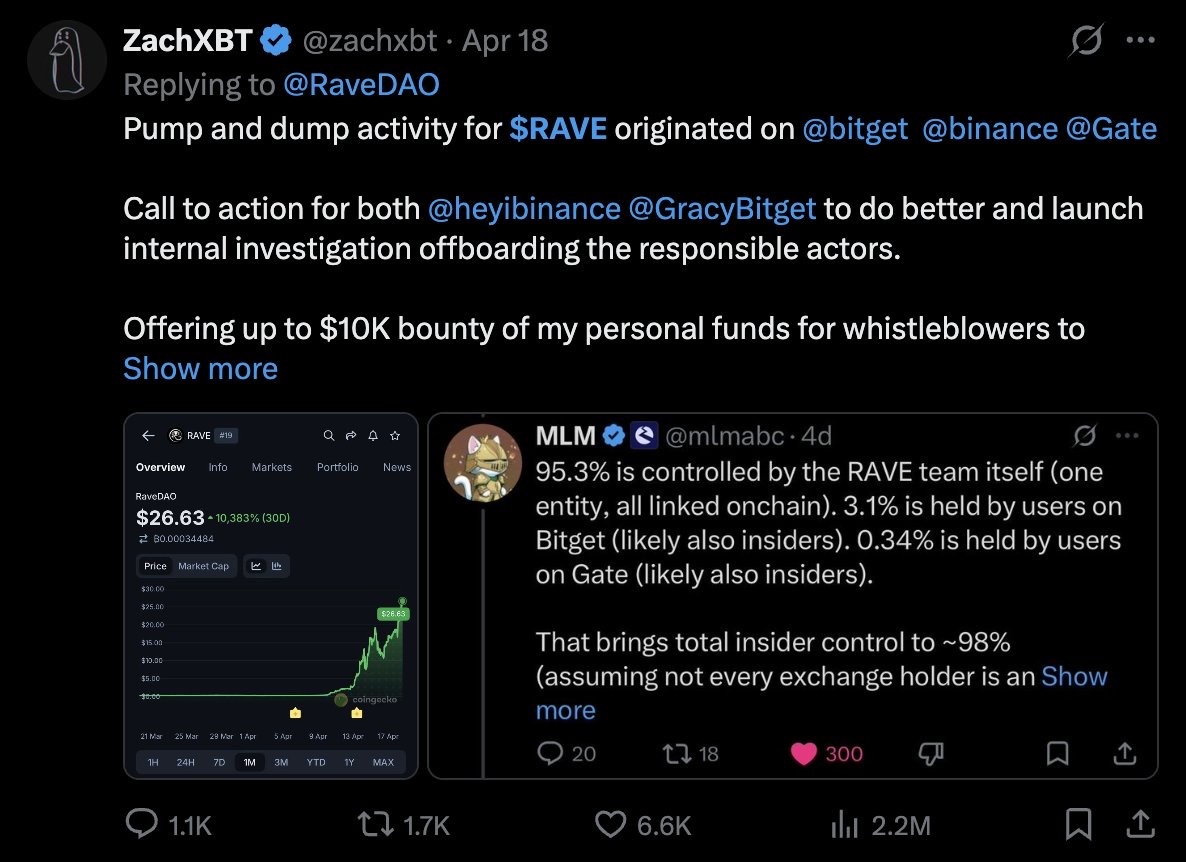
Author: Paul Klay Source: X, @PaulKlayVC Translated by: Shan Ouba, Jinse Caijing In the past few years, the crypto market has gone through various different schemes repeatedly. I believe these schemes are a key reason why the crypto industry no longer offers easy ways to make money like it did in the past. Moreover, I don't think those opportunities will return. I don't intend to discuss Bitcoin prices or trading volumes; I am not a crypto analyst, so please consider what I say below as my personal viewpoint. Easy money only exists when others are willing to spend. The vast majority of participants in the crypto market are gamblers. Of course, there are genuine technologies and real use cases, but those who participate in everything and treat crypto as a full-time job are, more or less, gamblers. So, as long as you are smarter than others, obtain information earlier, and sell your chips to later investors, who will eventually sell to retail investors, you can make money. Even if you are not among the earliest entrants, the probability of making money is still quite high. Most of these people will reinvest their profits back into the crypto market. Just like at a casino, they shift their money to other opportunities they believe can yield more returns. However, all of this happens relatively naturally. Some people make money, while others lose it; there is no specific group continuously taking all the profits. We all know that in traditional casinos, it is the casino owners who make the money. So several groups decided to act as the casino owners themselves. They figured out how to profit from all the fluctuations and withdraw that money from the market. The best part for them is that in their own casinos, they are almost guaranteed to not lose money. All they do is take advantage of people’s greed. Below, I will discuss four of the biggest and most common schemes, which I believe play a decisive role in this. 1. Trump and Insider Trading Trump realized he had a huge opportunity to influence both the crypto and stock markets, and he actively exploited it. Here, we only speak about crypto because it is much smaller in scale, less stable, and easier to manipulate. When the market direction is dictated by you, you and those around you hold a tremendous information advantage. The operations in question are straightforward: first, determine which direction is more profitable, build a position in advance, and then maximize profits within the liquidity available in the market. Keep doing this until people stop believing you, stop reacting to your statements, or until there is no liquidity left to exploit. The problem is that the market is not infinite. The number of gamblers is limited, and the money in their hands is also finite. When insiders use their ability to influence the market, they can extract huge amounts of money, concentrating wealth in the hands of a few, who may not reinvest that money back into the crypto market. Additionally, Trump and his family have issued multiple tokens, but that’s another topic. So, the victory celebrated by the crypto community during the election may ultimately turn into its worst nightmare. 2. Crypto Crime This is essentially the same idea, but the distinction is: you influence prices not because you are the President of the United States, but because you control a large portion of a token's supply, and your coin is listed on a major exchange for contracts. The specific operation is divided into several steps: First, create a project, raise funds from reputable investors, spend money on inflating trading volume and fan numbers, showcase nonexistent income, then raise another round, and go to major exchanges to get listed. If you can directly obtain contract trading qualifications, great; if not, continue inflating trading volume until you succeed. At this point, you will have a machine that seems capable of printing money indefinitely. When contract trading opens and you control a large portion of the supply, you can observe how many people are shorting and how many are going long. You choose which side favors you, buy or sell a sufficient amount, trigger the liquidation of your opponents, and then collect the profits. Repeat as many times as possible until your token is delisted or this scheme no longer works. To scale this operation, you must open contracts on major exchanges because trading volume is there. Regardless of how good or bad your project is, as long as the token is listed on Binance contracts, it can attract billions of dollars in trading volume. 3. Severe Overvaluation: Income Cannot Support It Crypto is still a relatively young industry, so projects often receive very high valuation multiples. Many people really cannot understand what they are being told. There are countless technologies, ambitious projects, and so on; this is completely normal. Like in all other industries, most projects that are based on unsound assumptions will eventually shut down, and only a few projects will drive the market forward. But crypto has two key differences: How income is generated Due to the nature of the market—most people come in to make easy money, and also because many founders and marketers package projects, the end result is that almost everyone's real motivation is to make money, rather than to solve problems. Founders promise potential rewards through airdrops, encouraging users to utilize their technologies. Users indeed use them, but not because the technology solves their problems, but because they expect to make money. Then founders take this data to find investors, raising huge amounts of capital, and eventually issue tokens. They distribute rewards to users, but activity levels can sometimes drop by hundreds or even thousands of times, because people have used the products just to wait for financial returns. Token Issuance In other industries, projects that fail shut down. Investors lose money, and founders lose time. But in the crypto industry, even if your idea completely fails, weak regulations and oversight may allow you to continue to claim that everything is going well, weave a compelling narrative, and issue tokens at a seriously inflated valuation, completely unrelated to the project's actual value. And people will actually buy. Founders make money, investors either recover part of their principal or even turn a profit—even though the project should have been shut down long ago. This is essentially an IPO without equal regulation and no substantial due diligence. You can issue whenever you want, spend money to get listed on exchanges, and then your job is done. The level of scrutiny can be astonishingly low. One of my colleagues even made a product called @valueverse_ai, which I personally like a lot. It compares actual income to valuation to find undervalued projects. This also explains why the majority of crypto tokens trend downward after launch, with only a few exceptions, and sometimes those exceptions rely on manipulation rather than genuine demand. Meanwhile, many projects that truly generate income do not even issue tokens. Back to basic market principles: as long as there are continuous inflows of newcomers, this model can operate. But theoretically, if it does not create real value, it cannot fundamentally succeed in the long term. Everyone wants to make money, but someone has to lose. So, founders begin to mass-produce projects, treating token issuance as an exit strategy for liquidity. I know many teams that used to release several projects each week and still do so. Just think about it: several projects every week. They only need to package the project, fabricate nice data, pay KOLs for promotion, and then, profits come in. Four, Running Away with Funds The previous example talked about valuations being grossly inflated: a project that according to all metrics is worth only $10 million is valued at $1 billion. Here we are talking about mass issuance of huge volumes of Meme coins. Many teams are doing this. They have a very low probability of losing money because they control the supply and can directly dump the tokens. As long as one out of a hundred tokens takes off, they can make a substantial profit. That's it. Similarly, there is no creation of real value here. You are just given a chance to satisfy a gambling impulse, no different from being in a casino. The difference is that traditional casinos may sometimes lose money in the short term; whereas here, the operators can design to minimize their risks to a very low level, and your odds might be worse than in a casino. The result is that the market is increasingly skewed towards institutional players and products with real use cases. Simply having a catchy story is no longer as effective as it used to be, and most of the easy money opportunities have disappeared alongside it. You could say this industry has matured, and I agree. But at the same time, a small portion has siphoned off vast amounts of capital, and today’s market is completely different from the early days. This is inevitable because this model has been unsustainable from the very beginning. At the same time, I believe this industry has huge potential and am confident it will continue to grow in the long term, only it will not be in the same form as before. This industry was once filled with extremely incompetent people who had no concept of how to run a business but were building ecosystems, while everyone else was throwing money at them. They would subsequently hire the most incompetent professionals I had ever seen and offer the highest salaries I had ever encountered. Most of these people have now left the field, which is a good thing. Money is no longer freely given to everyone. This has created incentives to build businesses that genuinely solve real problems, which should ultimately have a very positive impact on the industry.

Details compiled from public sources. Always do your own research.