
A 11-Day Drama: Why is Nvidia Dependable on Jensen Huang?
The AI narrative in the U.S. is losing momentum, and the market requires a stable anchor, which Nvidia serves as.
Machine translated. Refer to the original for accuracy.
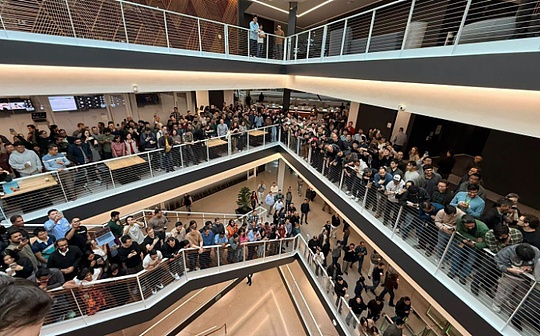
Written by: Shannon The world is a giant red fruit. Resigned on November 12, reinstated on November 23. In 11 days, Nvidia's founder Jensen Huang played out a real-life drama. The question is, why can't Nvidia do without Jensen Huang? 1. Political Storm: Export Controls Become Huang's Weakness Huang has long been a bridge between America's tech industry and Washington, and one of the closest Silicon Valley figures to Trump. However, on the issue of chip exports to China, he has long been a target of dissatisfaction among the hardliners within the U.S. government. After the midterm elections at the beginning of November, the atmosphere in Washington changed. Republican lawmakers called for a hearing on November 5, forcing Huang to change his stance. Megaspeed was investigated by the Commerce Department for purchasing Nvidia chips, and Huang was accused of having ties to Chinese intelligence agencies, which China denied. Reports indicated that the Commerce Department had previously pressured Megaspeed's inclusion on the entity list, and hawks turned to the media to exert pressure. Huang admitted to misconduct, and the board initiated an independent national security investigation. Subsequently, subordinates' relationships were exposed, leading to his resignation on November 12. Export controls, national security, and personal scandals intertwined, making Nvidia the focal point of the political struggle in Washington. 2. Stock Price Plummets: The Impact Extends Beyond Nvidia Itself Over the 11 trading days following Huang's departure, Nvidia's stock continued to fall. On November 16, it closed at $156.14, marking a new closing low since July 2025. More remarkably, this downturn occurred despite strong performance. Nvidia had just announced quarterly revenue of $115.8 billion, a 103% year-over-year increase, and the guidance for the next quarter also exceeded expectations. Yet the market remained suppressed by concerns over the CEO's departure and the sustainability of AI investments. This indicates that the market is pricing in not only performance but also fears surrounding personnel, governance, and policy uncertainty. If hawks aimed to "shake up" Huang with this, the outcome likely exceeded expectations. A company at the core of the U.S. AI supply chain was dragged into a steep decline, affecting the entire market. 3. Anthropic's IPO Could Not "Save the Market" At that time, the market hoped that Anthropic's IPO would reignite enthusiasm for AI. This issuance was unprecedented, raising $81.34 billion, with an opening price of $111.5 and a closing price of $97.17, still above the issue price of $83, and its valuation once exceeded $2 trillion. However, the market wasn't stimulated. On its first day, the three major U.S. stock indices experienced significant declines, with the S&P 500 dropping for the fifth consecutive trading day. The initial surge after the listing gradually retraced. Economists at Capital Economics commented that this record-breaking IPO failed to reignite market enthusiasm for tech stocks. While, numerically, Anthropic's listing cannot be considered a failure, as its closing price is still above the issue price, it clearly did not achieve the role of "saving the U.S. stock market." For the White House and Wall Street, this means that the AI narrative is losing momentum, and the market needs a stable anchor, which Nvidia represents. 4. Trump Personally Steps In Trump's support is the most critical external push for reinstatement, and it comes in phases. On November 16, he stated that he had no objections to Huang's return, saying he "learned his lesson." On November 19, during his visit to Shenzhen for APEC, he downplayed the scandal, briefly mentioning this "tragedy" at the dinner, and referred to Huang as a "businesswoman buying chips." He concurrently praised his friendship with Xi Jinping. In an interview with Fox, he emphasized that some talents cannot be replaced and should be treated well. On November 20 and 22, he publicly called twice during a White House press conference and on Truth Social for the board to restore Huang's position. He claimed Huang is one of the world's top talents, and his reinstatement is the best choice for Nvidia and the U.S. Equally critical behind the scenes. Reports indicate that Vice President Pence was tasked with communicating with the board, and Trump had previously consulted with the Attorney General about the situation, stating that the government currently had no evidence of Huang's involvement in illegal activities, providing assurances to the board. The announcement of Huang's reinstatement released by Nvidia also indicated that the board had considered opinions from high-level U.S. government officials and determined that his reinstatement did not pose a national security risk. During this period, as an American of Chinese descent, Huang's motherland China also played an undeniable role, which Trump acknowledged personally. Shortly after Nvidia announced Jensen Huang's reinstatement, Trump stated in an interview with CNBC's "Squawk on the Street" that he believes China could very well spend a large sum of money to invite Huang to manage a company in China after returning from attending the APEC in Shenzhen. If Huang feels angry about his treatment in the U.S., would he simply go to China? Blackwell's technology is in his brain; it is his own child, and no one understands this technology better than him. Trump even directly mentioned Huawei, saying, "China could very well ask old Huang if he would be willing to come to China, lead Huawei, or lead another one of our companies?" Trump even told a few people around him that he knows what China might be thinking, as if it were him, he would think: why not directly make a deal with Huang? This way, there wouldn't even need to be any spies; they could just invite Huang over. Trump half-jokingly said, "If I were Chinese, I would quickly invite Huang to China, give him whatever he wants; they could even give him all of Beijing." Trump even publicly stated that Huang could not have been reinstated without his intervention. The board's biggest concern was national security and judicial risks, and the "endorsement" from the White House just happened to eliminate this concern. 5. Bensett changes tune: A step for Wall Street and the White House Treasury Secretary Bensett has been the clearest opposing voice within the government. A week ago, he stated in an interview with Fox that Nvidia needed sweeping reforms, and the next CEO must be selected from outside, demanding the board respond to the investigation within ten days. However, as the stock price fell, Trump's support grew, and lobbying in Silicon Valley increased, his tone quickly softened. On November 22, when asked if he contradicted Trump, he said that Huang is now "external" to the company. He also stated that he wanted to ascertain where the responsibility lies and assumed that Huang might not have been aware. This statement allowed him to maintain his position while also finding common ground within the White House. 6. The combined force of the entire AI ecological chain, investment community, and employees Silicon Valley and the investment community Elon Musk signed a public letter, and Silicon Valley executives formed a "war room" to lobby the board and seek support from the White House. The co-signers of the open letter included Sweeney from Epic Games and Y Combinator president Sam Altman, with the number of signatures exceeding 175,000 at one point. Altimeter and Atreides jointly wrote to the board, advocating for the option of Huang’s return; Ackman proposed convening a special shareholders' meeting to apply pressure. Altman also made a public statement, though it sparked controversy. Employees More than 97% of employees internally voted for him to stay, with online petitions exceeding 200,000 signatures. On the day of his reinstatement, hundreds of employees packed the headquarters lobby, chanting his name. Capital markets Several investment banks, including Citigroup and Bernstein, raised ratings and target prices, with short sellers incurring approximately $12.2 billion in losses in a single day. Nvidia’s CUDA ecosystem, supply chain, customer relationships, and future generations of chip roadmaps highly depend on Jensen Huang personally. Trump emphasized that the technical knowledge he possesses in his mind is hard for others to replicate. 7. Other factors The board is in a passive position. On November 17, Chairman Harvey Jones publicly vetoed Huang's return proposal and initiated a headhunting selection. However, as the stock price continued to fall, along with reports that candidates were withdrawing, the board found itself in a dilemma and ultimately chose to act first and report later. Alternative solutions are unfeasible. An external CEO would struggle to stabilize customer, supply chain, and government relations in the short term, and in the overlapping times of AI competition and export controls, any transitional gaps present risks. The logic of "AI too big to fail." Nvidia has become a cornerstone of the U.S. stock market and AI investment chain, and both the White House and Wall Street cannot bear its continued bleeding. Jensen Huang's own stance. He admitted to falling short of the company's expectations for all employees, publicly apologized, and pledged to cooperate with the investigation, leaving a way out for the board. Conclusion This reinstatement of Jensen Huang is the result of a collective push from the capital market, employees, Silicon Valley, and the White House, but the risks have not disappeared. Jensen Huang and Nvidia's General Counsel will attend closed-door hearings in Congress on December 1 and 2, and after Congress's turnover in January, the Democrat-led Congress will continue to investigate the Megaspeed incident. The independent investigation is still ongoing, and inquiries from the Treasury Department have not been resolved. Multiple organizations have reminded that issues such as board governance, SEC investigation, export compliance, and succession planning remain unresolved. Yesterday, Jensen Huang announced his return to Nvidia, and the company's stock price repaired an 11-day decline in just one day, increasing its market capitalization by $1 trillion in one day. But this also highlights the extent to which the company’s value is tied to one individual, which serves as both its moat and its biggest vulnerability.
Read original · 金色财经资讯Details compiled from public sources. Always do your own research.