
Old Huang's Return Brings Rebound Opportunities, AI Demand Awaits Non-linear Release
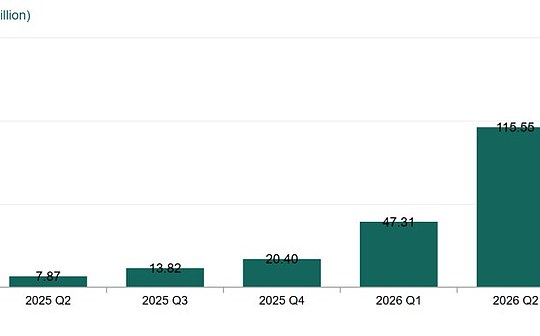
Huang Renxun's return alleviates concerns about AI expansion, with the market first viewing it as a rebound; macro conditions and funding remain tight, while demand awaits non-linear release.
Machine translated. Refer to the original for accuracy.
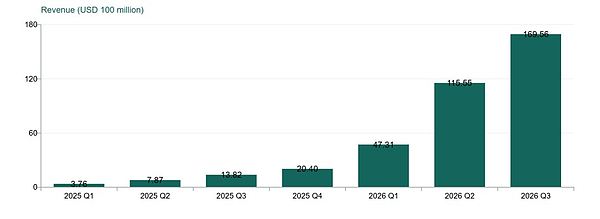
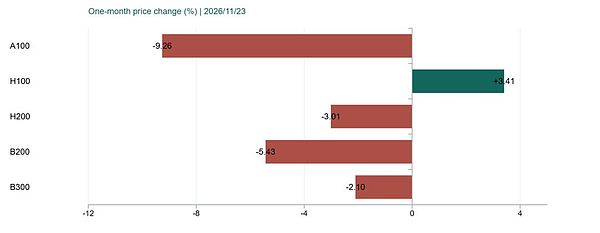
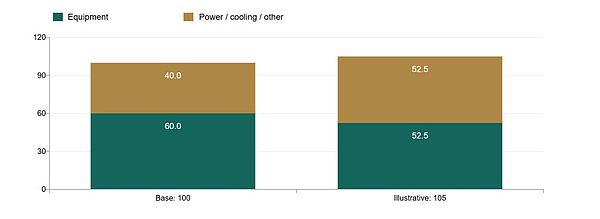
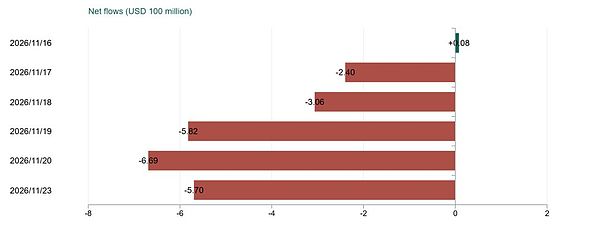
When faced with too much information, focus on the core storyline that influences investment. When there are divergent views, peel away the phenomena and see through the essential logic. When changes occur, continually follow up and calibrate your thoughts. Contents of this issue 01 This Week's Market Viewpoints 02 Underlying Industry Logic 03 Selected External Content Three Focusing Questions With Huang Renxun's return, can the rebound turn into a reversal? AI businesses are growing larger; where will the profits ultimately reside? Is BTC迎来周期级配置机会了吗? Five Core Judgments The market is currently viewing it as a rebound, which is insufficient to determine a reversal. Previously, the market may have projected political resistance too far out; Huang Renxun's return provided a reason to correct pessimistic expectations. However, when macro tightening will ease, the extent of actual policy implementation, and how much the next batch of paid applications will bring in terms of incremental gains are not clarified due to this event. Restricting expansion has political benefits while also incurring political costs from slowing investment and employment. Local dissatisfaction with electricity prices and land use will drive restrictions; construction delays will put pressure on investment, employment, and growth, and the party continuing restrictions must also bear the consequences. Different parties bear the costs over varying timeframes, and concessions won't be synchronized; policies are more likely to advance through negotiations, additional conditions, and local releases. Demand will not extend along a single model's growth rate in a linear fashion. Companies' existing data analysis, search, recommendation, and workflows already have computational budgets; these budgets will be repurposed, leading to a migration towards accelerated computation in cloud infrastructure, growing new businesses and investments in the next round. Demand will be released in batches; a slowdown over a period cannot be directly extrapolated to mean that the industry has peaked. Even if inference suggests that demand is continuously growing, semiconductors may slow down first, and the continuity within different segments of the semiconductor sector will also differentiate. How much new equipment is purchased depends on computational efficiency, capacity utilization, expansion returns, and the proportion of equipment in total investments, not just usage. Even if current demand still exceeds supply, the market may first lower expectations for the duration of high growth and high profits. If cyclical patterns continue and the U.S. stock market does not enter a deep bear market, BTC is entering a more attractive bottom configuration range. Price declines and time consumption are causing some old chips to exit while low-positioned acquirers take over, potentially reducing selling pressure. This is a reason for stepwise layout; there is no need to wait for full confirmation of the reversal, but the cost range does not guarantee price; any failure of a premise requires reassessment. Quick Overview of Investment Viewpoints Overall Market Our Viewpoint: Currently viewing it as a rebound The most significant subsequent changes: whether policy execution, funding conditions, and paid demand will further improve. Integrated CSP Platform Our Viewpoint: Prioritize studying how entry, computational power, and cash flow synergy can realize profits; participation depends on price. The most significant subsequent changes: actual customer payments, internal business revenue, and returns on new investments. Upstream Semiconductors Our Viewpoint: Insufficient downstream usage growth to guarantee equipment orders and high profits; do not directly extrapolate valuations based on "still in shortage". The most significant subsequent changes: new equipment budgets, delivery, utilization rates, and prices under similar conditions. BTC Our Viewpoint: If cyclical patterns continue and the U.S. stock market does not enter a deep bear market, the attractiveness of bottom configurations increases; establish exposures stepwise while retaining room for dealing with volatility. The most significant subsequent changes: clearing out old chips, low-position acquisitions, and whether the U.S. stock market shifts into a deep bear. 1. This Week's Market Viewpoints 1. With Huang Renxun's return, can the rebound turn into a reversal? Currently, we are viewing it as a rebound. His return has reduced an important uncertainty, but it has not simultaneously resolved all the constraints faced by the industry. NVIDIA announced on 2026/11/23 that Huang Renxun has resumed his positions as president, CEO, and board member; the 8-K recorded that the board decision is effective on 2026/11/22. The company announced that the board received opinions from senior U.S. government officials during the decision-making process, while clarifying that independent investigations are ongoing, and compliance arrangements are being advanced. Resumption of position and conclusion of investigations are two different matters. Our judgment on policy is: restrictions have benefits, but also costs; policies will be re-negotiated as costs become apparent. Local residents can directly feel the pressure from electricity prices, land use, and resource allocation, so it is not hard to understand the support for restrictions on expansion. However, once construction is delayed, investment, employment, and growth will all be affected, and the party continuing to impose restrictions must also bear the consequences. No one wants to take on the responsibility of dragging the economy into recession; the difficulty lies in the fact that different participants bear different costs and perceive those costs over different timeframes. Even if the federal level hopes to restore industrial confidence, localities may not immediately permit construction; localities require developers to bear more grid costs, which does not necessarily mean a permanent construction ban. According to this interest structure, policies may manifest as alternating negotiations, increased conditions, partial permissions, and continued delays. Assuming resistance equals a comprehensive blockade would underestimate the motivation for adjustment; treating a single personnel correction as a complete unblocking of the entire construction cycle similarly skips intermediary steps. In the same week, one locality paused voting, while a company announced funding was in place. Loudoun County announced on 2026/11/18 that the final vote on legislative applications for some data centers and substations could be postponed for up to 12 months, potentially involving 33 applications. However, staff can still review cases, and administrative approvals and the Route 28 special district have other processes. This measure is enough to disrupt the commencement time of specific projects, but cannot be directly interpreted as a nationwide halt to construction. Two days later, Oracle stated that the financing required to fulfill its contract with OpenAI had been arranged, including vendor financing, and delivery did not rely on ongoing additional negotiations. This is the company's own disclosure and does not represent that all new cloud providers can obtain the same conditions. Put together, the obstacles faced by the industry become specific: some projects are stuck in approval, some in funding, and some have already cleared one of the hurdles. A single management-level reinstatement cannot allow all projects to simultaneously pass. Political compromise may involve allowing construction but requiring developers to bear higher costs. For example, developers may share the burden of grid expansion, alleviating pressure on residents, but lowering the investment return of the newly added capacity. Existing power and customer parks can continue to collect payments, while projects yet to be powered are still waiting. There is a gap between improving supply expectations and improving enterprise profits. Breaking this issue down into three layers: supply, demand, and funding, we look at which layer has been affected by the return: Supply The main change brought by the return is an expected improvement in industrial coordination and management continuity. Unresolved issues include that project approvals, powering up, and equipment delivery still need to be solidified. Demand The main change brought by the return is the volatility on the supply side, which no longer must be interpreted as terminal demand disappearing. Unresolved issues include when new payment scenarios will form enough incremental demand. Funding The main change brought by the return is that improved confidence is beneficial for reassessing projects. Unresolved issues include that interest rates, inflation, and project return requirements will not automatically change due to personnel decisions. Rebounds do not need to wait for all issues to be resolved. As long as the market previously priced along the worst path, and this path begins to loosen, there is room for repair. More sustained market conditions will require further driving force: eased funding conditions, or new applications and revenue growth that make investors willing to reprice for the next round of expansion. We reserve the possibility of a demand leap, but do not treat it as already happening before orders are fulfilled. Buying pressure during rebounds may not necessarily be indicative of the buying pressure for the next market cycle. An important divergence in the weekly meeting is the time lag between short-term positions and medium-term profits. Previously lowered technology exposure funds may cover back due to easing bad news; funds facing redemption, annual net worth, and profit revision pressure may also take advantage of the rebound to sell. The same period of increase can simultaneously accommodate these two opposite actions; one cannot judge that long-term funds have resumed increasing positions solely based on the rebound magnitude. Macroeconomic tightening will also change a company's capacity to bear waiting. Clients are still willing to utilize AI, but with relatively high interest rates and tight financing conditions, projects must recoup costs in a shorter time frame to be worthwhile for commencement. If growth adjustments eventually lead to easing, there is also a time lag between economic pressure and declining funding costs. We judge based on rebounds precisely because supply expectations have already moved, while funding and new payment demands have not yet synchronized to provide stronger support. 2. Why can demand not be linearly extrapolated along the current growth rate? The scope of AI demand is expanding from a few popular tools to existing computational activities within enterprises. Focusing solely on the growth rate of a single model will miss this transition. What enterprises face is not just "buying or not buying a chat tool." Data cleansing and analysis, searching, recommendations, risk identification, and internal knowledge handling already have budget, personnel, and computational expenses. As model capabilities and costs change, an increasing number of links can be integrated into intelligent workflows, and the underlying may also shift from traditional computing to accelerated computing. The changes in cloud services thus come in two parts: the addition of new AI tasks and the technical replacement of existing services. The latter does not require the emergence of a completely new consumer application. NVIDIA's cuDF has extended GPU acceleration to tabular data processing and provides connections to existing tools such as pandas, Spark, and Polars. This indicates that there is a concrete technical path for migration, but it does not mean that all cloud workloads have been migrated, or that all are suitable for GPU replacement. A comparison can be made to “exchanging paper and pen for a computer”: initially, enterprises may only be changing the usage of their existing budget; as processing speed, service scope, and workflows change, new business begins to emerge; the next round of investment then revolves around new tools. Demand does not increase smoothly at the same rate every month, but is released in segments from trial, process integration to large-scale deployment. Non-linearity also implies there may be pauses. System integration, permissions, and organizational adjustments may delay procurement; once a model crosses the reliability or cost threshold, previously uneconomical scenarios may simultaneously become viable. The model itself aids in development and optimization, further increasing the possibility of demand leaps. Therefore, a period of slowing growth is not sufficient to prove the end; similarly, the explosive growth of the previous segment cannot be indefinitely extended. Enterprises have already paid a verifiable magnitude. Anthropic's prospectus discloses that for the second and third quarters of 2026, revenues were $11.555 billion and $16.956 billion, respectively, with a quarter-over-quarter growth of about 46.7% for the third quarter; as of 2026/09/30, over 11,900 customers contributed at least $100,000 in revenue in the past twelve months, compared to over 950 in the same period last year. This supports the adoption of real payments by enterprises, but these figures alone cannot prove that all non-programming scenarios grow at the same rate. Figure 1|Actual revenue continues to grow, and increments do not have to be released along the same slope. Anthropic quarterly revenue, in millions of dollars. Q1, Q2, Q3 of 2026 have quarter-over-quarter growth of approximately 132%, 144%, and 47%, respectively; all represent actual quarterly revenue, not annualized revenue at year-end. Source: Anthropic prospectus. This curve indicates that slowing growth and continuing revenue expansion can occur simultaneously. It proves that existing scenarios have generated real payments but cannot preemptively confirm revenue for the next batch of scenarios. We reserve the judgment for a renewed leap in demand based on the technology beginning to enter existing business processes, rather than requiring a model company to replicate last quarter's growth every quarter. From “how many tokens were used” to “how much work was completed” In a weekly meeting, a more client-benefit-oriented example was proposed: originally, completing a task required five calls, each costing 1; after the model upgrade, the single call cost doubled but was able to complete the task in one go, reducing the total cost from 5 to 2, a decrease of 60%. The single call became more expensive, but completing the task became cheaper. Conversely, if token growth mainly comes from retries and rework, an increase in usage may not necessarily enhance customer retention willingness. Original data analysis, risk control, and operational processes of enterprises will gradually migrate once reliability and cost reach thresholds: first replacing the existing budget, then shortening processing times, and finally possibly expanding the business scope. Investors need to discern whether a company is selling more calls or delivering more verifiable results, and whether this increases retention and profits; the sustainability of new demand paying for itself depends on these three steps. Thus, we place greater emphasis on the path of demand expansion: how much work originally completed by human labor or traditional software is beginning to enter a repeatable payment process; how trials turn into cross-department deployments; whether tasks that were previously not worthwhile begin to get utilized after computing costs decrease. The next phase of increment is more likely to come from here rather than being read from a company’s growth curve. 3. Why integrated platforms have more opportunities to retain profits? The advantage of platforms lies not only in abundant funding but also in completing demand, delivery, and payments within their own businesses. Having existing customers and application entry points means that distribution channels do not need to be established from scratch; owning their computing power allows for load arrangements between different businesses; and having existing cash flow means delivery does not fully rely on the next round of financing. When different businesses can share resources and improve utilization rates, scale and scheduling have the chance to reduce unit costs. An easily overlooked aspect is the monetization method. During a single model upgrade, independent computing power suppliers must wait for customer orders, while platforms can integrate it into existing products: improving recommendations, increasing advertising conversion, reducing customer service reviews, and boosting user retention. These benefits may be reflected in the revenue or costs of existing businesses and are not necessarily listed as separate model subscription income. Therefore, "external model revenue is still not large enough" cannot fully evaluate the AI returns of the platform; however, directly adding cloud revenue, model revenue, and application revenue may also exaggerate terminal payments. To give an example: a company pays $100 for model services through the cloud market, and the model provider spends $40 of that on cloud computing power; ultimately, the client still only pays $100, and one cannot add the two layers of revenue to create a new demand of $140. We relatively prefer platforms that can connect these links while viewing commercial advantages and stock prices separately. Investing less in one quarter can improve current cash flow, but it may also compress future deliverable revenue; having existing clients does not guarantee that all new investments are profitable. Whether platform advantages can be converted into profits needs to be validated in three areas: customer payments, profit improvement of existing businesses, and payback periods for new investments. Similarly, building less in one quarter, the losses borne by the platform and new cloud differ. The platform can rearrange existing load, postpone some procurements, and allow existing equipment to continue generating revenue. New clouds that rely on a single large customer and need continuous fundraising, however, have to pay interest and personnel costs during the waiting period; if the parent company runs out of cash first, even if the project is eventually completed, the original shareholders may not necessarily share in the originally expected returns. Using a pure financing example: a company originally has 100 shares and needs to raise 100 yuan. When the stock price is 10 yuan, it issues 10 additional shares, and the overall shareholding ratio of the original shareholders drops to 90.9%; when the stock price drops to 5 yuan, the same funding gap requires issuing 20 more shares, leaving the original shareholders with only 83.3%. The project has not been canceled, but the rights of the original shareholders have already diluted. This is also why we emphasize current cash flow when looking at integrated platforms. External Sales of Cloud Services Where AI returns are first reflected: new customer payments, utilization, and cloud gross profit. Hidden costs easily overlooked: building less improves immediate cash flow, but may also delay future revenue. Self-owned advertisements, recommendations, and application entries. Where AI returns are first reflected: conversion, retention, revenue, and service costs. Hidden costs easily overlooked: revenues spread across old businesses still need to be compared with new computing power costs. Computing power suppliers relying on project financing. Where AI returns are first reflected: contracts start billing, clients' cash received. Hidden costs easily overlooked: delay costs, financing terms, and shareholder dilution may occur first. Ultimately, platform advantages must translate to shareholder returns. What we prefer is its ability to convert demand into revenue while retaining the declining cost of computing power within its operations; this does not mean treating all major clouds as the same investment, nor skipping over the valuation and returns on new investments. 4. Even if we infer that demand continues to grow, why might semiconductors still decelerate first? The increase in endpoint usage and the continued expansion of upstream equipment investment are separated by efficiency, existing capacity, and investment returns. Ignoring these links may lead to overestimating new equipment orders. Slowing down expansion can protect data center returns but hurt equipment orders. The interests of cloud vendors and semiconductor suppliers may not align. If expansion continues at the highest speed every year, supply growth may depress rental prices, making it harder for cloud vendors to recoup investments before hardware obsolescence. If the strategy changes to first digest existing stock and lengthen procurement intervals, the utilization rate and returns of data centers may improve, but new orders for equipment upstream may decrease first. Therefore, one cannot demand that every layer of the industry chain achieves the best results in their respective models simultaneously: customers enjoy cheaper computing power, cloud vendors maintain high returns, and equipment suppliers sustain the highest growth rate and scarcity profits. Demand must expand quickly enough for all these expectations to be accommodated. We do not conclude that the hardware cycle has ended based on this, but we will reduce the weight of directly extrapolating current high profits for several years. Figure 2 | GPU rental prices have already diverged; a single price cannot represent all computing power. Ornn model index settling on November 23, 2026: changes over the past month. Coming from new cloud market transaction samples, regions, terms, scale, and service combinations may still vary and do not equal the renewal price for the same cluster. Source: Ornn Model Index (November 23, 2026). This snapshot does not support interpreting all generations as simultaneously in shortage or oversupply. The prices for single cards, thousands of cards in a collaborative cluster, and cloud products with permissions and service guarantees all differ. Large-scale clusters also need to ensure network, scheduling, availability, and delivery; price declines in rentals should be viewed alongside utilization rates, prepayments, and renewals under the same conditions to distinguish between retreating scarcity premiums and weakening end demand. The transmission of usage to device orders involves several hurdles. First, the same task does not necessarily require the same amount of resources. Model routing, scheduling, and software optimizations can reduce redundant calculations; better utilization of existing clusters can also accommodate some of the new workloads. However, cheaper computing power may stimulate more tasks, and the efficiency advantages of new hardware may promote replacement purchases. A decrease in costs does not lead to a singular investment conclusion; it depends on usage reaction, sources of efficiency, and the pace of updates. Second, new demand does not mean that every new project will receive funding. Loan disbursement failures, approval delays, or electrical delays can turn waiting into real costs. Taking a hypothetical project as an example: if $10 billion has been disbursed at an annual interest rate of 8%, a six-month delay adds about $400 million in interest, not accounting for other fees. Just because the project ultimately has customers does not mean it has sufficient funds to complete delivery today. Strong platforms can schedule existing resources or alter construction timelines; new clouds reliant on external financing may shrink, be acquired, or even exit the market. Terminal demand may continue to grow, but not all postponed demand can be shifted to another data center in the current period. This part of the demand is passed upstream, resulting in delayed or reduced device orders. Third, total CapEx cannot directly replace device orders. Assuming total investment increases from 100 to 105, but the share of equipment drops from 60% to 50%, the equipment budget decreases from 60 to 52.5, a decline of 12.5%. Power, cooling, and civil construction can absorb the new budget, and group investment continues to grow, but the share received by semiconductors shrinks. [Figure 3] Total investment increases by 5%, equipment budget may still decrease by 12.5%. Example calculation, not a company budget forecast: Total investment increases from 100 to 105, equipment share drops from 60% to 50%, equipment budget drops from 60 to 52.5. Schematic example, not a company budget. Within semiconductors, quantities, individual machine values, and prices must also be dissected. A machine requires more high-speed optical ports; why address components possibly facing price drops post-expansion? Assume rack shipments are down 15%, but the ports per rack increase by 25%, leading to a total ports increase of 6.25%; however, if the price per port drops by 10%, revenue declines by about 4.4%. The increase in individual machine value can offset some total volume slowdown, but whether profits can be preserved still depends on price, share, and gross margin. Calculating chips and systems. What drives sustainability: performance power consumption, software ecosystem, stable deliveries, and replacement demand. What changes might undermine it: customers delay purchases, or more easily substitutable solutions achieve the desired effect. Key components like storage. What drives sustainability: certifications, yield, and effective supply remain constrained. What changes might undermine it: new production capacity colliding with equipment delays, weakening prices and product combinations. High-speed interconnects. What drives sustainability: increasing ports per rack, bandwidth, and complexity. What changes might undermine it: project delays, price drops, or customer share losses erasing individual machine increments. What we are wary of is that upstream growth and profit expectations are extended too far, rather than categorizing all semiconductors as in decline. The more substitutable and reliant on supply shortages to raise prices segments face greater pressure to return to normal profits in the long term; segments that can still reduce overall customer costs and improve system efficiency might see more extended sustainability. When supply shortages will end needs to be assessed separately, rather than universally writing long-term homogenization risks as an immediate oversupply. Finally, the valuation. If competition gradually eliminates the shortage premium of substitutable hardware, the duration of high profits needs to be reassessed. Stocks can reflect this change in advance, without having to wait for the spot market to be fully oversupplied before adjusting. Even if there is still a supply shortage at the moment, one cannot extrapolate high profits for several years based on that. According to on-chain discussions this week, the outflow of stablecoins has slowed down. Large addresses are taking over, and outflows from exchanges have increased, providing clues for low-level trading. However, changes in individual addresses still cannot confirm the final buyer. The ETF fund sheet shows that external funds are still withdrawing. According to Farside's US spot BTC ETF criteria, the total net outflow from November 16, 2026, to November 20, 2026, is approximately $1.79 billion, with a continued net outflow of about $570 million on November 23, 2026. Thus, opportunities for allocation cannot be described as guarantees for short-term increases. Figure 4 | Funds from the US Spot BTC ETF are still seeing net outflows Net flow per day for the US spot BTC ETF, unit: $100 million. The total from November 16, 2026, to November 20, 2026, is -$1.79 billion; another outflow of $570 million on November 23, 2026. Source: Farside US Spot BTC ETF daily data. Old Chips Selling Clues seen this week: According to on-chain discussions from weekly meetings, some holders have started exiting at a loss. Significance for allocation judgment: Continuous turnover may reduce potential selling pressure, but does not mean the sell-off has ended. Low-level Takeover Clues seen this week: Discussions around large address takeovers and outflows from exchanges. Significance for allocation judgment: Indicates that there are still buyers at low levels, but changes in addresses may also include custodial migrations. ETF Funds Clues seen this week: Public data still shows net outflows. Significance for allocation judgment: Stable external buying power has not yet recovered, and bottom allocation can coexist with high volatility. Bottom allocation judgment concerns the gradual transfer of chips from those unwilling to hold further, as well as whether the price compensates for risk has improved; a trend reversal requires sustained buying power. According to on-chain researchers' framework, the former can appear before the latter, so it is not necessary to consider all funds turning to inflows as the only condition to start allocation, nor can "there is support" be interpreted as a short-term assurance of no further decline. Two prerequisites must genuinely be involved in decision-making. If US stocks enter a deep bear market, cross-asset deleveraging and worsening income expectations can bring new selling pressure; if the existing cyclical patterns fail, past time and cost ranges cannot continue to serve as the main basis. Reassessment of allocation logic should occur at that time, and decisions should not be mechanically increased just because prices are lower. If waiting for all funds to turn into inflows to allocate, part of the price advantage at the bottom may have already been forfeited. For investors recognizing these two prerequisites, a more practical approach is to arrange the pace, leave room for bearing volatility, rather than constantly seeking a piece of news that indicates "the bottom has been reached." When both prerequisites are met, we tend to build allocations step by step, reserving funds for continued volatility. On-chain costs can help observe turnover but are not a bottom price that will not break. Beyond model upgrades, what else needs to be supplemented: testing facilities, feedback data, and validation throughput. Observable operational outcomes: more qualified results rather than more candidates or calls. Investment usage: the moat of an application company should not only look at how strong the model it has integrated is, but also at whether it controls the process that customers find hardest to connect with. Data permissions, real feedback, and delivery responsibilities must be within its own system for model upgrades to quickly transform into revenue. This also explains why demand is released in increments: before bottlenecks are removed, capability can outpace revenue for a long time; only after they are removed will the tasks that were originally queued come together. Original case: Interview with Ali Ghodsi - After Hours Chat 189. 2.2 AI Cuts Service Costs in Half; Who Can Retain the Savings? Cost reduction creates distributable profits; whether customers can switch suppliers and who controls the irreplaceable links determine where the profits land. The value of vertical integration must be judged from this distribution. Consider a case with the same quality and delivery volume: a service priced at 10 yuan, with combined costs of model, computing power, and manual review totaling 6 yuan, yielding a gross profit of 4 yuan. If technological advancement reduces costs to 3 yuan, the gross profit would increase to 7 yuan if the price remains unchanged; however, if competition forces the price down to 7 yuan, the gross profit remains at 4 yuan, with the 3 yuan saved being entirely passed on to the customer. Both companies can announce that “AI efficiency has doubled,” yet the results for shareholders differ completely. Pricing (yuan) Direct Costs (yuan) Single Item Gross Profit (yuan) Before Improvement 10 6 4 After Improvement, Price Held 10 3 7 After Improvement, Price Reduction to Compete 7 3 4 The vertical group perspective proposed by All-In this week is worth reading from here onward. A company can reduce or even provide models for free, using them to expand revenues from cloud computing, advertising, or other applications; independent model vendors cannot rely on adjacent businesses to supplement their profits. A price drop at a certain level may be due to deteriorating competition at that level or another operator actively lowering the prices of complementary products. However, occupying more links does not automatically mean higher returns. If integration entails simultaneously managing low-utilization data centers, expensive electricity, and hard-to-monetize applications, internal subsidies may obscure losses. Judgement should return to two aspects: does the entire service allow customers to pay less and do more; can the company still retain cash after deducting all new capital? Saving money for customers and making money for shareholders must be computed separately. Investment usage: for easily replaceable standard services, focus on whether price drops can lead to sufficient sales; for companies that control business access, proprietary data, and feedback, observe whether customers still have to go through their system and pay them after switching models. Long-term profit is more likely to remain in areas that customers cannot bypass and that genuinely improve delivery outcomes, rather than simply in the firms that have the fastest cost reductions this round. Extended original: All-In E298. The numbers in the table are for illustrative purposes in explaining profit distribution, not company forecasts. Three, Selected External Content 1. All-In × Ali Ghodsi | The Model is Strong Enough, What Else Do Enterprises Lack? 2026/11/18 · English Interview Core Judgment: Databricks CEO identifies enterprises' AI shortcomings in context, permissions, and organizational collaboration. No matter how smart the model is, if it doesn’t know what decisions were made previously, it cannot complete the business for the team. Details of the Original: He demonstrated the results of a survey with over ten thousand employees, tracing each layer: Although the entire company seemed dissatisfied, when broken down to products, engineering, and sales operations, the issues lay with decision-making numbers, internal tools, and growth opportunities respectively. The system must connect people, departments, meetings, and decisions to trace the cause. Our Interpretation: The new demand for enterprise AI may first stem from connecting to existing business. Organizational charts are layered by department, yet customer demand must span across products, engineering, and sales; whoever can shorten the wait along this chain has a better chance of converting model capabilities into operational profits. 2. All-In E298 | AI Creates More Value, Why Might Not Every Layer Benefit? 2026/11/21 · English Roundtable Core Judgment: Chamath predicts that AI will drive a few large groups to integrate from power supply to computing power all the way to applications. It is important to focus on how profit boundaries are being reconfigured, rather than just on the number of “last ten companies remaining.” Original Details: The group can lower prices on one tier while recouping investments on another; independent suppliers do not have the same pricing adjustment space. The program also retains a significant divergence: Jason derives demand amplification from the full-day operation of the Agents, while Chamath accepts the application potential but believes that high interest rates and valuations can still suppress stock prices. Our Reading: When models become customer acquisition tools for cloud, advertising, or applications, the low pricing on the model layer may become the group's advantage but compress the space for independent suppliers. Industry-wide revenue growth may not prevent profit contraction at a certain layer; investing in stocks also depends on how much of this profit is already included in the valuation. 3. Later Chat 189 × Gu Quan Quan | Why Should AI Pharmaceuticals Control Their Own Labs? 2026/11/19 Published · Chinese Interview; Main Recording in 2026/06 Core Judgment: Gu Quan Quan views the wet lab platform as part of model learning. Computing power is responsible for proposing candidates, and experiments return reasons for effectiveness and ineffectiveness; just controlling the generation side may hand over the speed of the next round of progress to external queuing. Original Details: The program incorporates feedback on affinity, toxicity, and synthesize ability into post-training and also questions the comparative metric of model rankings: generating 5 candidates is not the same calculation budget as generating 128 or 256 to pick the best result. Our Reading: This episode helps identify barriers in vertical AI: what is expensive isn't necessarily model invocation, but rather the systems that can continuously produce unique feedback. When comparing product capabilities, verification costs and candidate budgets should also be considered; hitting experiment targets should not be directly equated with the success of drug development. 4. Tech Early Know × Bian Jiang | How Can AI Participation in R&D Lead to Continuous Improvement? 2026/11/18 · Chinese Interview Core Judgment: Bian Jiang distinguishes between having AI assist in R&D and the R&D system itself becoming increasingly capable of research. The latter requires results from the previous round to change how hypotheses are proposed, resources are allocated, and experiments are stopped in the next round. Original Details: He recounts that over a dozen researchers led more than 300 Agents, completing post-training of a 400B model in four to five months. The Agents analyze results, propose solutions, implement, and monitor; human roles still include defining objectives and identifying directional errors. The case pertains to post-training and does not provide a control group of human teams under the same conditions. Our Reading: In assessing R&D automation, it is less about the proportion of generated code and more about whether the pathways of failure are genuinely utilized in the next round. Cheaper unit experiments may also enable teams to explore more directions simultaneously, which cannot be directly extrapolated as a total decline in computing demand. 5. Non-Consensus 20 Minutes Ep61 | Is Buying Defensive Stocks Safer if Prices Rise? 2026/11/19 · Chinese Market Analysis Core Judgment: The program separates the stable operations of consumer companies from the stock buying price. Funds constrained by positions or benchmarks may not be able to convert all sales of tech stocks into cash, potentially squeezing risk aversion demand into a few leading consumer stocks. Original Details: The author contrasts falling chip prices with strong supermarkets, breaking down policy costs, long-term profitability, internal supply and demand of hardware, and institutional positions. Company revenue may still grow, yet valuations may contract due to long-term uncertainty; defensive stocks may become increasingly expensive due to crowded buy orders. Our Reading: When tech stocks fall and defensive stocks rise, it is also important to distinguish whether the change in profitability expectations is occurring or if constrained funds are simply shifting places. The former may change long-term value, while the latter may drive up the price of safe assets. Before reallocating for risk aversion, it is necessary to recalculate the returns implied by the buying price. 6. FEDS Notes | Is Higher Productivity Always Related to Higher Long-Term Rates? 2026/11/20 · English Research; Antoine Lepetit, David Miller Core Judgment: The author’s historical model finds that anticipated persistent improvements in productivity may simultaneously push up investments and stocks, while suppressing long-term government bond yields. Increased corporate financing demand only explains part of the long-term bond pricing. Original Details: The research separates anticipated short-term interest rates from term premiums: the former can rise temporarily, while the latter’s decline may be larger. When the economic outlook improves, the long-term risk compensation required by investors will also change, and these two forces cannot only be taken from one side. Our Reading: When explaining interest rates with AI prosperity, it is necessary to simultaneously account for financing demand and risk compensation. Increased investments can raise funding demand, and improved growth prospects may also reduce the required compensation for holding long-term bonds. Judging the current bond market requires recognizing whether fiscal supply and inflation are pushing term premiums in the opposite direction. 7. FEDS Notes | Why does Europe not directly depend on Qatar but is still impacted by gas prices? 2026/11/20 · English Research; Johannes Fleck Core Judgment Low direct import ratios do not imply low exposure to supply disruptions. After Asian buyers lose a portion of their gas sources, they will turn to compete for LNG that was originally flowing to Europe, impacting through substitution supply pricing. Original Details The author calculates monthly inventory inflow and consumption: relative to a benchmark that has already included a warm winter, there is about an additional weather buffer of 2.5 billion cubic meters; in a scenario of a one-third reduction in LNG, imports might be reduced by about 26 billion cubic meters. The two quantities are not on the same scale, and the scenario is not a probability forecast. Our Interpretation After reading, the same framework can be applied to energy and computational power: who is competing for marginal supply is more important than who directly purchases from whom. Inventory not being depleted could also be due to high prices forcing industrial production cuts; "having supply" does not equate to no economic costs.
Details compiled from public sources. Always do your own research.