
Sky Protocol Event Reflection: Why a Lending Market Without Liquidation Failed

stUSDS secured nearly half of its loans with a single founder, and after shutting down automatic liquidation, the interest rate tool became ineffective, leaving depositors waiting for answers until the exchange stepped in.
Machine translated. Refer to the original for accuracy.
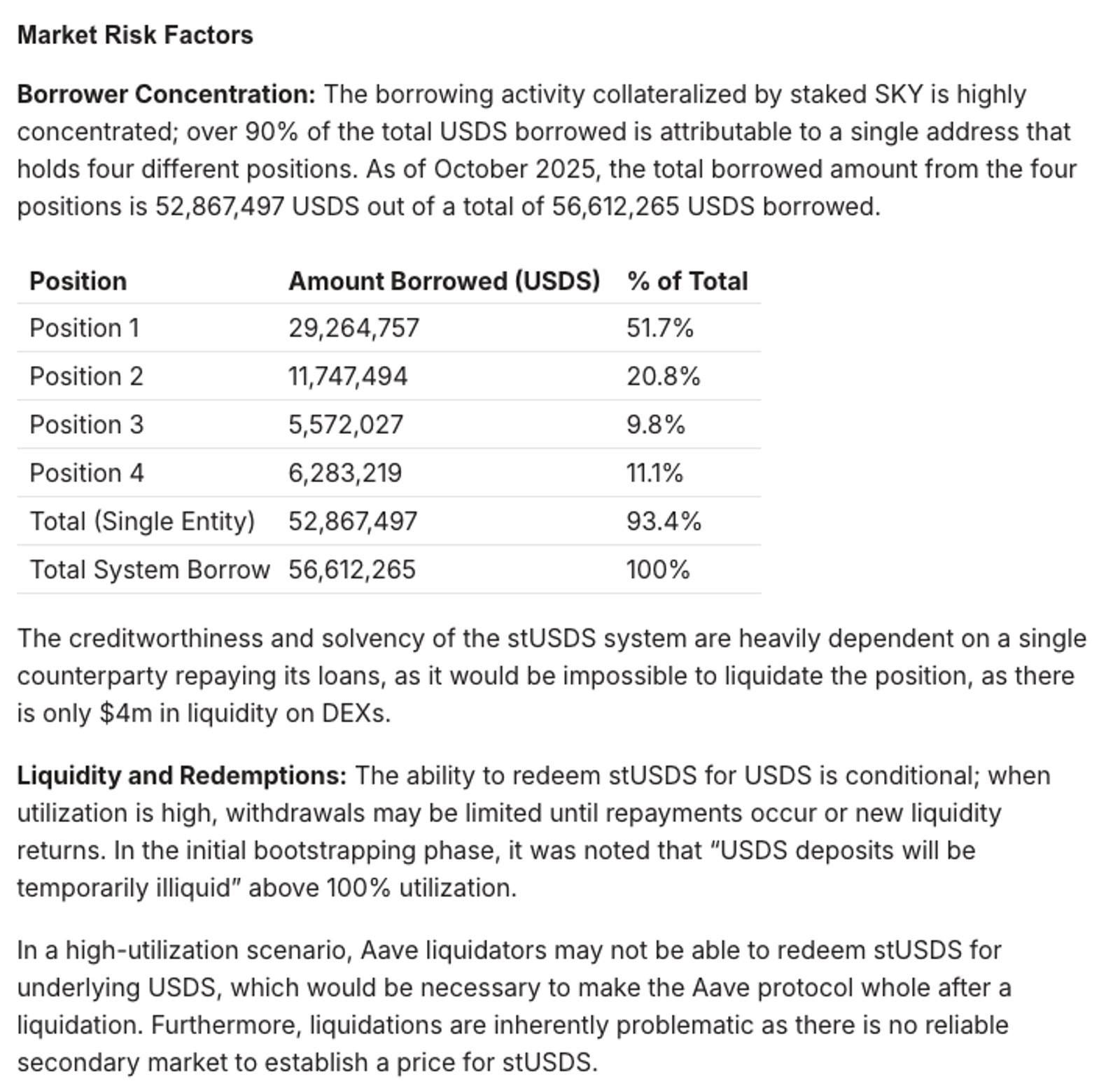
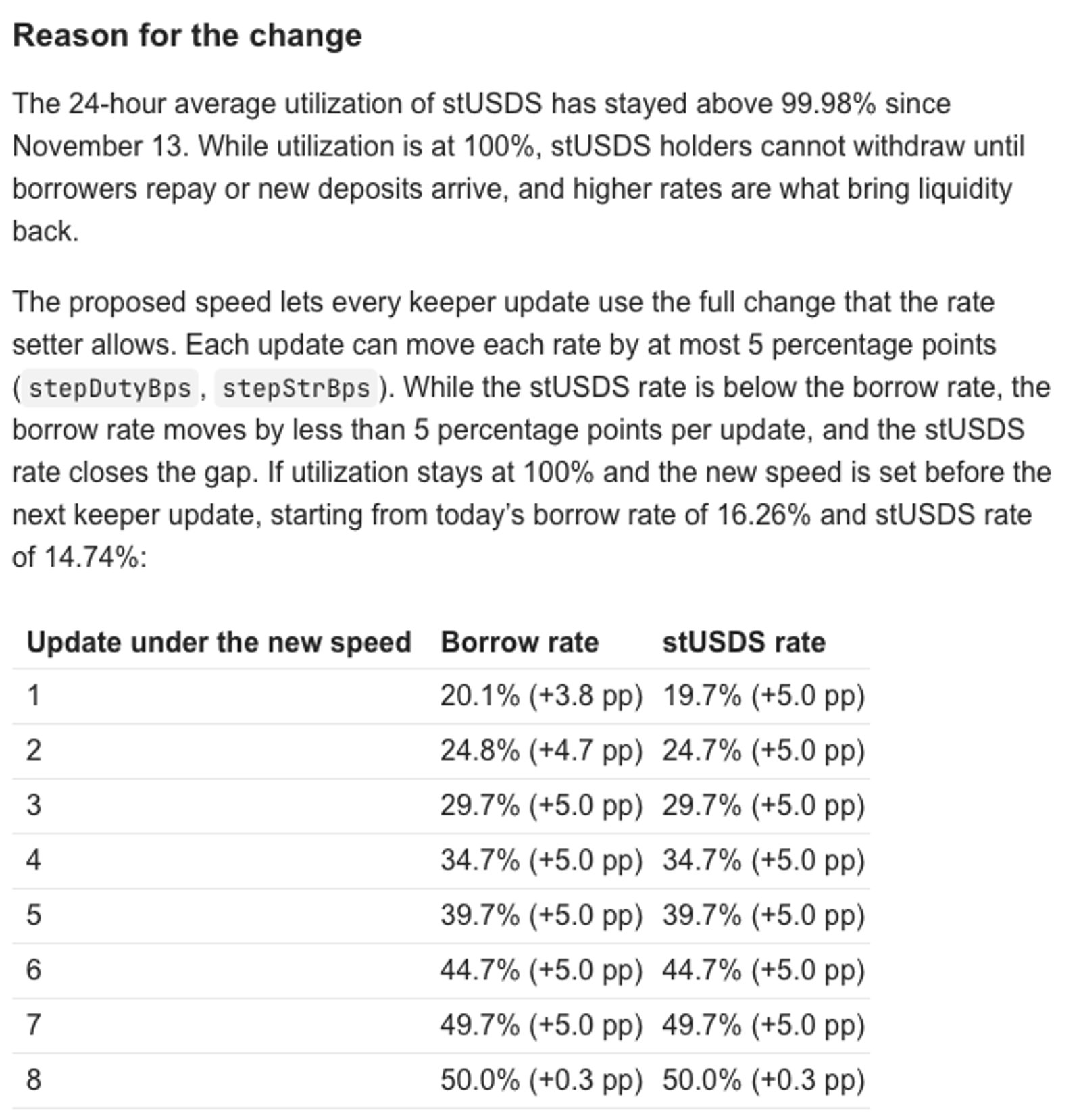
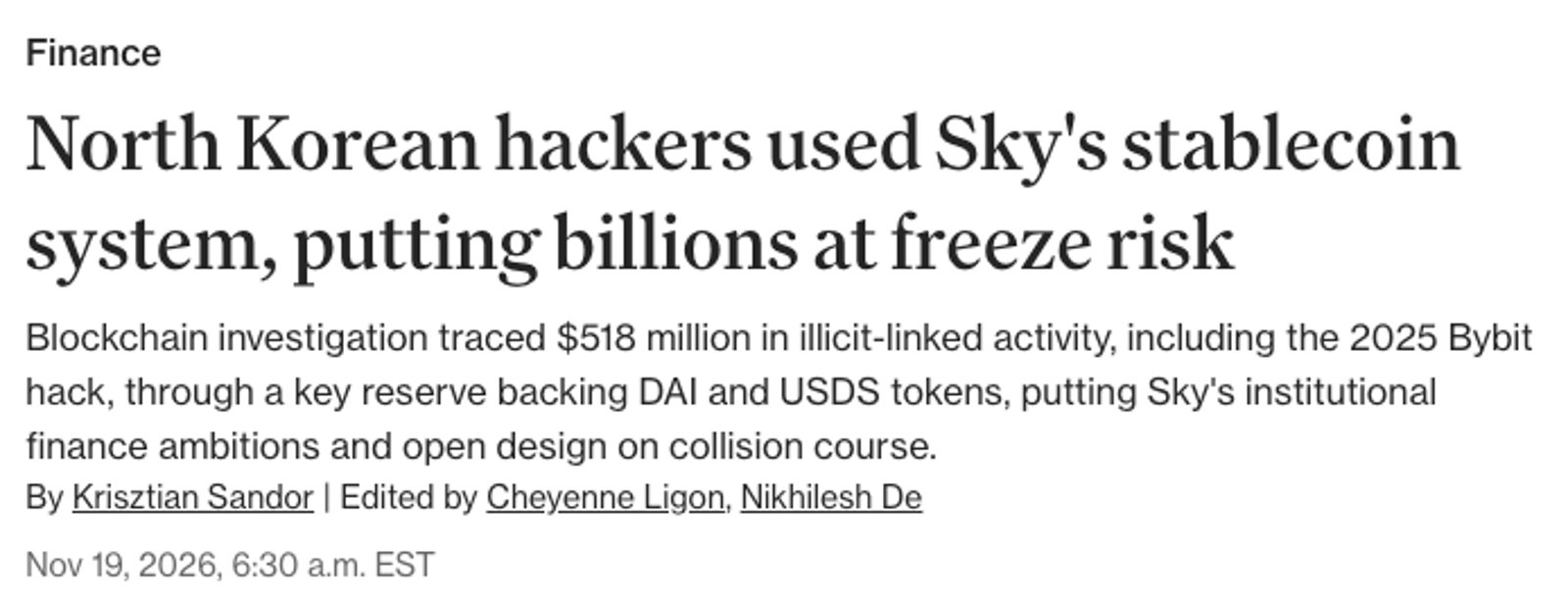
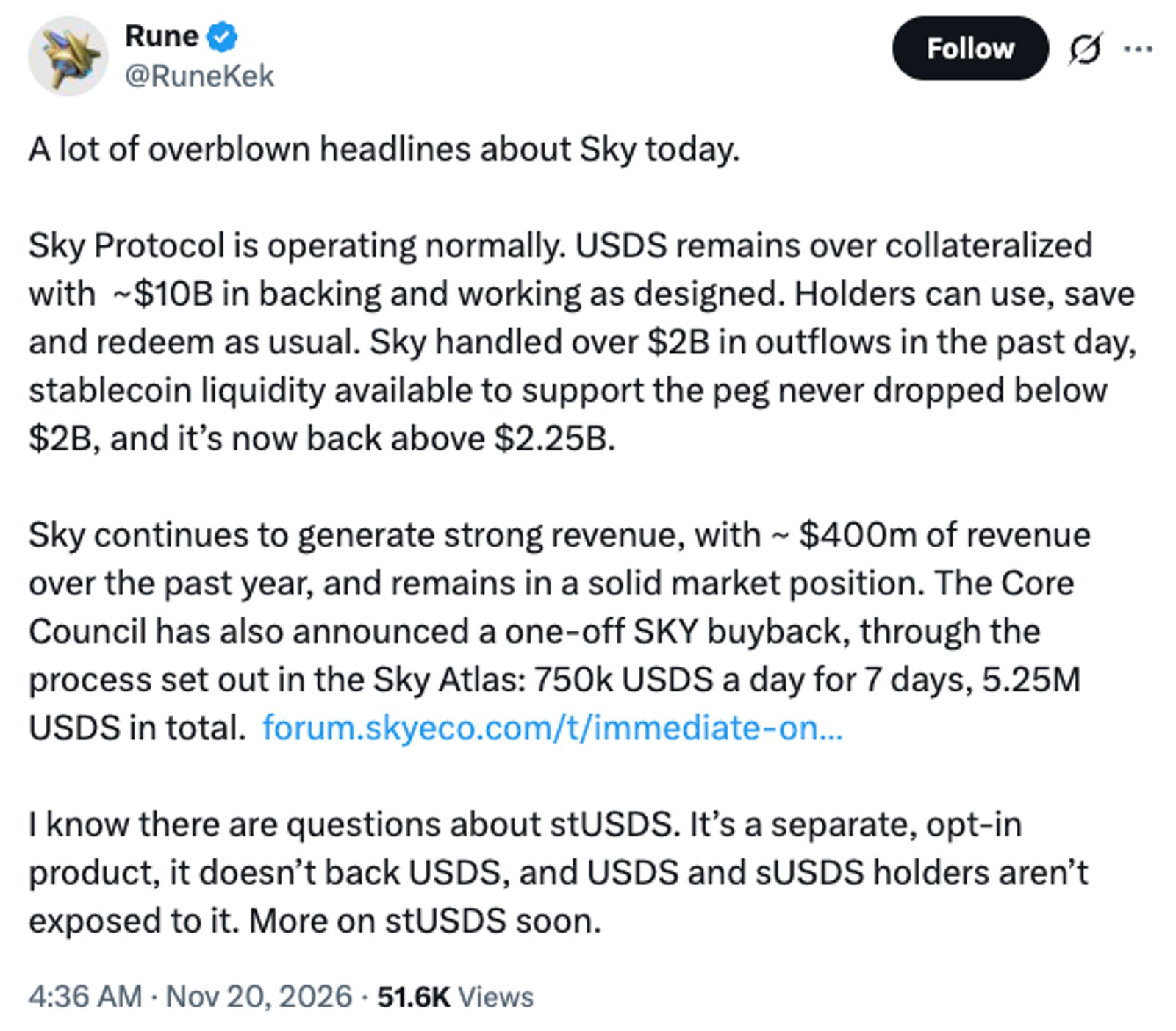
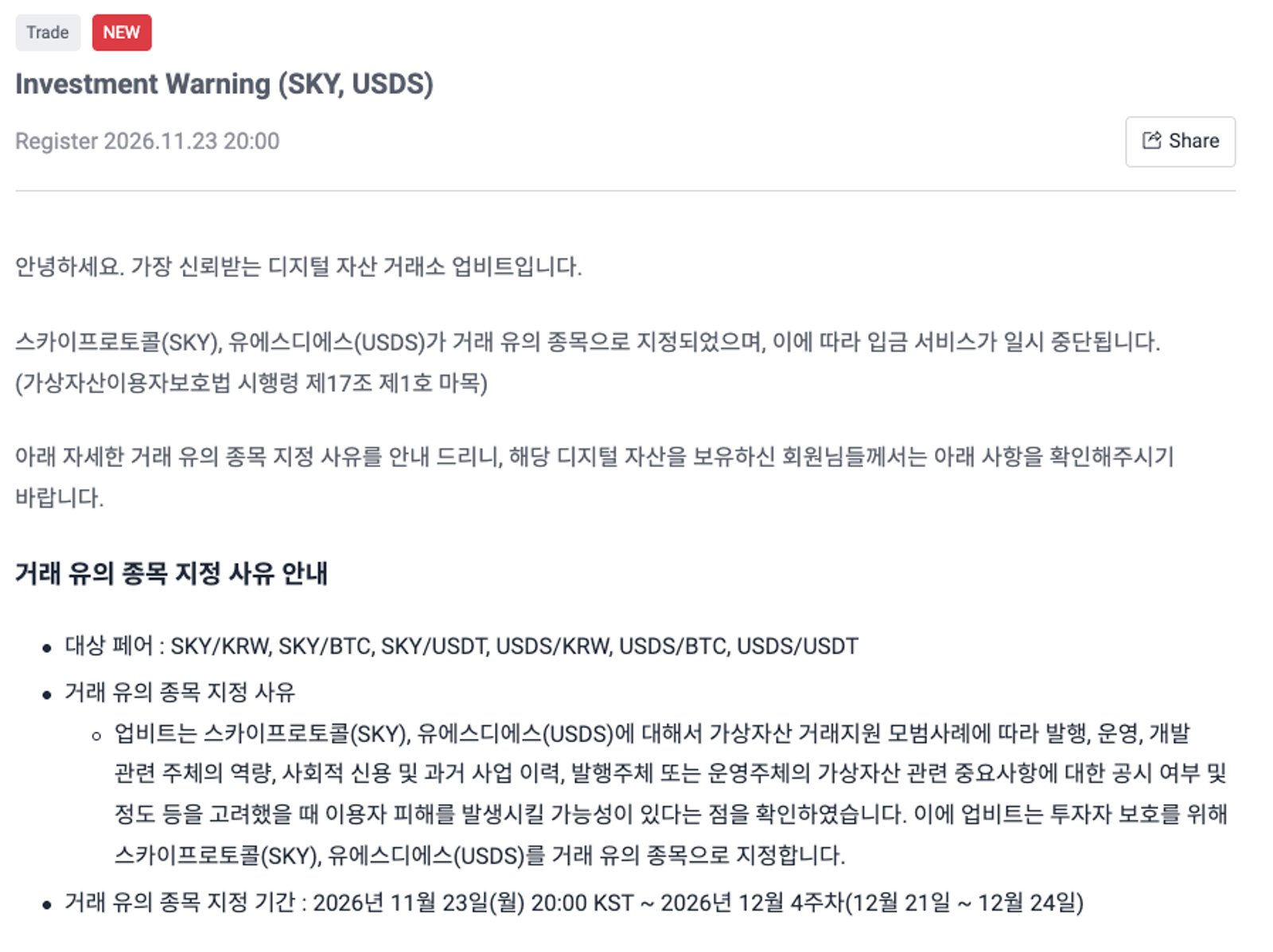
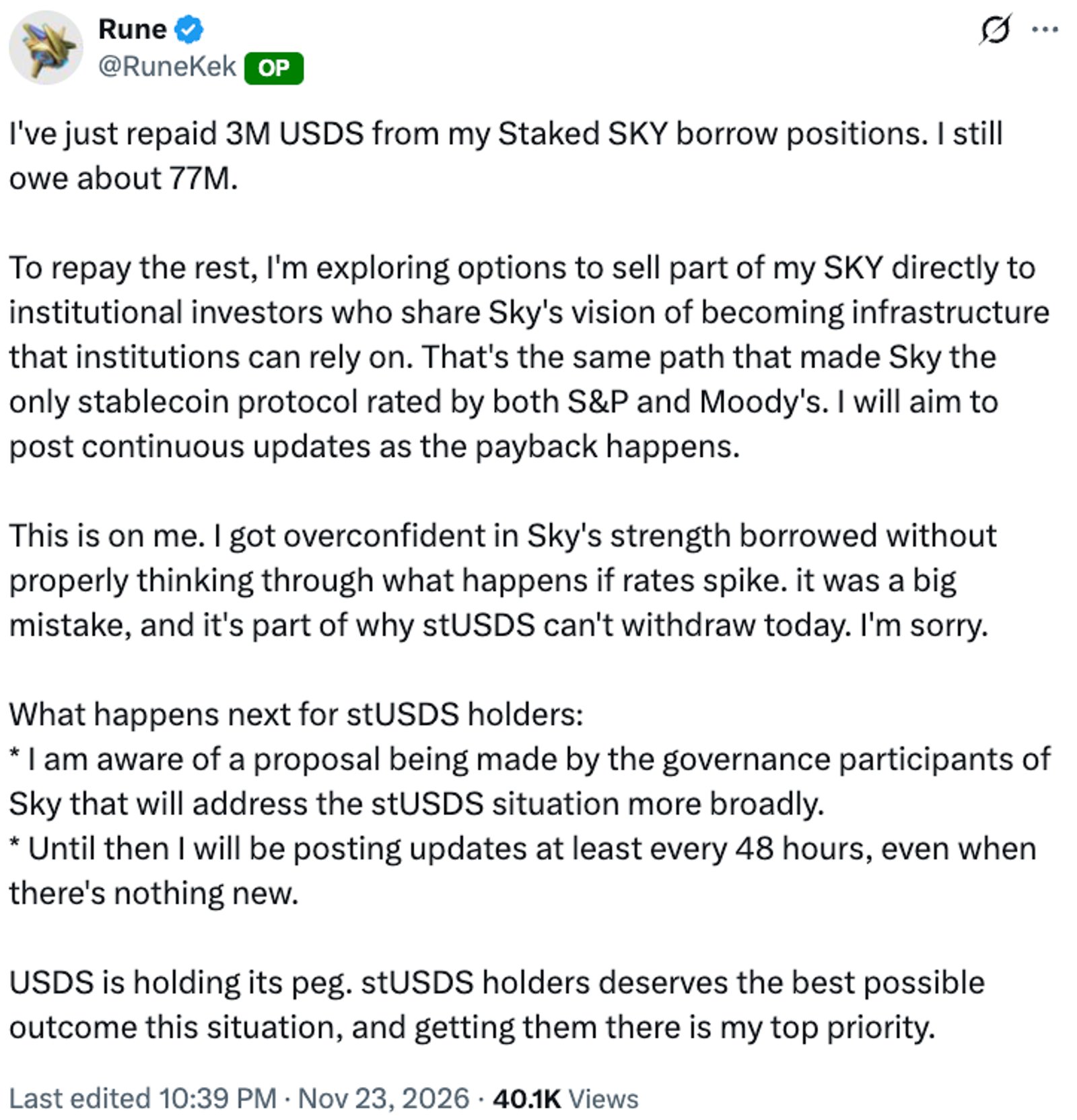
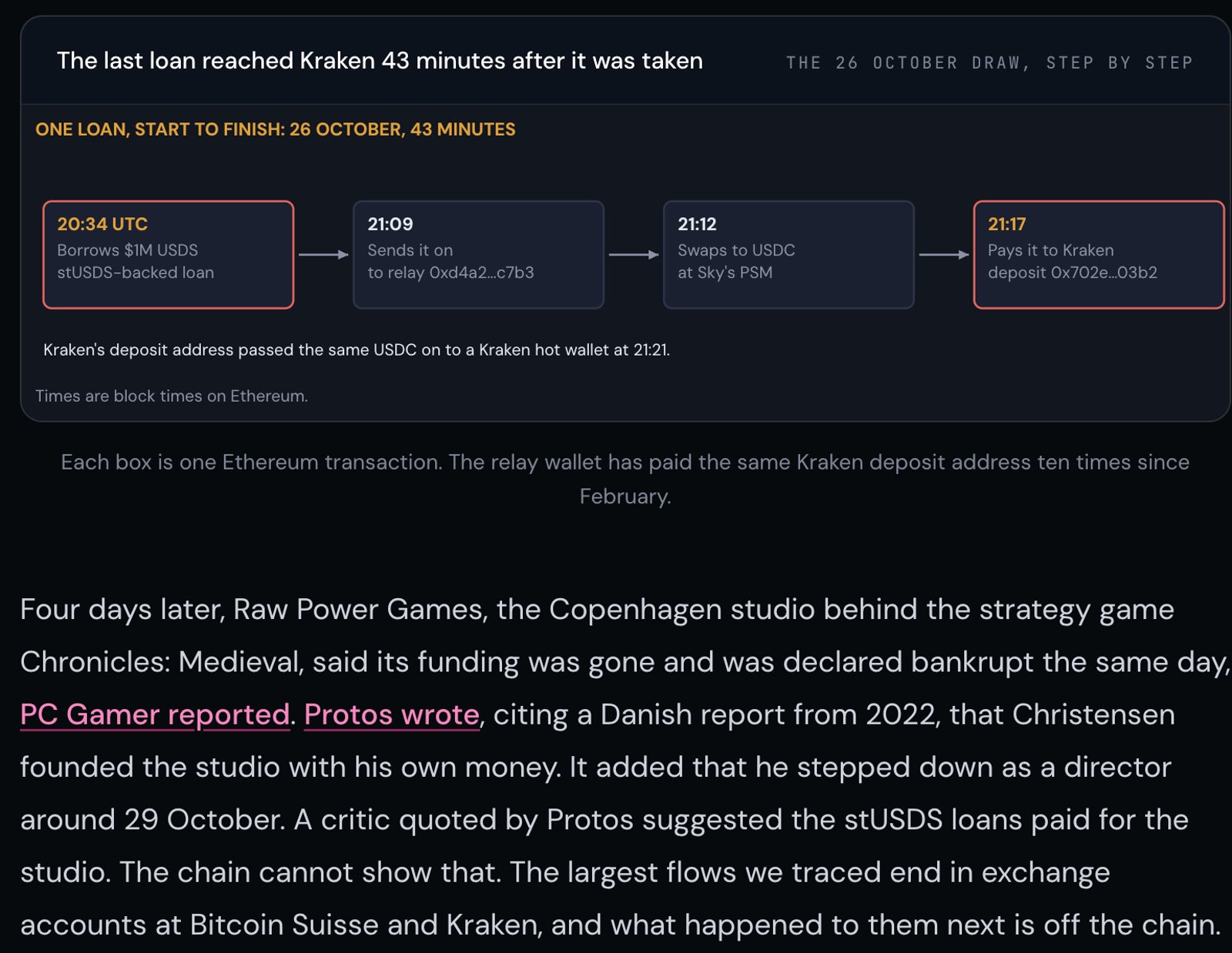
Author: FourPillarsFP Source: X, @FourPillarsFP Translation: 善欧巴, Jinse Finance Core Points Recently, withdrawals of stUSDS have been frozen due to nearly all deposits being loaned out, with nearly half of the loans (around 77 million USDS) concentrated in the hands of founder Rune. This risk was raised a year ago. USDS managed over $2 billion in redemptions in a single day without issue, but early statements from the team only discussed USDS. It wasn’t until exchanges issued trading warnings that depositors heard Rune's apology and repayment plan. The design of stUSDS is to raise interest rates when the treasury funds are insufficient to encourage repayments and new deposits. However, in the case of automatic liquidation being turned off, this mechanism did not work as intended. Over four days, the interest rate rose from 24.74% to 49.74%, but the expected natural repayments did not materialize. Ultimately, it was the actions of the exchanges and public criticism that prompted Rune to take action. As the situation escalated, South Korean exchanges like Upbit listed SKY and USDS as trading warning assets and suspended deposits. This closed the arbitrage channel, causing USDS, which could be exchanged back for $1 at any time, to rise to 7835 won (about $5.83) on Upbit. South Korean exchanges have been actively launching stablecoin trading pairs, so an independent framework is also needed to handle emergency situations with stablecoins. 1. Event Progress Over the past week, Sky has been at the center of multiple controversies. Reports of illegal fund flows, large USDS redemptions, the founder's borrowing, and exchanges pausing deposits have intertwined, making it difficult to see the real issues. This article will first clarify the sequence of events, then examine what questions were raised about each issue, how well they were answered, and finally provide my own views. Before sorting through the events, it’s necessary to briefly explain what stUSDS is. Sky operates the stUSDS treasury. The treasury absorbs USDS from depositors and lends them out while offering depositors stUSDS tokens as proof. Anyone looking to borrow from the treasury must pledge Sky’s governance token SKY as collateral, with the interest paid becoming the income for depositors. Sky also provides sUSDS, a product that pays a savings interest rate on the deposited USDS. While their names are similar, the structures are entirely different. Depositors can only withdraw USDS on demand based on the remaining balance in the treasury. The already loaned USDS must wait for the borrower to repay before it can return, and because these loans have no maturity date, it is uncertain when they can be recovered. Sky manages this issue through interest rates. When there is a low remaining USDS balance, the interest rates are tiered up to a maximum of 50% to encourage borrowers to repay and attract new depositors. If there are loan losses, depositors are designed to bear the initial burden. 1.1 October 2025 Source: Aave Governance Forum Under the above stUSDS structure, if the loans are concentrated among a few borrowers or if borrowers do not repay, depositors' withdrawals may be blocked for an extended period. This risk was first publicly raised a year ago. In October 2025, when Aave considered using stUSDS as collateral, the risk analysis firm LlamaRisk pointed out that about 5287 million USDS of the total loans of approximately 5661 million USDS were concentrated in four positions held by a single address. Besides this concentration, the report also pointed out that withdrawals could be limited, liquidations would require manual governance intervention, and depositors would bear the losses. A month later in November 2025, withdrawals were indeed frozen. Sky co-founder Rune Christensen (hereinafter referred to as Rune) proposed to expedite interest rate adjustments and suggested providing liquidity on Curve, allowing depositors who needed to exit quickly to sell stUSDS even at a discount, while also expanding the stUSDS collateral market on Morpho. The same proposal lowered the collateral requirement from 145% to 120% and set a price cap of $0.025 for SKY used in loan evaluation. Ultimately, that freeze was resolved after the interest rate rose to about 38% and approximately 19.9 million USDS in new deposits flowed in. 1.2 November 2026 The recent series of events is a continuation of the issues raised last year. In chronological order, they are as follows: 1) November 13 Source: Sky Ecosystem Forum According to BA Labs, a risk advisory from Sky, the 24-hour average utilization rate of stUSDS loans has remained above 99.98% since November 13. Almost all deposits have been loaned out, making instant withdrawals impossible. 2) November 19 On the 19th, two independent events surfaced, impacting the Sky ecosystem simultaneously. Source: CoinDesk The first concerns Sky's Peg Stability Module (PSM). Analytical firm Inca Digital stated that 422 wallets associated with illegal activities transferred approximately $518 million through the PSM, with about $101.9 million directly linked to North Korean hackers. Just 10 days after the Bybit hack in 2025, these related wallets exchanged approximately $91.5 million through the PSM. The report also noted that approximately $2.7 billion USDC held by the PSM is stored in a single address, and if Circle freezes that address, the entire reserve could be locked. Following the report's release, over $2 billion USDS were exchanged back to USDC through the PSM in a single day. The second event concerns stUSDS. On the same day, on-chain analytics firm Bitquery released an analysis stating that a multi-signature wallet associated with rune.eth owes approximately $77.1 million USDS, accounting for about 48% of all loans. Concurrently, the company operating the Sky frontend modified user risk disclosures that intensified community suspicions regarding the team's attempt to evade responsibility. 3) November 20 Source: @RuneKek Rune made a statement regarding the PSM. He stated that USDS is over-collateralized and that liquidity in the PSM never fell below $2 billion during the handling of over $2 billion outflow in a single day, while stUSDS is an independent opt-in product, not collateral for USDS. Regarding stUSDS itself, he only mentioned that details would be released later. As the SKY price fell following a series of reports, Sky announced a one-time buyback of 750,000 USDS daily for seven consecutive days, totaling 5.25 million USDS. 4) November 20 to 23 The deposit rate was 24.74% on the 19th, subsequently increased to 29.74%, 34.74%, 39.74%, and 44.74%, reaching 49.74% by the 23rd, close to the upper limit. On the 21st, stUSDS valued at $1.09 was traded at around $0.91 USDS on Curve, at a discount of about 16.5%. 5) November 23 Sky announced that the liquidity of USDC in the PSM has rebounded to $1.77 billion, with USDS backed by collateral worth $9.2 billion. There is still no explanation regarding stUSDS. 6) November 23, 20:00 (KST) Source: Upbit Korean exchanges Upbit, Bithumb, and Coinone listed SKY and USDS as warning assets and suspended deposits. 7) November 23, 21:10 (KST) A wallet suspected to be linked to Rune repaid 3 million USDS. However, the funds were completely withdrawn in just three blocks, about 24 seconds, including the block containing the repayment. Approximately $910,000 flowed within the same block to an arbitrage bot that bought stUSDS at a discount on Curve. 8) November 23, 22:39 (KST) Source: @RuneKek Rune issued a second statement. He stated that he has repaid 3 million USDS from his own position, and there is still about $77 million debt. He is studying selling some SKY directly to institutional investors to repay. He apologized, stating that he did not seriously consider the consequences of skyrocketing interest rates at the time of borrowing, which was a serious mistake, and he is willing to take responsibility for the current withdrawal freeze of stUSDS. He added that a governance proposal to address the overall stUSDS issue is being prepared and will report at least every 48 hours even if there are no new developments. 2. Opposition Views on Each Topic In results, the responsibility debate had an outcome when Rune admitted his mistakes. But in the week prior, opinions were severely divided. Below is a summary of each party's claims on each issue, along with my views. 2.1 PSM and Illegal Funds Two layers of concerns were raised. One is that PSM is being used as a channel to convert funds related to illegal activities into USDC; the other is that, due to its reserves being stored in a single address, once Circle freezes that address, the redemption of both USDS and DAI itself may be threatened. Sky responded that related transactions accounted for less than 0.06% of the cumulative PSM transaction volume, and most were completed through third-party channels rather than Sky's official front end. It also stated that the front end within the Sky ecosystem has implemented screening processes to filter sanctioned wallets. Few would deny that the proportion of problematic transactions is very small. However, a small percentage does not eliminate the risk of a single address having its reserves frozen. The screening also has obvious limitations: as long as screening occurs only on the front end, direct fund inflow calls from contracts cannot be filtered. Sky's explanation did not address these two points, and I think it is reasonable to call for improvements to this structure. 2.2 Are Depositors Safe? As the controversy spread, the position in Rune's collateral of SKY was valued at approximately $185 million at market price, corresponding to about $77 million in debt. Sky's defenders used this set of numbers to argue that depositors' principal was not at risk, as the collateral was more than double the debt. Loans have no maturity date, and the interest rate rises during significant withdrawals, which have also been disclosed in the documents. In their view, it is too early to speak of losses just due to withdrawal delays. Critics question whether the collateral can indeed be sold at that price. The collateralized SKY accounts for about 15% of the total supply, and such a large-scale chip flooding the market would make it difficult to maintain the current price. In fact, this set of positions depends on which price is used. Based on the oracle price cap of $0.025 that Sky uses for loan valuation, the collateral rate is only about 120%; based on the reported market price of about $0.04 on the 23rd, it rises to about 190%. A collateral rate below the threshold does not immediately mean losses, and the defenders have their reasons. But Sky initially set the price ceiling precisely because the market price in a thin liquidity environment is hard to trust at face value. Given this, basing calculations on the current market price is difficult to accept. Rune's second statement somewhat addressed the ongoing debate. He stated that he would sell SKY to institutional investors via over-the-counter trading, rather than selling it on the open market to repay the remaining debt. This approach allows for selling large chips without impacting market prices and is also a reasonable practice for depositors. However, at the same time, this effectively acknowledges the critics' point of view. If collateral worth twice the debt can be sold at a fair price in the market, there would be no need to look for another buyer. 2.3 Suspension of Founder Liquidation This topic elicited the strongest reactions. Some of Rune's positions were not liquidated even after the collateral rate fell below the threshold, raising doubts about whether he received special treatment. Upon learning that the risk disclosure was modified right on the 19th, when the controversy was at its height, further suspicion arose: were the terms changed only after the issues were exposed? But records show that the automatic liquidation of stUSDS was not closed due to this incident. According to a report by LlamaRisk from last year, the automatic liquidation of the stUSDS market has been closed for all loans since 2025. As for the risk disclosure, it did indeed update to version 2.0 on November 19th. The current documents specify that governance can close liquidation, withdrawals may be blocked for an extended period, and stUSDS holders bear losses incurred due to the failure to execute liquidation. However, these risks have always existed as part of the contract structure. This does not mean there are no problems. In my opinion, the bigger issue is not whether automatic liquidation is turned on, but that the person borrowing the most is deeply involved in the decision of this matter. It was Rune who proposed in 2025 to lower the collateralization requirement from 145% to 120%. The person proposing the policy is also its biggest beneficiary. It is also worth noting that the collateralized SKY still retains voting rights. According to on-chain analysis, approximately 53% of the SKY cast in voting on November 19th came from Rune's staked collateralized SKY delegation. The topics on that day involved monthly settlement and limit adjustments for part of the treasury, unrelated to stUSDS liquidation, and there is no evidence to suggest that the trustee acted on Rune's instructions. However, if someday a decision must be made about "whether to liquidate this collateral," the object being liquidated would directly participate in that vote. Governance proposals announced by Rune would also be voted under the same structure. Questions have already been raised on the forum about who and on what criteria liquidation would resume, but there have been no answers so far. 2.4 Is Sky's Explanation Enough? Until the evening of the 23rd, all explanations from Sky and Rune were about the USDS. More than $2 billion in redemptions in a single day were paid out one-to-one without any issues. Since stUSDS loans are not collateralized by USDS, these loan losses will not directly transmit to USDS and sUSDS holders. Even Sky's critics mostly agree that the risks of USDS and sUSDS should be viewed separately from stUSDS. The problem is that the real answer-seekers are the stUSDS depositors. They want to know when and in what order they will get their funds back, but Sky's announcement makes no mention of this. The stUSDS clarification promised by Rune on the 20th has still not emerged three days later. The announcement on the evening of the 23rd merely describes the past week as a period of extreme market pressure and distorted reporting, without a word about stUSDS. Meanwhile, the repurchase of SKY during the same period disclosed specific amounts and timelines. Of course, depositors are bound to ask: why is there no timeline for the recovery of their funds? The first direct response to depositors appeared in Rune's second statement. He admitted responsibility, explained the source of repayment funds, and promised to provide regular updates thereafter. This was in stark contrast to the official announcement just hours earlier. Moreover, this statement coincidentally came after the Korean Exchange issued a trading warning, leaving community members, including myself, with mixed feelings. Where Did the Borrowed Money Go? Source: Bitquery Unrelated to Sky, Rune founded and funded a game company, Raw Power Games. On October 30th, the company announced that funding behind the studio was cut off, subsequently entering bankruptcy proceedings. It was later learned that the last loan of $1 million USDS by Rune was withdrawn on October 26th, just before the announcement. This raised suspicions about the flow of borrowed funds into the company, leading some to speculate that if the company faced difficulties, repaying the principal would not be easy. There were even claims that Rune deliberately set up this structure to quietly reduce his SKY holdings. However, the confirmed facts so far are insufficient to support these suspicions. Bitquery traced part of the loan funds flowing into the deposit addresses of exchanges and brokerages but could not determine who received it afterward or for what purpose it was used. This does not make the demand for disclosing the use of funds unreasonable. The question of position attribution has been resolved once Rune confirmed it belonged to him. However, he did not explain why he borrowed the money or where it was spent in his statement. Furthermore, based solely on the outcome, Rune will first obtain cash by staking SKY rather than selling it on the market, and later repay the debt through OTC sales of these SKY. Regardless of initial intentions, it is hard for other SKY holders and stUSDS depositors to have positive feelings about this. Therefore, I believe that transparent disclosure of the purpose of the loan and sale conditions is the minimum requirement for rebuilding trust. For someone deeply involved in the protocol and who borrowed the largest loan, the purpose of the loan and the repayment plan cannot simply be considered a private matter. Enlightenment No clearing in the lending market has failed to operate normally stUSDS was designed to restore liquidity through interest rates. Its assumption is that when the treasury lacks funds, interest rates rise; after interest rates rise, borrowers will be willing to repay, and new depositors will be willing to deposit. In a typical lending agreement, this mechanism is effective because there is a clearing. If accumulated interest pushes debt and causes the collateral rate to fall below a threshold, the borrower will lose the collateral. When interest rates rise, the borrower has no choice but to repay promptly or add collateral. In stUSDS, this chain is broken. Interest is not paid in cash but simply added to the debt; even if the continuously growing debt pushes the collateral rate below a threshold, it will not trigger automatic liquidation. In this situation, no matter how high the interest rate, the borrower does not feel pressure, and only the on-paper debt continues to grow. What interests me most in Rune's statement is his acknowledgment that he did not seriously consider the implications of rising interest rates when borrowing. The interest rate model assumes that borrowers see interest rates as a cost and act accordingly. However, the person who borrowed half of the loans said he did not seriously think about what rising interest rates meant. In the loans pushing the stUSDS utilization rate to 100%, about half belong to Rune, which is also part of the problem. From his perspective, the rising interest rates do not seem like a sudden external shock but rather the result of his borrowing. When a few borrowers dominate the loans, interest rates struggle to act as a tool to change borrower behavior. So, what exactly drove Rune? During the four days when the interest rate rose from 24.74% to 49.74%, no repayments occurred. Repayments and apologies were made only after the exchange listed SKY on a trading warning and public criticism surged. I think this case illustrates that a lending market lacking mandatory clearing can ultimately only rely on external pressure. The founder borrowed heavily against his own token, and after the issue was exposed, turned to off-market sales. This is not the first time. In August 2023, Curve founder Michael Egorov borrowed around $100 million by collateralizing CRV. After Curve was attacked, the price of CRV plummeted, and the risk of liquidation rose. He sold 72 million CRV to 15 buyers off-market at $0.40 each, raising $28.8 million. This price was about 30% lower than the then market price of $0.58, accompanied by a lock-up period of three to six months. This precedent teaches us two things. The first is the cost of off-market sales. Assuming Rune must accept a similar discount relative to the market price of $0.04 on the 23rd, he would need approximately 2.7 billion SKY to repay all remaining debts, which is over three-quarters of the collateral and about 11% of the total supply. This also means that such a scale of voting rights would shift into the hands of institutional investors. The second is that off-market sales do not resolve the problem. Even after repaying part of his debt, Egorov still held a position. By June 2024, around $140 million of his position was ultimately liquidated, leaving approximately $10 million in bad debt. Rune also indicated he only sold a portion of his holdings. Thus, how to manage the remaining positions after the sale is equally important as the sale itself. However, there is a decisive difference between the two cases: Egorov could not arbitrarily close the liquidation mechanism in the market where he borrowed. In 2023, he borrowed from external protocols like Aave; by June 2024, his borrowing also included Curve's own lending market, LlamaLend, where liquidation was invariably executed. The approximately $10 million in bad debt also occurred in Curve's CRV lending pool, which he personally repaid within days. In contrast, Rune borrowed from his own protocol’s products, under his own proposed collateral terms, with liquidation closed. In the Curve case, the constraints on the founder exist outside the protocol; stUSDS lacks such constraints, placing the burden entirely on depositors. I believe this is the reason some consider this incident worse than Curve's. 3.3 The Implications of Korean Exchanges Suspending USDS Deposits Source: Upbit After the trading warning, another issue arose on Korean exchanges. The USDS, which should be pegged to $1, surged in the Upbit KRW market. USDS usually trades in the 1400 KRW range; after deposits were suspended on the night of the 23rd, it began to rise, hitting a high of 7835 KRW during trading on the 24th. As of the time of writing, it remains at 5570 KRW, nearly four times its dollar value. The reason is the suspension of deposits associated with Upbit's warning measures. Unless there are specific liquidity providers, the stablecoin's price mainly relies on arbitrage to maintain its peg. Once deposits are blocked, arbitrage cannot occur, creating a market where supply within the exchange leads to a human versus human game. The problem is that the supply of stablecoins held by the exchange is limited. Upbit has been rolling out a series of stablecoins like RLUSD and USDG this year, significantly expanding related trading pairs. But as I demonstrated in a previous article, around 98% of trading still concentrates on USDT. USDS is also a thinly traded pair on Upbit, with an average daily volume of only a few tens of thousands of dollars. What happens when deposits are blocked in such a market is not hard to predict. This scenario could very well repeat. Stablecoins are prone to issues related to reserves, issuers, regulation, etc., which may lead to trading warnings. The more stablecoins that go live, the more frequently such incidents occur. I believe the most reasonable course of action is to take necessary measures after accurately assessing the situation. In this case, USDS could have been redeemed instantly via PSM, with no reason to trade at a price higher than the global price. Therefore, setting a cap on the premium above the global price is an actionable measure. If a stablecoin is stolen due to a hacker attack, or if it rapidly unpegs for some reason, the situation is different: stolen tokens or depreciating tokens may flood into the exchange, passing the burden onto Korean investors. At this time, the current practice of blocking deposits can serve to protect investors. Of course, exchanges find it difficult to make accurate judgments early in an event. The conservative option of blocking deposits before forming a judgment is also hard to criticize. In this case, exchanges could at least consider: for any suspension of stablecoin deposits, a default cap on its premium relative to global prices should be established. If the asset's value has indeed been damaged, the price will drop regardless; if it has not been damaged, the cap can help avoid some of the harm caused by a spike followed by a drop. Originally intended as a risk warning for trades, it has now been interpreted as a signal for price surges, which clearly contradicts the original intention of the system. As South Korean exchanges continue to increase stablecoin trading pairs, they need to prepare matching countermeasures. Author of this article: @c4lvin
Details compiled from public sources. Always do your own research.