
AI Can Do Mathematics: Why Do Humans Still Need to Do Math?
As AI begins to prove mathematical conjectures on its own, the value of human mathematicians shifts from solving problems to understanding and explaining, making validation and transmission the new scarce skills.
Machine translated. Refer to the original for accuracy.
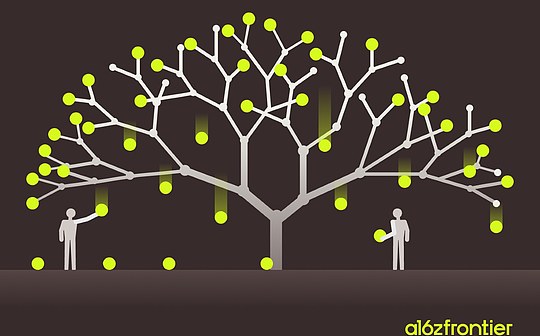
Author: Robert Hackett Source: a16z Frontier Translation: Shen Ouba, Golden Finance If AI solved a problem you've spent years wrestling with, would you feel like celebrating? Since reading mathematician Kirwin Hampshire's piece "The Dark Night of Mathematics" in July, I've been pondering this question. Hampshire originally had a vision of a life he was training for. When AI models began to find counterexamples to long-standing unresolved conjectures, he started doubting whether he would still have the opportunity to make his own discoveries. "I am going through a profound spiritual crisis," he wrote, "I have been screaming inside these days. It feels like living in a nightmare." And this was before OpenAI released hundreds of mathematical manuscripts in October. Following that, members of the mathematical community have been digesting what this means, feeling the shock, excitement, and confusion of doing mathematical research in an era of accelerating AI advancement. Among the results released by OpenAI was a proof solving a problem that Cornell University mathematician Justin Moore had pondered for 19 years. In 2010, Moore bought a bottle of XO cognac on the outskirts of Marseille, planning to share it with others researching the problem when the answer was revealed. He told his colleague Steven Strogatz that he would open the bottle once he and other colleagues understood the proof and unanimously acknowledged its validity. But the answer arrived along with several hundred other results, "sitting there like a severed rhino head," Strogatz described it. Moore anticipated that the toast would be "more like a wake than a celebration." Researchers at a16z Frontier know well what it feels like to work on problems that could be solved by models at any time. They extensively use AI in fields such as cryptography, theoretical computer science, economics, and mathematics to tackle stubborn old problems, validate ideas, and advance proofs. We gathered them to exchange insights, and one question repeatedly arose: What happens when the speed of proof arrival outpaces our understanding? Our senior research advisor, Dan Boneh, head of the Applied Cryptography Group at Stanford University, proposed a thought experiment: Suppose a model proves P≠NP, which is one of the "Millennium Prize Problems," regarded as one of the most important propositions in all of computer science. (If true, it means there exists a class of problems for which the given answers can be efficiently verified, but there is no algorithm that can efficiently solve every instance.) Now imagine this proof is a billion pages long. Will there truly be anyone who can fully comprehend it? How long would it take to understand, clarify, and then teach others, assuming it is indeed possible? Two days after our conversation aired, mathematician Levent Alpöge announced that he believes he has proven the Riemann Hypothesis using AI. This conjecture, proposed in 1859, regarding the distribution of prime numbers also falls under the Millennium Prize Problems, with hundreds of results in number theory dependent on its validity. In his statement, Alpöge said, "It is only natural to feel like this is an endpoint. For me, it is the loss of a major guiding light; but what I have seen in the process of advancing has amazed me so much that I believe this marks the dawn of something greater for all of science." The question of verification, or what is required to check others' work, is something we spend a lot of time considering. Alpöge published his proof draft using Lean, a programming language that allows computers to check each step of logic incrementally. But even if you can check Boneh's billion-page proof line by line, you still have to make it comprehensible. He stated that this task would require "a massive army of mathematicians and computer scientists," taking an extremely long time. (At least, the job prospects are good.) Ittai Abraham, an a16z Frontier researcher and computer scientist (and also the author of the Decentralized Thoughts blog), believes there are two frontiers in mathematics. The first marks the boundaries of discovery, while the second signifies the extent of human understanding of what has been discovered. Abraham mentioned a 1994 article by mathematician William Thurston, in which he argued that mathematics is a social enterprise whose progress cannot be measured solely by the number of theorems. "What we produce is human understanding," Thurston wrote. In his view, explaining ideas, questioning arguments, and helping others understand are at the core of the mathematical endeavor. This was precisely the premise under which Moore opened that bottle of Cognac: understanding the proof together with peers. A week after OpenAI published its results, Sang-hyun Kim and Yash Lodha released a simplified version of the same proof. Their paper did not claim any new findings but allowed other mathematicians to see more clearly why this result holds and where its reasoning can be applied. Our research colleague at a16z Frontier, Harvard Business School professor, and avid mathematics (and puzzles!) enthusiast Scott Duke Kominers understands the joy that Moore anticipated by keeping that bottle of Cognac. Kominers said that AI helped him solve a problem he had been revisiting since around 2007. He wrote to a few mathematicians he had admired but never met to share his findings, and they were thrilled to respond. According to Scott, reaching the finish line with the help of tools did not dampen anyone's excitement. He envisions that researchers will use AI to construct an entire mathematical edifice. (He wrote about this trend earlier last year.) He believes that as tools become stronger, our ambitions should grow alongside them. Mathematician Frank Vallentin, in the conclusion of a recent paper, described the joy brought by this collaboration in an "AI Usage Note." He had cherished a photocopy of a paper for years that concerned a problem he had been fascinated with since his student days. Imagine a periodic arrangement composed of points, called a lattice, with spheres of the same radius placed at each point. Do these spheres cover all of space, or are there gaps left somewhere? Given the lattice and radius, Vallentin wanted to know: as the dimension increases, how difficult is it for a computer to answer this question? On a Sunday in September, an AI model found a proof for another lattice-related problem. Vallentin thought, could the same proof be applied to the old problem he had been pondering? After back-and-forth deduction, he found that it could. The resulting proof precisely characterizes just how difficult this covering problem is. Vallentin simplified the proof, found it beautiful, and took responsibility for its correctness, even though he was uncertain how to attribute its credit. But he wrote that he was already quite happy to serve as "the messenger of this proof." So, what does this mean for someone aspiring to be a mathematician? What is left for them to do? Our researchers believe there is still much work ahead: absorbing, refining, and expanding new results, explaining them to others, and advancing human understanding. Boneh had a clever metaphor: he imagines AI as a giant tree, continuously dropping ripe fruits waiting for us to admire and taste. For someone hoping to make their own discoveries, this may sound like mere consolation. But these tools also offer opportunities to attempt previously unattainable work, like what Kominers envisions, establishing entirely new mathematical frameworks. Or as Alpöge wrote: "I hope this proof can give a glimpse of the miracles ahead, allowing us to see the joy and wonder we are about to discover in the simplest of things." Those who are currently learning and working will also determine which problems are worth this effort. a16z Frontier research partner and Georgetown University computer science associate professor Justin Thaler pointed out that no matter how powerful machines become, people still desire to make judgments themselves. To make good decisions, one must understand mathematics and its consequences, especially when building systems that others will rely upon. In the field of cryptography, judgments about which problems will remain difficult in the future are already influencing planning to defend the internet against quantum computers. Mathematicians have long aimed at difficult targets. In the future, there will be more, faster-moving targets that are also further away. Let us welcome better accuracy.
Read original · 金色财经资讯Details compiled from public sources. Always do your own research.