
No More Pretending: Is the U.S. Going to Invest in NVIDIA?
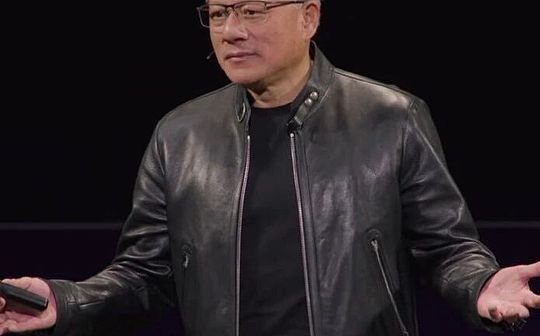
Trump expresses an open attitude towards U.S. government investing in NVIDIA; the market begins to bet on nationalization of computing power, potentially accelerating the dual-track global AI computing landscape.
Machine translated. Refer to the original for accuracy.
On November 24 local time, Trump publicly stated during a media interview that he is open to the idea of the U.S. government investing in NVIDIA. He has considered the proposal, which has not yet been formally made, but believes "it may not be too late now." He explained the underlying logic of intervening in the Jensen Huang controversy and promoting his reinstatement — NVIDIA's direction determines the U.S. AI advantage, and a wrong choice of leadership by the board would be a disaster for the U.S. This statement hints at his openness to the idea, but he also clarified that it is still far from the formal proposal stage. As a result, market speculation regarding the U.S. incorporating NVIDIA into the national computing power control system has rapidly intensified. Although this is still in the speculation phase, it is worth considering and discussing. The U.S. is transforming computing power into national infrastructure. This viewpoint is not baseless. Previous demands for TSMC to set up factories in the U.S., Intel receiving subsidies in exchange for equity, and continued export controls on high-end chips are part of a coherent "computing power control system" arrangement from the U.S. The U.S. goal is to upgrade AI computing power from a globalized business to a national strategic infrastructure, gaining control over the entire chain of chip design, manufacturing, supply distribution, and scheduling of large model computing power. In the past, U.S. regulations were external barriers. Companies could continuously negotiate between commercial interests and national security, seeking compromise solutions, launching bespoke chips, and allocating capacity among different clients. However, once equity is bound, regulators become stakeholders, shifting constraints from backend approvals to significant company matters. There is a key difference here that makes it difficult for NVIDIA to replicate Intel's path: When Intel accepted government holdings, it was contingent upon equity replacement for subsidies from the CHIP Act; the company itself was under pressure, urgently needing funding for domestic production capacity. In contrast, NVIDIA has abundant cash flow and does not rely on government funding. Mainstream market speculation suggests that if there is an investment, it is unlikely to be significant controlling equity. More likely, it will involve minority stakes combined with special rights, essentially a passive financial investment paired with golden share clauses, reserving veto power on issues related to national security, thus attempting to avoid strong backlash from local free market factions and Wall Street. NVIDIA: A contract with highly asymmetric pros and cons. For NVIDIA itself, this represents a contract with highly asymmetric pros and cons. In the short term, government endorsement may reduce the uncertainty of geopolitical policies, making it easier to obtain priority capacity coordination from local defense, government, and cloud vendors, receiving preferential treatment in the capacity allocation from TSMC's U.S. factory, and the stability of management expectations may also be reinforced. However, there are costs, and they could be large. NVIDIA's moat built over the past few decades is rooted in its neutral identity as a global supplier. The CUDA ecosystem, global long-term contracts, and cross-regional customer trust are all based on one foundation: orders are prioritized based on commercial rules and capacity is allocated to the highest bidder. Once the government becomes a shareholder, overseas customers, even U.S. allies, will begin to proactively diversify their computing power supply. At that point, de-NVIDIAnization will not be an emotional choice but a sovereign-level risk hedge. Meanwhile, the market valuation given to NVIDIA is based on its global expansion growth valuation. Once it is assigned strategic obligations, capacity distribution, technological decentralization, and overseas orders must all fall within the framework of national security, reducing profit margins and overseas expansion space to favor strategic goals, leading to a reevaluation of its valuation center, shifting from a purely tech growth stock to a strategic asset with public attributes. Moreover, NVIDIA's decision-making chain may also lengthen, compliance costs will rise, and once the neutrality of the CUDA ecosystem is questioned, years of accumulated software moats will face slow but persistent erosion. Thus, this U.S. strategy inherently carries an unavoidable paradox: To maintain global computing power hegemony, NVIDIA must remain open, neutral, and globalized; To control it deeply, it will inevitably destroy its core trust base as a global computing power supplier. The dual-track nature of computing power will accelerate solidification. From another perspective, the truly far-reaching ripples will fall on the global computing power landscape and our own path to computing power autonomy. If this arrangement is implemented, the rigidity of controls against China will further increase, while policy flexibility and grey areas will be compressed. Parameters, quotas for bespoke chips, remote computing power leasing, and third-party resale channels will all enter a more systematic review process. Domestic paths reliant on overseas procurement and overseas clusters to fill computing power gaps will face increased uncertainty. However, it will not create a watertight blockade. Within the U.S., there are already divergences in the demands of capital, enterprises, and allies. Regulation will always be a dynamic tug-of-war game, not a unidirectional tightening iron curtain. The more core change is the acceleration and solidification of the global dual-track trend in computing power. One track is the computing power stack dominated by the U.S., which binds together NVIDIA, CUDA, advanced domestic processes, and allied computing clusters; The other track is China's independent computing power stack, which forms a closed loop from chips, high-speed interconnects, storage, firmware to cluster scheduling and development frameworks. For the domestic computing power supply chain, this is not a short-term opportunity to catch up quickly, but a turning point in customer decision-making logic. In the past, the procurement side prioritized performance, cost-effectiveness, and migration costs; as the predictability of external supply disappears, the weight of controllability will continue to rise. Ascend, Haiguang, and the supporting optical modules, servers, packaging testing, and software toolchains will receive more budget for various scenarios and greater opportunities for large-scale cluster deployment. However, we must also be clear that ecological replacement is a long-term project. The operators, tools, and developer habits that CUDA has accumulated over more than a decade cannot be quickly leveled out solely by tilting orders. For domestic industries and investors, the most prudent assumption is not to bet on regulatory easing but to accept that the dual-trackization of computing power is a long-term reality. Jensen Huang's return to office is just a node. Trump's statement may set a new premise for the entire AI computing cycle.
Read original · 金色财经资讯Details compiled from public sources. Always do your own research.