
Did Google Suddenly Start a Chemistry Class? A Guide to the Four Models of Gemini 4
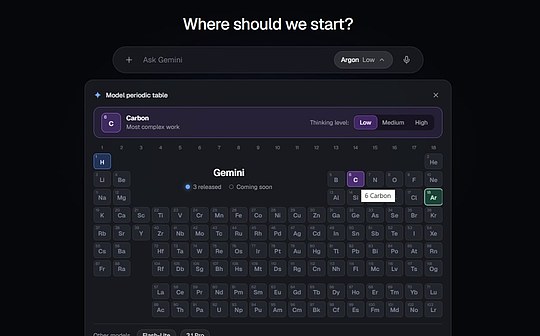
Google's Gemini 4 changes its model naming to the periodic table of elements, with Hydrogen, Neon, Carbon, and Argon corresponding to fast performance, balance, hardcore logic, and transition. This article explains the positioning and matching of the four.
Machine translated. Refer to the original for accuracy.
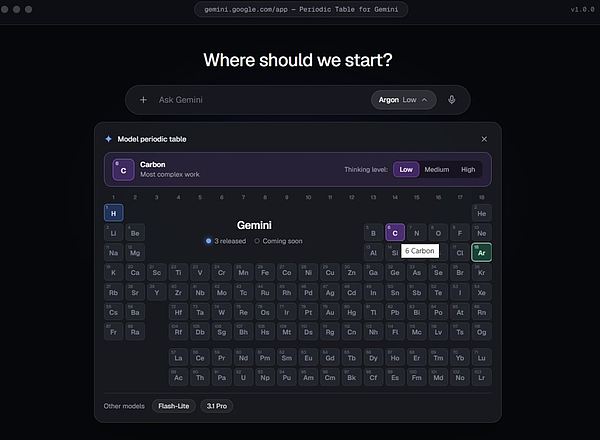
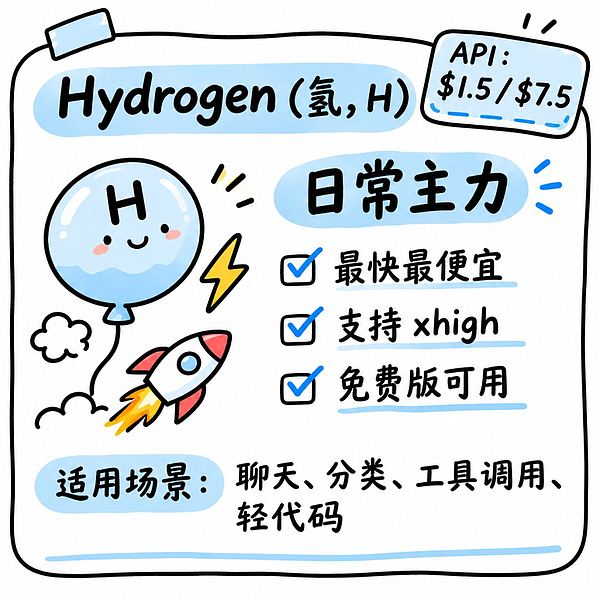
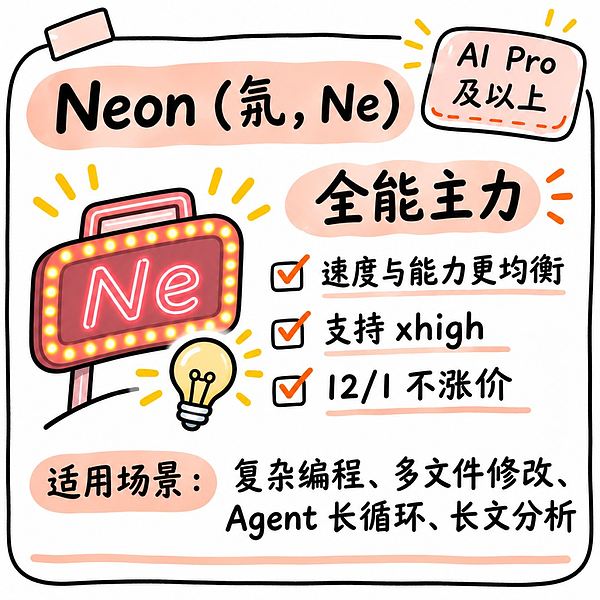
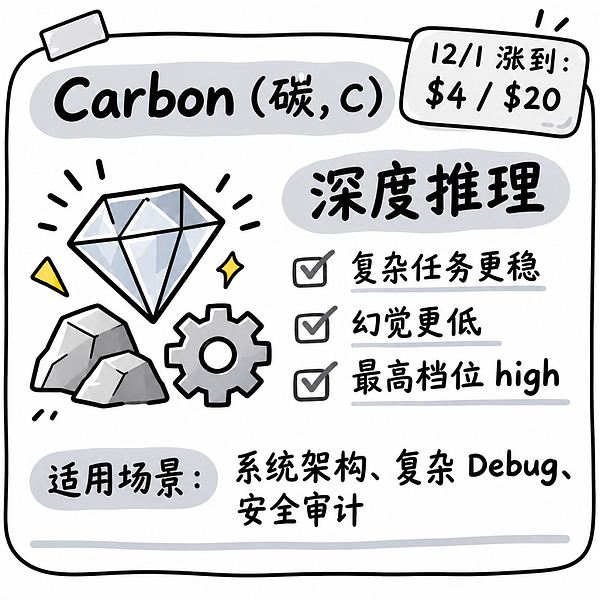
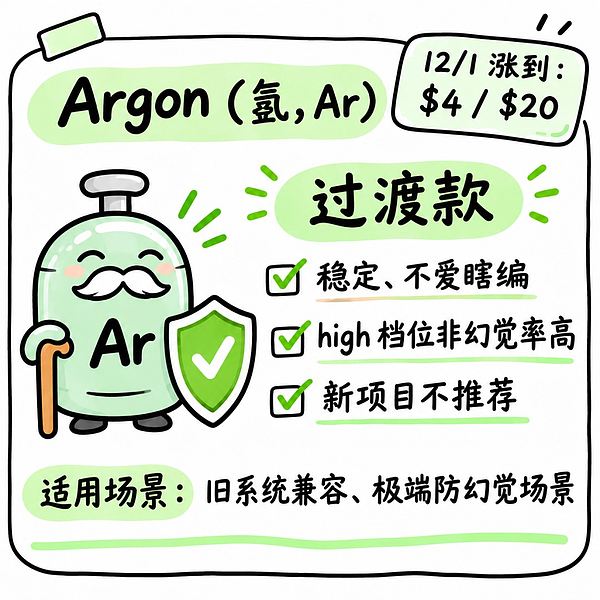
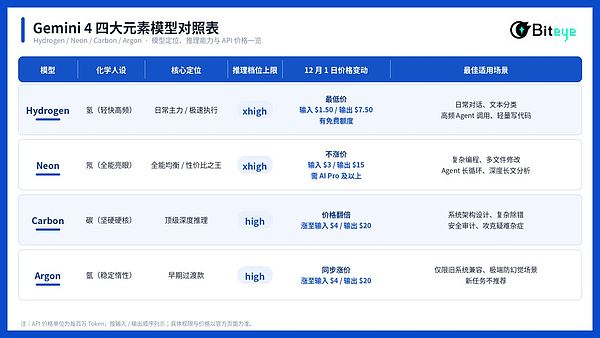
This article is reprinted from the "Biteye" community, author: Biteye core contributor Denise, editor: Denise. Just as everyone had memorized the naming system for large models: Pro, Flash, Ultra, Mini, Nano, Google suddenly pulled out the periodic table of elements in the era of Gemini 4. When I opened the backend, I saw: Hydrogen, Neon, Carbon, Argon. Goodness, do we need to review middle school chemistry first to use this AI? Image source: A Chrome plugin made by developers that turns the Gemini webpage model switch menu into an interactive periodic table. However, don't be too anxious. This time Google has changed the naming method for the models, and behind this is actually a product division logic: the four elements correspond to four different positions aimed at different performance needs and usage scenarios. In today's "chemistry class," we won't discuss complex underlying architectures, just plain language that will help you completely distinguish these four elements. 01 First, let's understand the temperaments of these four "elements" In the periodic table, each element has its own atomic number and chemical properties; in the Gemini 4 family, these four models also play irreplaceable roles. You can remember them in the order of "daily quick runs → versatile balance → top hardcore → early transition." 1. Hydrogen (H): the lightest, fastest, and ubiquitous "daily mainstay" In chemistry, hydrogen is the number one element with the lightest mass, the highest abundance in the universe, and serves as fuel for star combustion. In large models, Hydrogen is the fastest responding, lowest-cost, and most widely applicable "national-level" model. Core features: ultra-fast response, extremely high cost performance. Free version users can access it directly, and the API price is the lowest across the board ($1.50 per million tokens input / $7.50 per million tokens output), also supporting xhigh deep reasoning mode. Suitable for: everyday chat Q&A, long text information extraction and categorization, high-frequency Agent tool calling, and lightweight code writing. Remember it in one sentence: unless it's an extremely complex century-old problem, for casual use that requires high-frequency operations, letting "Hydrogen" handle it is right; it's light and cost-effective. 2. Neon (Ne): the "versatile neon" that debuted in November, the king of cost performance Neon is a rare gas that emits bright and stable red-orange light when electrified, being the core of city neon lights. Neon, which was just released in November 2026, is currently the brightest star in the Google camp. It accurately positions itself between Hydrogen and Carbon, becoming a truly versatile workhorse. Core features: the most balanced overall strength. Its reasoning depth far exceeds that of Hydrogen, and its operating speed is much faster than Carbon—under default settings, it runs at less than half the time of Carbon while achieving almost equivalent intelligence scores, also supporting xhigh mode. The biggest killer feature: requires Google AI Pro subscription or higher, but the most attractive part is that, in the December 1 price adjustment wave, Neon clearly won't raise its price. Suitable for: complex programming, multi-file code modifications, Agent long cycle tasks needing repeated reflection, and in-depth research reports on lengthy documents. Remember it in one sentence: the "version answer" by the end of 2026, for main tasks, choose it mindlessly; it's both smart and fast, and resistant to price hikes. 3. Carbon (C): the cornerstone of hardcore structure, specialized in tackling the toughest problems Carbon is the core framework of living organisms, able to transform into soft graphite or, under high pressure, into the hardest diamond in nature. Carbon is the "diamond" of the Gemini 4 family—designed specifically for the hardest and longest cycle deep reasoning tasks. Core features: performs best on hardcore scientific topics and complex logical problems, with a lower hallucination rate than Neon (top reasoning mode is high). When other models begin to ramble or enter logical deadlocks, Carbon often stabilizes the situation. Real Pain Point: Expensive and about to get more expensive. It's aimed at AI Ultra subscribers and paid APIs, with prices doubling directly from 2/10 to 4/20 starting December 1. Best for: Large system architecture design, extremely complex multi-file debugging, code security auditing, and any tough tasks where Neon and Hydrogen fall short. One sentence to remember it: Don’t call it out casually; it’s the “heavy artillery” saved for last. 4. Argon (Ar): The low-key “inert predecessor,” a transitional tool that gets the job done. Argon gas is commonly used in industrial welding as a protective gas due to its extremely stable nature, resistant to chemical reactions. Argon is one of the earlier efficient inference models introduced in this generation. Objectively, it has a solid advantage: even at high settings, its hallucination rate remains the lowest across the line, making it very reliable and not prone to fabricating information. The awkwardness: The Yangtze River's waves push the front waves. With the release of Neon in November, Argon has been totally surpassed in terms of overall speed, intelligence ceiling, and cost performance. Moreover, its API price will also rise to 4/20 starting December 1. Best for: Only recommended for maintaining compatibility with existing legacy systems or specific APIs with extreme zero-hallucination requirements. One sentence to remember it: New projects should skip it; there’s no need to spend high prices on Carbon for a transitional experience. 02 A table summarizing today’s “chemistry highlights” If you are too lazy to read a long article, you can check the following “element quick reference table.” 03 Practical “chemical experiments”: How should different people mix? Just memorizing the periodic table isn’t enough; the essence of chemistry lies in proportions and reactions. Here are three combination schemes tailored to different needs: 1. Regular daily users: Hydrogen as the base, Neon for breakthroughs. For everyday tasks like researching, writing weekly reports, translating, and organizing meeting minutes, use Hydrogen directly; its response speed is nearly zero waiting, providing the smoothest daily experience. Only switch to Neon when you throw it a lengthy multi-page PDF financial report or need it to deeply conceptualize a complex plan. 2. Developers and multi-agent workflow players: The “brain + limbs” golden ratio. If you are building a multi-agent automation workflow (like having AI check information, write code, review drafts, or send notifications), absolutely avoid binding all nodes to the same model to prevent either slowness or explosive bills. The most scientific mix is a combination of high and low: Use Carbon or Neon as the “brain”: responsible for task decomposition, architecture planning, final code review, or content quality control. Use Hydrogen as the “limbs”: responsible for high-frequency web scraping, JSON format conversion, tool calls, and batch executions. This combination allows for ensuring the final output is consistent while minimizing token consumption. 04 Final thoughts Looking back at this “chemistry class” from Google, we have moved past an era where one merely picked the most expensive option by parameter size. The lightness of Hydrogen, the versatility of Neon, and the hardness of Carbon essentially break down computing power into raw materials with different properties. For those of us who interact with AI daily, it’s better to remember the temperaments of these elements rather than worry about how quickly models are updating—putting the right element into the right reaction will yield the best results at the lowest cost.
Details compiled from public sources. Always do your own research.