
After the Proof of the Riemann Hypothesis

The machine proof of the Riemann Hypothesis has passed multiple community verifications. Rather than getting entangled in a definition of a constant truth, it is more worthwhile to question the reliability of the formal verification chain itself.
Machine translated. Refer to the original for accuracy.
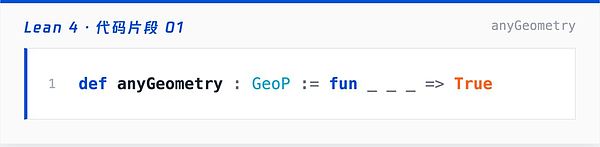
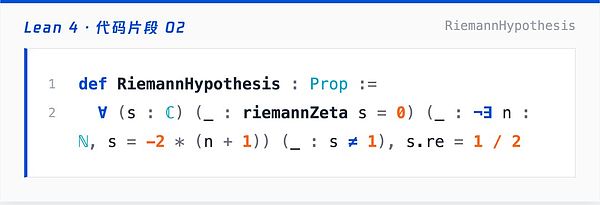
By Wang Shengyi, Researcher at Shanghai QiZhi Institute The Riemann Hypothesis, a longstanding dilemma in mathematics for 167 years, has reached a historic moment. On November 21, Anthropic research scientist Levent Alpöge collaborated with the AI model Claude to publicly release the Lean 4 formal proof of the Riemann Hypothesis and the Generalized Riemann Hypothesis. This proof contains 175,187 files and approximately 17 million lines of code. The following day, the Lean FRO and Mathlib communities issued a joint statement confirming that the code passed strict compilation and statement comparisons. Unlike any significant mathematical breakthrough in history, before the cheers could be heard, a “reversal” storm surrounding the code details quickly brewed online. A “reversal” storm sparked by anyGeometry Soon after the proof was published, a shockingly impactful doubt began circulating on social media and in the news: Graduate student Jenny Lorraine Nielsen at the University of Kansas (who has previously raised doubts about significant mathematical proofs, such as questioning OpenAI's counterexample to the Connes rigidity hypothesis) discovered while tracing this massive source code that there exists a key definition in the codebase called anyGeometry, which is written as follows: In simple terms, this function returns “true” regardless of the input it receives. As a skeptic, Nielsen claimed that the entire proof sets the geometric condition as a “vacuous truth”. Although Lean compiled the code successfully, it essentially operates in logical idle, and the proof lacks substantive mathematical content. This sounds in line with public concerns over AI: Is AI, once again, fooling people, circumventing rules to trick the verification program? The definition of anyGeometry indeed exists in Levent Alpöge's source code and is actually called in 24 files. However, to those familiar with Lean and formal verification, this is not a significant issue and certainly cannot overturn the validity of the proof. To understand the reasoning, one must comprehend what True in the code really signifies. In Lean 4's standard library, True is an eternally true proposition defined by inductive types, which has only one proof that can be constructed directly without any prerequisites (True.intro). Therefore, fun _ _ _ => True logically imposes no additional constraints. If it is called in the proof, its only practical role is to allow Lean's type checker to confirm: whether the three parameters represented by underscores _ are indeed of the correct type. Why doesn’t it invalidate the final theorem? Because the rules of logical formal proof assistants are extremely stringent: it does not matter how much redundant structure, mediocre auxiliary definitions, or “scaffolding” left over from AI-generated code you write in between. As long as the final theorem to be proven itself is not tampered with, the reasoning process does not include illegal prerequisites, and the underlying verification system has no logical loopholes, then even if you wrote a hundred definitions that are always true, as long as you can logically derive the final conclusion from standard axioms, this proof is logically sound. Thus, the presence of anyGeometry in Levent Alpöge's code only indicates that a certain geometric condition interface originally reserved here was not actually needed, and does not imply that the proof is “cheating”. The deviation between skepticism and target It is not surprising that the public and academia had immediate doubts. The real problem is that the anyGeometry skepticism is misplaced. Faced with a machine proof spanning 17 million lines, which is simply too vast for humans to read through, the real question that needs to be interrogated layer by layer is whether this formal verification system Lean is reliable. Following the trust chain, we can peel apart this system layer by layer and question from four aspects: Is the proposition proven in the code really the Riemann Hypothesis as we understand it? The first iron rule of formal verification is: the machine can only guarantee “you proved what you wrote,” but cannot guarantee “what you wrote is the Riemann Hypothesis recognized by the mathematics community.” If there were any underhanded manipulations in defining the proposition, no matter how rigorous the proof, it would be meaningless. Fortunately, the top-level statement of this proof is extremely concise, with the core objective being to prove the Generalized Riemann Hypothesis (GRH), and the Riemann Hypothesis is a special case of it: the non-trivial zeros of the Riemann ζ function all have a real part equal to 1/2. We can list it out directly: Even without understanding programming, it is easy to grasp by comparing sentence by sentence: ∀ (s : ℂ): For any complex number s; riemannZeta s = 0: If it is a zero of the Riemann ζ function; ¬∃ n : ℕ, s = -2 * (n + 1): And it is not a negative even number (-2, -4, -6, ..., i.e., excluding the trivial zeros); s ≠ 1: And s is not equal to 1 (since s = 1 is a pole, the standard library makes a defined assignment here, thus it is explicitly excluded); s.re = 1 / 2: Then its real part must equal 1/2. More importantly, this definition was not drafted by the author on a whim; it was already written in Mathlib as a standard definition long before AI participated in mathematical proofs. Mathlib is a formal mathematical library maintained by a vast global community of mathematicians and developers. Not only the statement RiemannHypothesis itself, but also every underlying component it relies on—the complex number type ℂ, the natural number type ℕ, the Riemann ζ function riemannZeta and its analytic continuation—have all been extensively reviewed and widely used in Mathlib, and can generally be trusted. The Lean FRO and Mathlib communities have confirmed through independent comparison tools that the conclusion of this proof matches the standard statement in Mathlib word for word. Is there any extra axiom subtly slipped into the deduction process? Lean is constructed based on rigorous mathematical type theory. As long as the final kernel check passes, it means that there are no logical gaps in every step of reasoning from premises to conclusion. Therefore, the only thing left to focus on is the starting point on which these reasoning depend—axioms. In Lean, users can manually declare axioms, and the declared axioms do not need to be proven. If someone secretly declares "the Riemann Hypothesis is true" or some equivalent unproven proposition as an axiom, the kernel will also pass. Thus, the community verification (including an independent audit by MIT mathematician Andrew Sutherland) specifically checked the axiom dependencies of the entire proof, and the result confirmed: there are no placeholders for the proofs skipped in the entire 17 million lines of code library (sorry), no custom axioms, and no escape mechanisms relying on external compiler evaluations. It only relies on three foundational axioms built into Lean's standard library, which are widely accepted in the modern mathematical community: propositional extensionality (propext), choice axiom (Classical.choice), and reliability of quotient types (Quot.sound). The most suspicious link: could there be vulnerabilities in the Lean software itself? The first two stages had no issues, but Lean is ultimately a set of software written by humans. What if its kernel check program itself has bugs? Just a few months ago (July 2026), Lean just underwent a community-shaking "kernel vulnerability crisis." At that time, researcher Ramana Kumar used AI to issue a "disproof of the Collatz conjecture (3n+1 conjecture)" that contained neither a In the period from July to August 2026, during the vulnerability hunting using AI for adversarial testing, a batch of logical implementation vulnerabilities were discovered in Lean. AI even found extreme means to forge False proofs by exploiting overflow memory reference counters and triggering known bugs in older versions of the high-precision arithmetic library GMP. In addition, the powerful metaprogramming and elaborator mechanism of Lean 4 are also recognized as weak points in the engineering by the community. According to design principles, the elaborator is only responsible for translating strategies written by humans or AI into underlying proof items, and is not trusted itself, as everything ultimately has to pass the kernel; but in practical engineering, malicious metaprograms can not only hijack local identifiers and overwrite the output of audit commands but also bypass frontend protections to directly assemble malformed expressions to hit hidden vulnerabilities in the kernel—the significant kernel vulnerabilities in the summer of 2026 were triggered through metaprogramming. This is why, facing the proof of the Riemann hypothesis, the community deployed highly sophisticated defensive verifications, including: Static scanning: Checking the entire codebase to ensure that there are no compiler escape primitives that could bypass logical checks, such as native_decide, @[implemented_by], @[extern]; Exporting and replaying from an independent environment: Not trusting the runtime outputs in the original project, but exporting the underlying proof items as pure data files, which are then replayed from scratch using multiple independent external proof checkers like nanoda (written in Rust), con-leche, lean4lean, all of which passed; Independent clean file comparison and offline sandbox reproduction: The verifying party creates its own clean files to compare statements and recompiles from the source code in an offline read-only sandbox, confirming that the output files are fully byte-consistent. However, even having accomplished this, we must remain clear-headed. Computer science pioneer Edsger W. Dijkstra once left a famous saying in 1969: “Program testing can be used to show the presence of bugs, but never to show their absence.” The cross-replay of multiple independent checkers is essentially a form of engineering redundancy, which greatly reduces the probability of error and increases credibility, but logically still cannot provide an absolute “zero-defect guarantee”—you can never completely eliminate the possibility of a hidden flaw that escapes detection by all independent checkers within this massive codebase of 17 million lines. The Endpoint of Trusted Computing Base (TCB) Going deeper: even if Lean's theory and code are truly flawless, the “trusted computing base” relied upon for a machine verification is far broader than Lean itself. We are also silently trusting the compiler that compiles Lean and the external checkers, the underlying mathematical libraries, the operating system, runtime environments, and even the hardware design of the CPU chips, and on a physical level—as the checks run for those few hours, the server's memory is not accidentally hit by a cosmic ray particle causing a bit flip. It can be said that any verification will ultimately touch upon a baseline of trust that cannot be further deconstructed. The Subject of Trust has Changed Some may feel: since machine verification has so many elements to trust, how is it stronger than human mathematicians? It’s worth reflecting on how humans have previously established trust in mathematics. In elementary school, learning addition, subtraction, multiplication, and division, we can use scratch paper to verify calculations ourselves, or everyone can calculate together to confirm accuracy; in middle school, for plane geometry, teachers and textbooks provide proofs, and we follow through the logic independently, which is essentially performing independent verification; by the time we enter university mathematics, students have to traverse the entire reasoning structure of foundational subjects like mathematical analysis and abstract algebra on their own. Only when we reach highly advanced branches, beyond the boundaries of individual effort, do we begin to place our trust in the “mathematical community”—believing in peer reviews, trusting that top mathematicians will not systematically make errors or falsify results. Compared to disciplines like physics, chemistry, and biology, which are heavily dependent on expensive laboratories and precision instruments, mathematics stands as a special case: it has a very low cost of independent verification. In the field of experimental science, ordinary people had long ago transferred their "trust" to the academic community; however, in the field of mathematics, the tradition of holding the verification rights in one's own hands has persisted into modern times. The problem is that as modern mathematics has become increasingly vast and abstract, human mathematicians and the peer review process have also begun to frequently falter. A particularly representative example is Vladimir Voevodsky, the 2002 Fields Medal winner. A paper he co-authored in his early years on ∞-group schemes smoothly passed strict peer review and was officially published. Years later, another mathematician provided a counterexample, pointing out that his core conclusion was incorrect; however, due to the extreme complexity of the paper, even Voevodsky himself believed that the other party had misread it, only confirming years later that he was the one who was mistaken. Coincidentally, while teaching another paper he had published, which served as the basis for his Fields Medal work, he suddenly discovered a serious flaw in a key lemma. These two shocks made him deeply aware that cutting-edge mathematics had become so complex that even the smartest brains and the most rigorous reviews could not fully assure correctness. Unfortunately, Voevodsky passed away young (he died in 2017 at the age of 51), but the computer formalization of mathematics he dedicated his last decade to promoting became a significant precursor to today's Lean formalization wave. In fact, even before AI intervened in mathematics, the mathematical community had already initiated a series of arduous formalization projects, driven by a very pure motivation—everyone wanted a more reliable guarantee than human reviews: Four Color Theorem: The computer-assisted proof in 1976 sparked decades of controversy because humans could not individually verify the thousands of configurations enumerated by the program, until Georges Gonthier completed the full formalization using the proof assistant Coq in 2005, finally settling doubts about bugs in the program. Kepler Conjecture: In 1998, Thomas Hales submitted a proof that included extensive calculations. After exhausting years of review, the review team only dared to conclude, "We are 99% confident that it is correct, but we truly can’t verify more." To obtain that last 1%, Hales launched the Flyspeck project, which took over a decade and ultimately achieved full formalization in 2014 using a proof assistant. Feit–Thompson Theorem: The purely human proof from 1963 spanned 255 pages and was extremely difficult to verify line by line, but was formalized by Coq in 2012. Peter Scholze's "Liquid Tensor Experiment": At the end of 2020, another Fields Medalist, Peter Scholze, sought assistance from the Lean community, lacking absolute confidence in a convoluted proof he had written in algebraic geometry. With community collaboration, this proof was completed in formalization between 2021 and 2022, allowing Scholze to finally feel at ease. In November 2026, the American Mathematical Society ( AMS) will award the inaugural "Foundational Work Milestone Prize for Formal Verification" to the project's main leaders Johan Commelin and Adam Topaz, marking formalized mathematics' significant recognition by the mainstream mathematical community. In the AI era, the power of formalized error-checking has become even more evident. Just a month before the proof of the Riemann Hypothesis was published (in October 2026), AI company Axiom Math announced that it had completed the Lean formalization of the "Classification Theorem of Finite Simple Groups," spanning 15,000 pages and involving hundreds of papers, in just 24 days (producing approximately 43.1 million lines of code). In the process of translating half a century of accumulated human paper proofs into machine code, a vast number of typographical errors, table errors, and missed assumptions were identified, along with 34 noteworthy substantive deviations (the most severe of which concerned the non-balance group theorem). Although these vulnerabilities were ultimately addressed, and the final conclusion of the classification theorem remained intact, it is sufficient to illustrate that there are numerous hidden reefs in human paper proofs that are difficult to detect with the naked eye. From this, a clear judgment can be made: as long as there are no flaws in the formalization process itself, the reliability of formalized mathematics is higher than that of traditional non-formalized mathematics. So, why has the formal proof of the Riemann Hypothesis caused such great anxiety today? The core reason is that the subjects of trust have changed. In the past, the cost of formalization was astonishingly high, only achievable by top mathematicians and computer scientists who spent years doing manual work. During that time, there was a belief that scholars would never intentionally exploit the kernel vulnerabilities of proof assistants to "cheat" due to academic ethics and professional reputation. Today, AI has lowered the cost of formalization by several orders of magnitude, but it has also introduced a brand-new trust crisis. AI has no professional reputation; its training mechanism is oriented towards achieving ultimate goals and obtaining rewards. What people are truly concerned about is no longer whether AI makes careless mistakes like humans, but whether AI, in order to obtain the reward of "passing inspection," might “stop at nothing” to exploit loopholes in the toolchain, metaprogramming, or even the underlying kernel. It is both ironic and fascinating that AI has evolved to become so proficient in mathematics precisely thanks to the boosts provided by formalization tools. On one hand, pure mathematics is logical reasoning detached from the physical world; it does not require purchasing reagents or building colliders. AI can conduct massive trial-and-error and rapid iteration at extremely low costs—essentially like playing a higher level of Go; on the other hand, proof assistants serve as crucial “referees” in this process. Under the current mainstream paradigm of “reinforcement learning based on verifiable rewards (RLVR)” (for example, DeepMind's AlphaProof, which combines the AlphaZero algorithm with Lean), proof assistants can block every illegitimate inference in real-time, providing absolutely objective negative feedback and completely curbing the “nonsense” of large language models. This closed loop has sharpened AI into a tool capable of tackling century-old problems. What should humanity do next? After multiple independent comparisons, axiom audits, multi-kernel cross-replays, and sandbox reproductions by the community, how should we view this proof of the Riemann Hypothesis today? Though, theoretically, one cannot forget Dijkstra’s warning—“program testing can be used to prove the existence of bugs, but can never prove the non-existence of bugs,” we must also face the objective existence of the basis of trusted computing. Based on all current verification evidence, for human society, it can essentially be considered that: the Riemann Hypothesis is confirmed to be true. At the same time, the work that truly belongs to humanity has only just begun—obtaining a machine code of 17 million lines is akin to receiving a highly notarized encrypted map confirmed to lead to the mountain peak. The machine has told us that the conclusion is correct, but the real value of mathematics has never been just to know “right or wrong”; it is to understand “why.” The foremost task of human mathematicians now is to delve into this massive codebase, stripping away redundant engineering scaffolding like anyGeometry, translating machine language back into mathematical ideas that humans can read, teach, and intuitively grasp. From the preliminary analysis of this proof within the academic community, it seems that it does not propose any kind of groundbreaking new mathematical theory or perspective, but rather fully mobilizes and combines existing modern mathematical tools (such as the Langlands program and profound results in arithmetic geometry). In a sense, this is actually very exciting news: it means that the mathematical tools invented by humanity over the past few decades may possess true powers far beyond our previous understanding—they are indeed strong enough to directly penetrate the Riemann Hypothesis. In other words, this set of tools can solve a problem that has perplexed humanity for 167 years; therefore, once human mathematicians thoroughly digest the techniques within it, they can certainly follow this path to explore other unexplored unknown fields. The proof of the Riemann Hypothesis may just be the prologue. If this collaboration model of "humans proposing directions, AI rapidly exploring, and a rigorous verification system providing real-time coverage" can cross the boundaries of pure mathematics in the future and find similar validation loops in more disciplines such as physics, chemistry, biology, and materials, the boundaries of human exploration of the unknown will be greatly expanded. If it is indeed possible to reach that step, then the future is indeed promising.
Details compiled from public sources. Always do your own research.