
Jensen Huang's Power Game: 30 Years of Industry Leadership, 3 Years into Washington
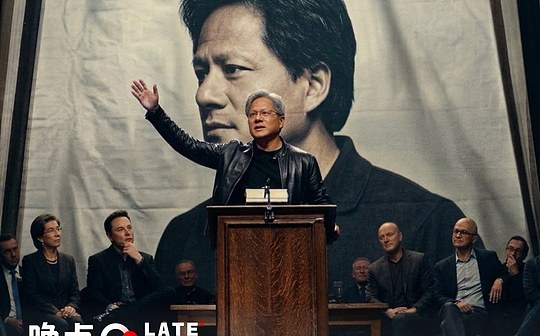
From Silicon Valley chip powerhouse to Washington political player, Jensen Huang has filled the biggest gap in Nvidia over the past three years.
Machine translated. Refer to the original for accuracy.
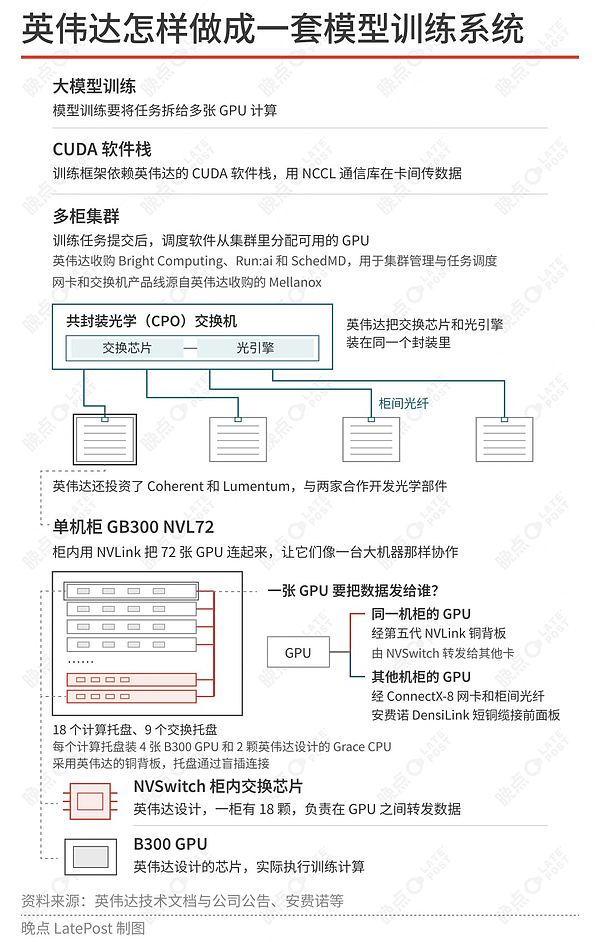
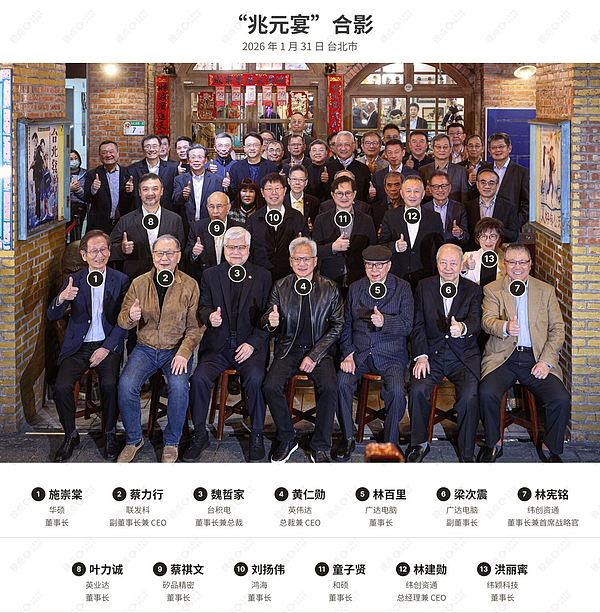
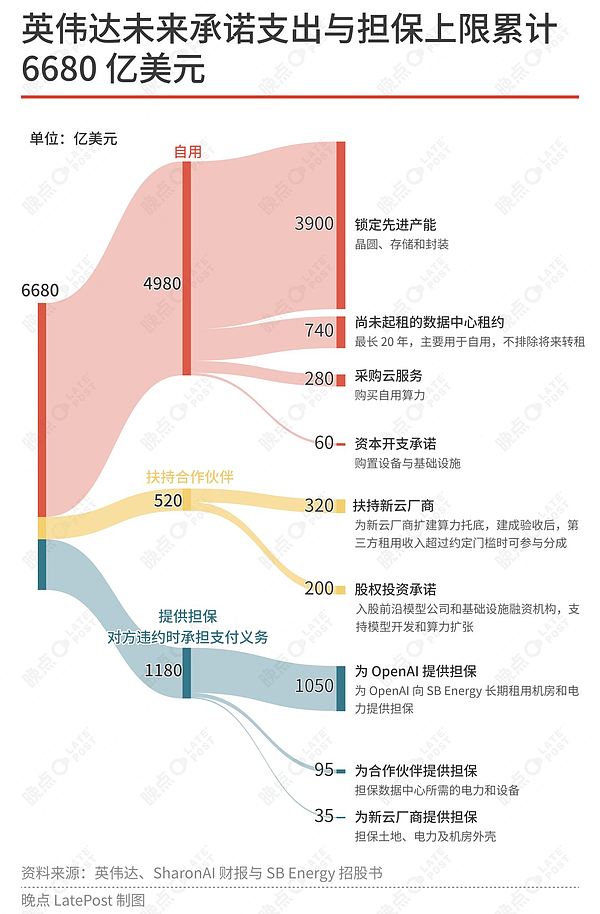
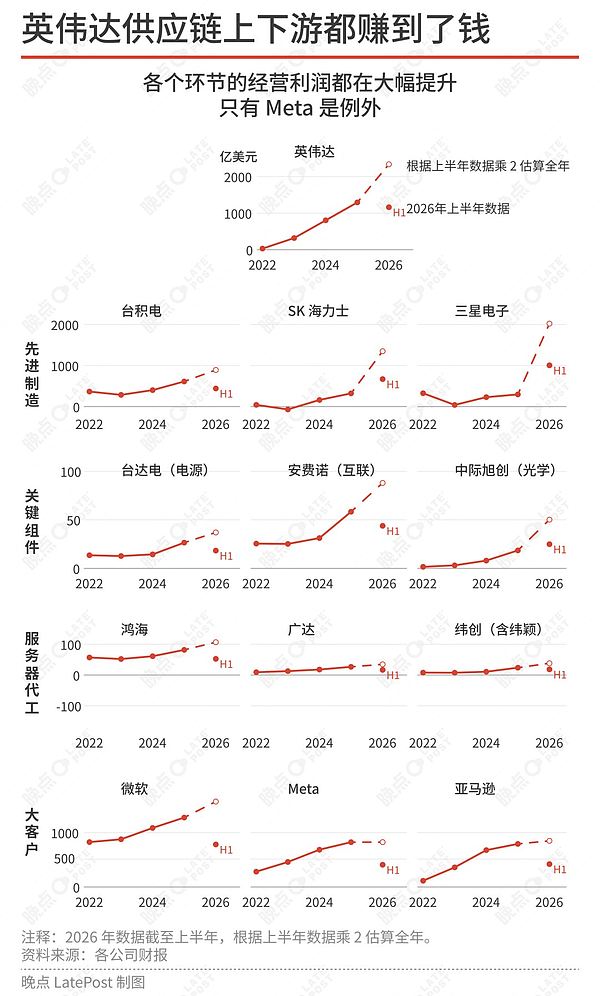
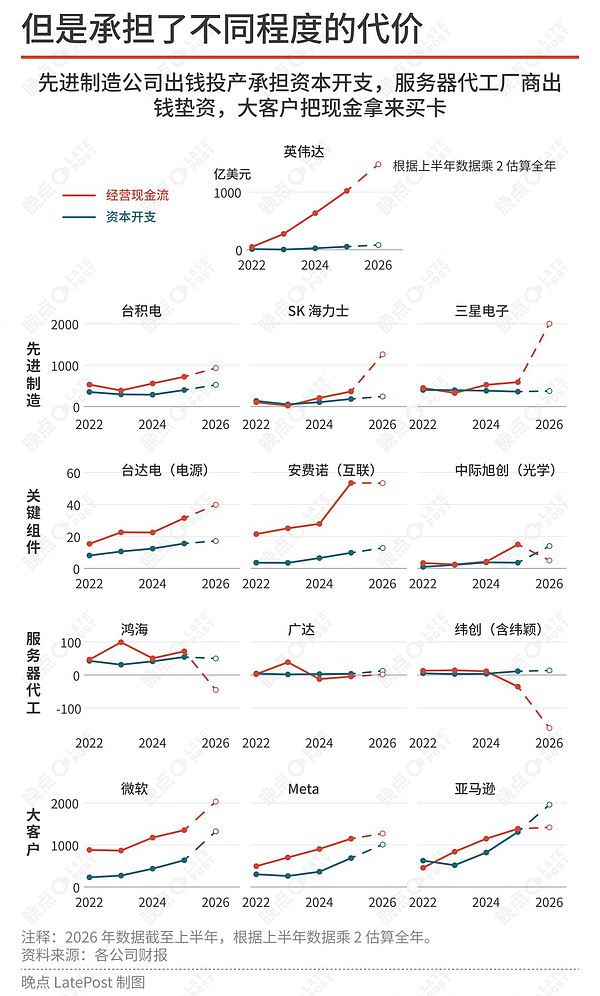
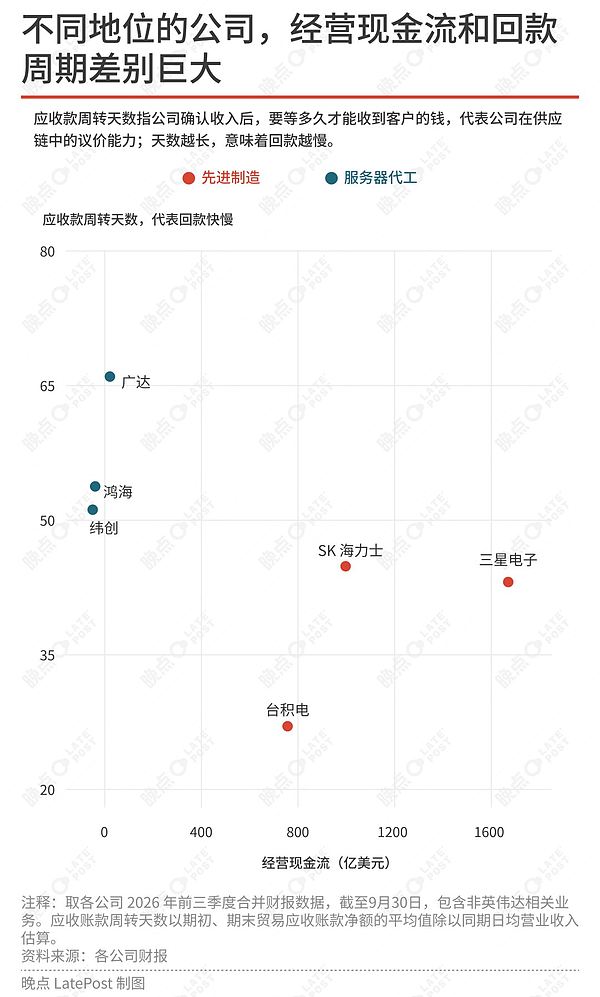
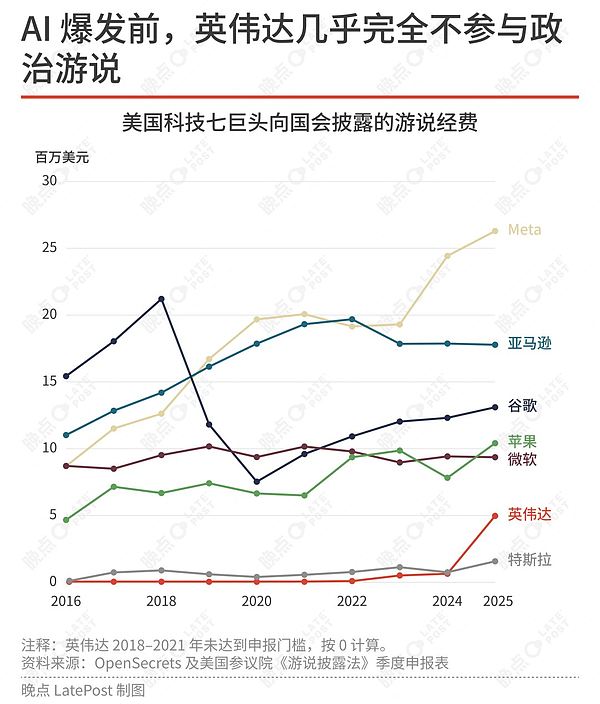
"You either run to find food, or you become prey." In the autumn of 2001, just before the launch of the first generation Xbox, Microsoft hosted a dinner for suppliers, and Bill Gates took the stage to speak. The graphics processor made by Nvidia determined the game quality, but its team was seated far from Gates at a table. The chief scientist from Nvidia later joked to reporters, "We were too important, just as important as those who made non-slip rubber mats." The following year, Microsoft increased its orders and asked for price reductions. Nvidia refused and was taken to arbitration by Microsoft. Nvidia's collaborations with all tech giants have ended similarly: developing the PS3 gaming console chip, being pressured for prices by Sony, ending the same way; customizing graphics cards for MacBook that had problems and angering Steve Jobs by refusing to cover warranty costs, getting kicked out of Apple's supply chain; selling self-driving chips to Tesla that were swapped out quickly after Musk formed a chip team. In 2024, Larry Ellison, founder of Oracle, recounted another dinner at an analyst meeting. He said that he and Musk repeatedly asked Jensen Huang, "Please take our money. No, you haven't taken enough, take a bit more." He also specifically mentioned that he picked up the tab. After the explosion of large models, the giants have all become Nvidia's customers and no longer bargain. Nvidia sells AI chips worth 1 million yuan, with hardware costs under 250,000 yuan, and after deducting R&D and sales expenses, the operating profit exceeds 660,000 yuan—by comparison, Apple sells an iPhone, where the hardware cost takes half, with an operating profit margin only about half of Nvidia's. Cloud computing giants, internet giants from China and the U.S., and even Nvidia's own investment, OpenAI, have all self-developed chips, attempting to break free from its control. However, over the past 15 quarters, Nvidia has earned more than $400 billion in net profits from the global tech industry, growing faster and faster. Jensen Huang uses this money to support new clients and continue to reshape the entire semiconductor supply chain. Over the past two weeks, under multiple pressures, Jensen Huang voluntarily resigned and was reinstated as CEO by the board with the support of the U.S. President. The power play he is involved in has moved from technology and business into Washington. From selling graphics cards to defining computing clusters, almost the only option for large model training "Training is like having a clock ticking in your heart; no one has ever relaxed before the time is up," said a large model researcher. During one failure, he almost didn't sleep for three days, pulling in hundreds of engineers from several teams to investigate, finally discovering a bug at the bottom of the company's storage system. This company has operated data centers globally for years, but "this kind of problem cannot be discovered without training." Another researcher said that he “dreamt of the erratic loss curve.” The curve told him there was a problem with the model learning, but pinpointing which part had issues required him and his colleagues to trace from training data, algorithms, and code all the way to storage, networks, and machines. At peak times, over a hundred people in China and the U.S. worked in shifts, holding meetings twice a day. What kept them working exhaustively were the random crashes during model training on the large computing clusters. Meta and ByteDance have both disclosed in papers: using over 10,000 Nvidia H100 GPUs to train large models, experiencing several interruptions on average daily. Most interruptions can now be automatically recovered by Nvidia's systems. Faults that require human intervention to resolve equate to losses for the company. In the previous two years, a day of downtime cost millions of yuan. Now, domestic teams are renting the latest Nvidia GB300 overseas to train large models, and losing a day can cost tens of millions. More difficult to compensate for than the rental costs is time. Last year, OpenAI was still a benchmark for peers. This year, Tencent's senior management noted to its subordinates that the company's efficiency was not high enough, specifically naming Anthropic as a model to learn from. Google also launched Gemini 4 to quickly catch up with OpenAI. "If you are still on the edge of dying at any moment, you won't take the risk of using new hardware for training," said a researcher from another company. They had tried using a well-known vendor's computing cluster for inference and small-scale training experiments. Due to incomplete core software, sometimes a card would just disappear from the software while running. "Industry players doing large model training configure servers based on global validations; they don’t even dare to change a network card—fearing instability," said Wang Ping, co-founder of a domestic GPU company. In its early years selling PC graphics cards, NVIDIA had to align with Microsoft’s software standards and the hardware standards defined by companies like Intel. It competed with rivals on how quickly a single graphics card could run a game. Most of the time, NVIDIA was ahead, though occasionally it was overtaken by ATI (AMD). In 2006, NVIDIA released the CUDA parallel computing platform, enabling GPUs to handle general computing beyond graphics. CEO Jensen Huang, facing resistance from Wall Street, insisted on incorporating CUDA-supporting hardware into every gaming graphics card, which increased chip manufacturing costs by about 10%. However, this allowed researchers to purchase consumer-grade gaming cards to perform parallel computations that previously required computing clusters or supercomputers. The AI revolution was marked by AlexNet, which was developed on two NVIDIA GTX 580 gaming graphics cards. When a single graphics card can’t accommodate an AI model, computation has to be distributed across multiple cards and servers. Speed depends on how quickly data can be transmitted between the cards. If the bottleneck is due to industry standards, NVIDIA replaces it with its own technology. In 2014, NVIDIA announced its high-speed interconnect technology NVLink and subsequently designed the switching chip NVSwitch. A few years later, it offered $6.9 billion to acquire Mellanox, a company that produces network cards and switches, gaining essential technology for connecting numerous servers. "NVIDIA has already controlled every layer of AI computing power centers," said Wang Ping. In 2024, NVIDIA launched the GB200 NVL72, which packs 72 GPUs and 36 Grace CPUs designed by NVIDIA itself. How power is delivered, how coolant extracts heat, and how copper cables connect the GPUs to the switching chips are all predetermined by NVIDIA, with suppliers entirely relying on the specifications for purchasing parts and production. Even cloud computing clients have to retrofit their data centers according to NVIDIA’s cabinets. He believes that replacing NVIDIA's technology depends on what clients need the chips for. In the past, engineers had to manually rewrite software for CUDA development, but now AI can assist with the porting process. For small to medium models, one or a few servers are sufficient, and many companies are also using domestic graphics cards. Although NVIDIA’s hardware and software are more mature, it leaves itself more profit margins, presenting opportunities for competitors. Once the model for inference scales up to tens of trillions of parameters, multiple servers or even "super nodes" need to be connected to perform a single computation. At that point, it’s about how much the entire group of machines costs and how many words can be generated per second. NVIDIA’s cards are expensive individually, but a complete setup might be more economical. The most challenging task is training. Thousands of cards need to work in coordination for weeks, posing challenges to the interconnection, scheduling, and fault recovery capabilities of the entire data center. All challengers must resolve countless engineering issues that NVIDIA and its customers have tackled over the past decade in real-world environments, one by one. If other graphics cards could replace them, many companies wouldn’t spend over 20 million yuan on an 8-card B300 server priced at three to four million yuan. Spending money to support new clients and scheduling entire industry chains with orders In 1995, two years into its establishment, NVIDIA developed a game console chip for Sega, realizing mid-way that it had chosen the wrong technology path, which could lead to bankruptcy if continued. Jensen Huang met with his senior counterpart from Sega, Naoto Ohshima, to admit the mistake and pleaded for the remaining payment. Ultimately, Sega invested $5 million, and NVIDIA used this money to produce its breakout product, the Riva 128, which was released three years later. Jensen Huang has often recounted this story at occasions like the National Taiwan University graduation ceremony and Sequoia podcasts, mentioning that Sega "got nothing" out of it. It's akin to how he later reflected on his ties with Morris Chang, saying they never signed "a single legal contract" in their 30 years of collaboration, forming an image of a founder fostering improbable collaborations through personal friendship. This July, at an event in Akihabara, Tokyo, Huang changed his narrative, stating that what he sought from Sega at that time was "investment." NVIDIA's public offering documents show that Sega's $5 million converted into stock, netting a profit of $10 million after the IPO. This aligns more closely with NVIDIA’s later dealings with upstream and downstream partners: Jensen Huang builds trust with counterparts through sincerity and vision, yet the relationships are based on mutual benefit. On January 31, 2026, NVIDIA CEO Jensen Huang hosted a dinner for supply chain partners at a traditional restaurant in Taipei. In the 1990s, the largest chip companies had their own foundries. Before the explosion of smartphones, it was gaming graphics card companies like Nvidia and ATI, which were of limited scale but pursued extreme chip performance, that bought advanced process capacity from TSMC, allowing them to develop and produce more advanced production lines each year. Zhang Zhongmou and Huang Renxun also became close friends, often going to his house for pizza and salad. In 2013, Apple became TSMC's largest customer. TSMC synchronized with Apple's product rhythm, upgrading production technology every year, using most of its advanced capacity to produce iPhone chips. During this period, Nvidia's purchase volume was only a fraction of Apple's. The supply chain still valued it because Nvidia was the chip design company most focused on performance: by 2017, it had made the size of the V100 chip around 800 square millimeters, which is 8 times that of an iPhone chip, approaching the physical limit of lithography machines. In 2009, Huang Renxun stated on Charlie Rose's program that Word and Excel had caused people to buy computers for typing and accounting, achieving the success of the CPU. Now people also want a virtual world, which requires a stronger GPU. He was also looking for any new industries that could use GPUs. On the day of the interview, he had just met with several financial companies that were buying Nvidia chips to calculate options risks. About 10 years ago, through a sales agent, Nvidia's China sales team went to pitch GPUs to a security company. An engineer present recalled that the other side's response was very stiff—Nvidia had provided graphics computing for film companies, and security also dealt with video, so it should be applicable. At that time, the chips used in cameras were simple and could only recognize license plates. Using Nvidia GPUs could train more complex models to recognize falls, accidents, and other complicated situations. This security company only bought dozens of graphics cards, totaling hundreds of thousands of yuan. Nvidia was willing to provide test machines and sent several engineers to work alongside the client's staff every day. “They understood our business, and we got pretty good performance,” said the engineer. Later, Nvidia designed the T4, adding capabilities to decode more video streams simultaneously. By 2017, when Huang Renxun held a technology conference in Beijing, he already regarded the security company as an important AI customer, ranking its name alongside Alibaba Cloud. Nvidia's investment in the automotive sector is even greater. Cars cannot plug in graphics cards; the chips must be integrated into computing modules and pass safety tests. Before the explosion of new energy vehicles, Nvidia had already been looking for willing partners in China to invest together, opening its bottom-level interfaces to allow car manufacturers to use their own algorithms and patents. A person familiar with the cooperation said that at that time, Huang Renxun personally approved contract prices and sometimes even personally adjusted schedules to ensure it would not affect customers' new car production. Automobile companies generally have limited software capabilities. The Nvidia team directly helped develop the software. At the busiest times, the North American team and the Chinese team worked around the clock. Some car manufacturers wanted to form their own bottom-level software teams, and Nvidia's people also helped advise. The revenue from automotive chips was not even enough for Nvidia to pay the related team's salaries, but investments continued to this day. A Nvidia person joked that he was practically doing charity. From security, automotive to the metaverse and humanoid robots, Huang Renxun is not hesitant to mobilize engineering forces to support new industries, but he firmly maintains one bottom line: regardless of how big the customer is, Nvidia almost never customizes dedicated chips for them, but rather provides close service to fully understand the industry and create general-purpose GPUs needed by other companies. Nvidia methodically tackled industry after industry, gradually becoming the largest customer of many cutting-edge processes. AMD was the first to customize HBM high-bandwidth memory, and Xilinx was the first to purchase CoWoS packaging, but manufacturers later developed according to Nvidia's requirements. After the birth of GPT-4, venture capital firm a16z predicted that high computing costs would force model and application companies to spend a significant portion of their financing on cloud rentals, with cloud giants like Google, Microsoft, and Amazon becoming ultimate winners. If there were only these few customers, Nvidia would not receive today's prices. The customer rescue plan was subsequently launched. Nvidia prioritized supplying scarce chips to emerging computing clouds like CoreWeave, invested in them, and signed multi-billion dollar buy-back agreements, promising to purchase unsold computing power. Several law firms assisted Nvidia in customizing agreements so that companies like CoreWeave could obtain GPUs and secure hundreds of billions in loans with Nvidia's guarantee. A related person told us that the Nvidia legal team interfacing with these law firms directly reported to Huang Renxun. After cash surpassed Microsoft and Apple, Nvidia began to invest in OpenAI, Anthropic, and xAI, which it previously could not afford, and even provided up to $105 billion in lease differential guarantees for OpenAI data centers. These investments and guarantees circle back as locked multi-year GPU orders back to Nvidia. Jensen Huang commands the entire supply chain with these hundreds of billions of dollars in orders. The Blackwell chips (B200/B300) are too large; the lithography machine must carve out two bare chips and then seal them with 8-12 layers of HBM3E memory together. This requires TSMC's CoWoS packaging technology. Nvidia pre-paid over $3 billion and signed long-term contracts to secure more than half of the production capacity. TSMC has invested $37 billion to expand its packaging factory, increasing production thirteenfold over four years. Samsung has traditionally bundled memory with its own wafer manufacturing. However, in order to secure long-term HBM orders from Nvidia, they agreed to outsource the logic chips for the next generation of custom graphics memory to their old rival TSMC. Downstream assembly factories and server manufacturers like Foxconn and Wistron, which make boards for AI chips, take on the responsibilities of funding and absorbing inventory. They immediately purchase the chips delivered by Nvidia, but have to wait until the boards are ready, installed in servers, and tested for delivery to customers before receiving the final payment. Major foundries have significantly increased their revenues and profits but are financing through the stock market or taking on debt. How Nvidia distributes profits and responsibilities across the supply chain (swipe to view) In the interchangeable production segments, Nvidia races every week. Deb Shoquist, Nvidia's Executive Vice President of Operations, revealed that they track every chip throughout the entire process, reviewing the yield and turnaround time of each assembly factory weekly; if a factory declines, new chip allocations are immediately transferred to other production lines. As a result, the entire supply chain operates according to Nvidia's roadmap: wafer and memory factories are investing billions of dollars to expand production, foundries are borrowing money to compete for yield weekly, and new cloud collateral chips finance card purchases. Nvidia has single-handedly taken the driver's seat of the entire AI industry—until it collided with a different set of rules in Washington. 30 years without touching politics, 3 years walking into Washington Throughout 2022, Nvidia spent only $90,000 on lobbying the government. In the same year, Amazon spent nearly $20 million on lobbying. That August, the U.S. government notified Nvidia that the A100 and the soon-to-be-launched H100 had to obtain licenses before being sold to China. At that time, mainland China and Hong Kong accounted for 21% of Nvidia's revenue. Initially, Jensen Huang had engineers modify the chips to slow down the data transfer speed between chips, resulting in the export-compliant A800 and H800. Two months later, the U.S. Department of Commerce revised the rules again, banning the sale of these two models. Commerce Secretary Gina Raimondo publicly named Nvidia, stating that if they continued to modify the chips close to the red line, "I will regulate it the next morning." One week before Biden left office, the Department of Commerce announced the "AI Diffusion Rules." Only 18 core allies of the U.S. can procure Nvidia's most advanced chips without restrictions, and even Israel did not make the list. In 2023, Jensen Huang learned the common political practice of "retail politics," walking through Taipei's Ningxia Night Market on camera, arm-in-arm with chaebols eating fried chicken in a small shop in Seoul. He gradually shaped a rare, friendly uncle image in the tech community, packaging multi-billion dollar industry investments, capable of influencing national fate, and flows of capital and business alliances into a relaxed and enjoyable gathering among old friends. In January 2025, the White House welcomed a president eager to find common ground with entrepreneurs. For the first time, Nvidia, which had never sponsored any president, wrote a $1 million check for the Trump-Vance inauguration committee. On the day of the inauguration, January 20, in the majestic dome hall of the Capitol, Elon Musk, Jeff Bezos, Mark Zuckerberg, Tim Cook, and Sundar Pichai applauded for Trump. But Jensen Huang maintained his distance. He gave up the VIP tickets and went to Asia for the company’s annual meeting. During the Spring Festival, DeepSeek released the R1 inference model. Nine days later, bipartisan members of the U.S. House of Representatives jointly wrote to the National Security Advisor, calling for regulation on the H20 sales to China. Two days later, Jensen Huang walked into the White House and met Trump for the first time. In May, Jensen Huang donned a suit and tie and traveled to Riyadh. Trump noticed him at the US-Saudi Investment Forum and called out from the stage, "Tim Cook didn’t come, but you did." That day, the US Department of Commerce announced it would withdraw the "AI Spread Rule," and HUMAIN, a subsidiary of the Saudi Public Investment Fund, announced a partnership with Nvidia, planning to deploy 18,000 GB300s in the first phase. Nvidia's lobbying expenses this year have already approached $5 million. The company also donated $25 million to the newly constructed White House banquet hall in October. According to later revealed donation records, Nvidia requested anonymity. By the end of the year, Jensen Huang had become the most effective lobbyist in the tech industry. On December 3, he first visited Trump at the White House, then went to the Senate Banking Committee to discuss chip exports. In the Joe Rogan interview aired that day, he mentioned their amicable relationship—whenever he had any concerns or requests, he would call, and the other party always had time. Four days later, the House and Senate announced the text of the negotiated National Defense Authorization Act. An important clause that Nvidia opposed was removed—the GAIN AI Act originally required sellers to give American clients a priority buying opportunity before exporting advanced chips to specific countries. A day later, Trump announced that Nvidia would be allowed to sell H200s to approved Chinese customers, with the US government taking a 25% tariff from the sales. Nvidia's political success also relies on widespread shared interests. A significant proportion of wealth among American middle and upper-class families is tied up in the stock market, and AI has been almost the sole driver of stock market growth in recent years. Decision-makers have money in it as well. By the end of 2025, Trump’s account held at least $12.5 million in Nvidia stocks. Former House Speaker Nancy Pelosi's husband held at least $5 million, along with at least $500,000 in Nvidia call options. At least 21 Republican members and 19 Democratic members of Congress reported holding Nvidia stocks personally or through family members. If this was about solving technical issues or negotiating deals with business partners, Jensen Huang's mission would already be accomplished. But in the political game of Washington, there’s more than just the president. On October 29, 2026, the NYT cited US intelligence officials who said that Jensen Huang had a personal relationship with Alice Huang, an executive of Megaspeed, Nvidia's previous Singapore client, who might be involved in obtaining intelligence. On November 11, in the face of a board investigation, Jensen Huang submitted his resignation, stepping down from the president, CEO, and board positions. Around this time, several media outlets reported on his extramarital affairs with three subordinates. On the day Nvidia announced his resignation, three Republican committee chairs in the House demanded that several chip control measures be written into the Fiscal Year 2027 National Defense Authorization Act: The Chip Security Act requires tracking systems to verify where chips are sent; the Remote Access Security Act aims to include externally rented computing power into regulations; the AI Overwatch Act would elevate high-end chip exports to the level of oversight reserved for foreign military sales, requiring forced review by congressional committees instead of allowing the president direct clearance. Eleven days later, Jensen Huang dramatically regained his CEO position. During this time, a group of Silicon Valley tech entrepreneurs and investors offered advice, and nearly 100,000 Nvidia employees, shareholders, and his followers signed a letter of support. "This time as CEO, I will do better," Jensen Huang stated in a meeting with employees after his return. He denied that the White House urged his return. The board stated that there was contact from high-ranking White House officials, while Trump told reporters the next day that he himself contacted the board: "You see how well I did yesterday?" Nvidia's political obstacles remain unresolved. The Senate is set to hold a hearing a week later to question Jensen Huang; Congress will continue investigating why the Department of Commerce did not cut off problematic chip flow channels earlier. In January next year, the Democrats who won the midterm elections will become the majority in both chambers, and they frequently call for restrictions on the power of large corporations. Jensen Huang's comeback proves that the wealth and public opinion amassed in Silicon Valley for years have gained the capability to engage in a game with Washington. He has personally acquired the most valuable trial-and-error experience as an entrepreneur, and is now clearer on how to play the political game, which he can only continue.
Details compiled from public sources. Always do your own research.