
How to Protect Your Wealth in Geopolitical Storms?

When the storm comes, neither gold nor Bitcoin can save you.
Machine translated. Refer to the original for accuracy.
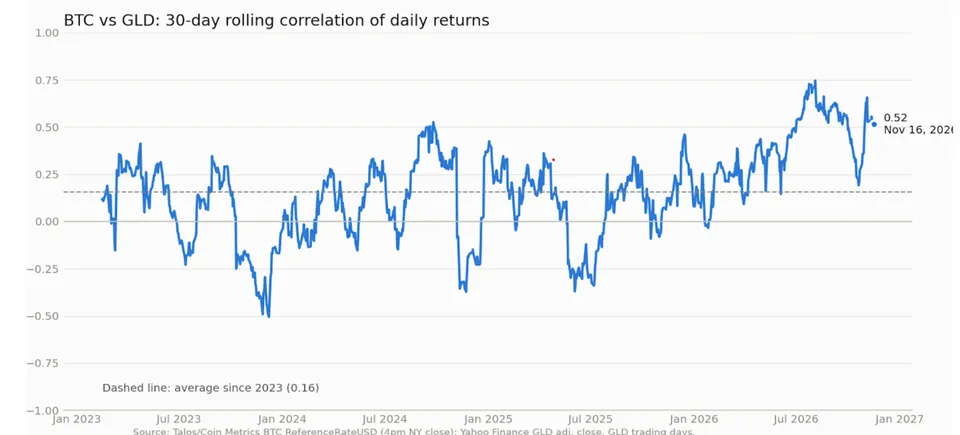
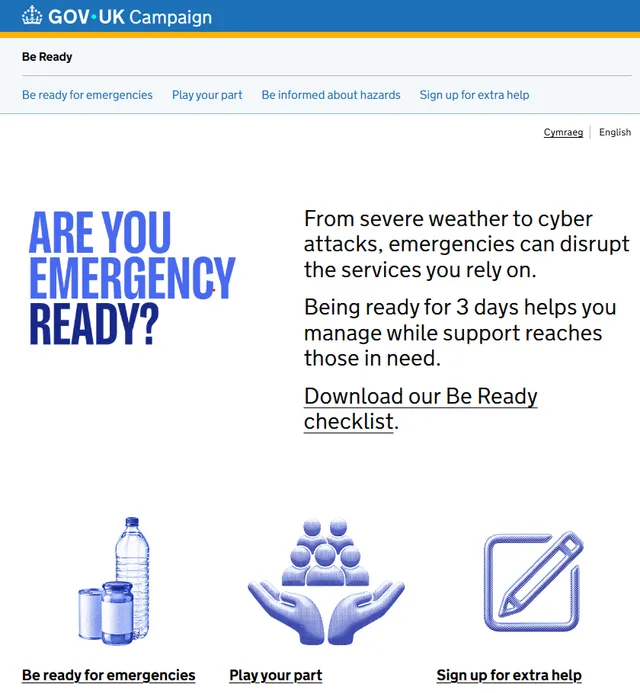
Author: Christina Comben; Translation: Chopper, Foresight News Geopolitical conflicts, cyberattacks, and power grid collapses could come at any time, and more governments around the world are urging people to prepare for major disasters. In the UK, citizens are responding to the government's "Be Ready" campaign by stockpiling canned food and bottled water. Fighter jets flying over the Middle East, rumors of dirty bomb attacks in Washington, and the global largest software company being down for an entire day— the possibility of disaster striking at home is becoming increasingly real. But what should you do with your money at this time? How do you protect your wealth while ensuring access in the event of system failure? The key lies in two things: choosing assets that can maintain their value even in a world engulfed in flames and being able to access funds during emergencies. Regarding the first point, Maximilian Kunkel, Chief Investment Officer for ultra-high-net-worth clients at UBS, one of the world's largest wealth management firms, told Magazine: "We want to remind people not to think that any single asset is safe in all situations." He stated that wealthy investors should focus on creating a portfolio that is "resilient across multiple scenarios," with sufficient liquidity and diversification in asset classes, currencies, and regions. The blurred lines between Bitcoin, gold, and 'safe-haven assets' UBS's 2026 Global Family Office Report covers families with an average net worth of $2.7 billion, among which 64% list major geopolitical conflicts as their top concern for the next 12 months. However, these investors have not rushed into the cryptocurrency market for the sake of preserving value. "24% of family offices report having exposure to cryptocurrencies or digital assets, but within the invested portion, the allocation is typically only around 1%." Hadley Stern, head of institutional business at Silence Laboratories and founder of Fidelity Digital Assets, explained that financial institutions might now classify Bitcoin and gold in the same category, but Bitcoin has not yet gained equal status as a safe haven. "Gold has a history of thousands of years... Bitcoin is not even twenty years old. But the logic people use is the same: a scarce asset that does not belong to any third-party liability," he said. He advised against relying on it as a reliable hedge during crises: "I would be cautious with the term 'hedge,'" he said, "Bitcoin is still highly volatile and often trades alongside other risk assets during market sell-offs." In contrast, cash is useful in emergencies, but not suitable for "long-term value preservation," he said. Michael D'Alessio, COO of digital asset trading platform Talos, told Magazine that there are early signs showing Bitcoin is starting to resemble gold more. He noted that during the volatile period before and after the U.S. midterm elections, Bitcoin's correlation with stocks remained high; however, during the same period, its correlation with gold also increased significantly, reaching about 0.75 over a 30-day rolling period as of early August. "This is a meaningful shift and is precisely the kind of signal institutional investors are looking at now." Correlation of Bitcoin and gold's 30-day rolling daily returns. Source: Talos / Coin Metrics The risks are not just about losing money, but also about not being able to withdraw it. The collapse of Mt Gox and the more recent failure of the Paraguay bank indicate that "the safety of an asset depends on the system holding it," Stern said. Risk committees within institutions do not automatically turn to Bitcoin or gold when tensions escalate but begin to ask other questions: "Where are the assets? In which jurisdiction? Who can freeze it? What happens if the counterparty or payment channel is down for a week?" He said, "These used to be back-end issues, but now they are discussed at the board level." Kunkel said that concerns over major geopolitical conflicts are prompting wealthy families to consider "not only asset allocation but also where assets are placed, currency exposure, liquidity, and jurisdictional diversification." UBS's report found that 88% of family offices hold bankable assets in two or more jurisdictions, with 30% currently looking into or considering increasing currency diversity. Institutional 'stuffed storeroom' Fortunately, banks and custodians are also preparing for actual disaster responses. "Regulators expect institutions to plan for 'serious but reasonable' events," Stern explained, such as cloud service outages, cyber attacks, critical vendor bankruptcies, or markets being closed for several days, and that they "demonstrate they can maintain the operation of the most critical services under these circumstances." The UK government is advising the public to stock up on supplies. Source: Gov.uk For custodians, this means testing: can assets still be transferred if a certain signature location goes offline; how quickly can operations resume if the data center is gone. Stern said that while homes prepare for emergencies by filling pantries, the institutional approach is: not to rely on anything singular—no single custodian, no single keyholder, no single cloud service, no single bank. Similarly, investors need to clarify which assets can be withdrawn quickly and which cannot, and "maintain enough liquidity to weather a rough patch without being forced to sell." Kunkel stated that preserving capital "does not mean eliminating volatility, but maintaining enough liquidity and diversification to endure volatility," so as not to become a forced seller. When a major crisis strikes, diversification can shield the portfolio from market shocks, but if the underlying infrastructure fails, you might not be able to access your funds. Hedging is not just about having the right things; it’s about being able to access them even when the system is down.
Details compiled from public sources. Always do your own research.