
Jensen Huang's Return is a One-Day Wonder, Wall Street Warns: No Problems Solved
Oil prices, inflation, and the Federal Reserve remain focal points; Jensen Huang may have only addressed the short-term issue of who leads NVIDIA, without solving any other problems. AI investment returns are still to be validated, and Anthropic's IPO loss exacerbates valuation disparities.
Machine translated. Refer to the original for accuracy.
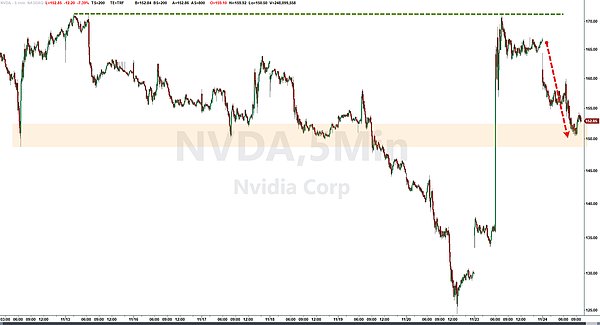
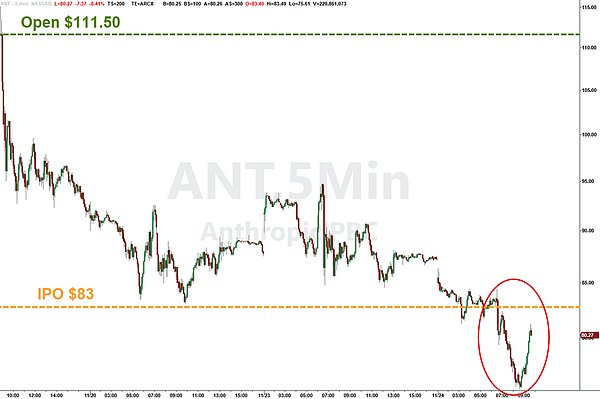
Author: Li Dan, Wall Street Insights The market frenzy triggered by Jensen Huang's return as CEO of NVIDIA lasted only one trading day before AI tech stocks faced another sell-off. Wall Street insiders warned that although Huang's return alleviated immediate leadership uncertainty at NVIDIA, it did not address deeper issues such as inflation, interest rates, and the massive return on AI investments, and could even introduce new governance and political risks. Spike and Rapid Pullback After Monday’s Surge, AI Sector in Collective Pressure On Tuesday, November 24, Eastern Time, tech stocks that surged on Monday owing to Huang's return became the center of a sell-off in U.S. stocks. On Monday, the Dow Jones Industrial Average soared nearly 1500 points, up about 3%, the S&P 500 gained over 4.7%, the NASDAQ Composite rose around 6.5%, and the Philadelphia Semiconductor Index (SOX) jumped approximately 14%. The S&P, NASDAQ, and SOX recorded their largest single-day gains since April 2025. On Tuesday, the market quickly differentiated: the Dow initially dropped over 300 points, a decline of about 0.6%, but then turned positive, eventually closing up nearly 0.9%; the S&P 500 dipped nearly 1.4% during the day but closed down 0.5%; the NASDAQ fell close to 2.6% at one point, ultimately closing down about 1.5%; and the SOX closed down nearly 7.9%. In terms of individual stocks, NVIDIA (NVDA), which surged 31.5% and gained almost $1 trillion in market value on Monday, closed down nearly 5.9% on Tuesday, hitting intraday lows of over 8.8%. Other stocks benefiting from the AI infrastructure boom also saw significant declines on Tuesday; among chip and memory stocks, AMD (AMD) dropped about 8.9%, SanDisk (SNDK) and Micron (MU) fell over 10%. New cloud service providers and data center operators CoreWeave (CRWV), Nebius (NBIS), IREN (IREN) all closed down over 10%, while optical communications stocks Lumentum (LITE) dropped over 10%, and Coherent (COHR) fell over 9%. Anthropic (ANT), on its fourth trading day after going public, fell below its IPO price of $83, dropping over 13.7% intraday before closing down over 6.5%. After an initial gain of about 17% on its first day, this stock experienced three consecutive days of declines, totaling around 15.7%. Huang's Return Cannot Alleviate Macroeconomic Pressures; Oil Prices, Inflation, and the Fed Are Still the Focus The drop in tech stocks on Tuesday primarily reflected that investors have not changed their judgments on the macro economy and monetary policy due to Huang's return. Robert Pavlik, Senior Portfolio Manager at Dakota Wealth, pointed out: "Neither oil prices, a hawkish Federal Reserve, nor inflation can be resolved merely by Huang's return. It might only address the temporary issue of who leads NVIDIA, without solving any other problems." "I believe investors are reawakening to these realities." This also explains why Monday's market frenzy struggled to maintain momentum. Huang's return alleviated the sudden uncertainty brought about by changes in NVIDIA's leadership but could not alter inflation trends, expectations about the Fed's policies, or the impact of interest rates on overvalued tech stocks. Investors still need to assess whether inflation will continue to demonstrate resilience and if the Federal Reserve will maintain a hawkish stance. The market is simultaneously awaiting the latest U.S. inflation data to gauge the policy path ahead of the Fed's December meeting. For tech stocks, which rely heavily on future earnings growth for valuation, changes in interest rate expectations not only affect discount rates but also the financing costs for data center construction and AI infrastructure investments. Can the AI Trading Rebound Be Sustained? Goldman Sachs Points Out Reasons for Both Bulls and Bears In addition to macro pressures, investor doubts about the AI industry itself have not disappeared. The sharp rise on Monday raises the question of whether the market is optimistic about the fundamentals of AI or whether it was primarily driven by short covering and position adjustments, sparking debate on Wall Street. Goldman's U.S. TMT team summarized the differing judgments of bulls and bears currently in the market. Bulls believe the market still has the potential to continue rising, as there are not many funds willing to continue selling after the prior significant sell-off, and the market could benefit from "nobody left to sell" positioning tailwinds. They also believe that the previous decline in AI and semiconductor stocks was mainly a bear market driven by emotions rather than a deterioration in fundamentals. However, bears believe that the AI industry still faces a series of long-term issues, such as the approval and licensing of data center project construction (shell/permitting), return on investment (ROI), and the future trends of token demand and consumption (Token trajectory), among others. Even if the market rebounds in the short term, it is difficult to sustain a breakthrough above pre-election levels. This set of views reveals the core divergence in current AI trading: If the previous decline was mainly driven by sentiment and positions, then short covering and position repair may still support a rebound; but if the return on investment in data centers, project construction, and AI commercialization still raises long-term questions, it will be hard for the market to re-enter a unilateral upward trend solely based on a change in leadership. ZeroHedge’s analysis of Monday's market rally also emphasized the role of technical buying: Prior to this, the market had accumulated a large number of short positions, and the news of Jensen Huang's reinstatement triggered concentrated short covering, compounded by mechanical buying from leveraged ETF rebalancing, which amplified the increase in tech stocks. As buying momentum weakened on Tuesday, the rise driven by short-term positions was hard to sustain, and the original concerns about AI trading resurfaced. Presidential Intervention in Corporate Governance Raises New Doubts, Strategic Companies May Gain Valuation Premium On Monday, Nvidia's stock price soared, reflecting the market's strong welcome for Jensen Huang's return, but Ron Adler, co-head of global equity trading at JPMorgan, reminds investors to consider another issue: Is the president's direct intervention in corporate governance really what the market wants to see? In commenting on Huang's return, Adler stated: "The removal of uncertainty surrounding Jensen Huang and Nvidia is obviously positive. However, the broader uncertainty regarding corporate governance rules and political intervention has significantly worsened." He compared this event to President Trump's request last August for Intel CEO Bob Swan to resign, followed by a change of stance weeks later, believing that presidential involvement in corporate leadership could make it harder for the market to judge corporate governance rules and policy boundaries. Adler further warned: "In the long run, this is likely to depress stock valuation multiples, especially given the potential for Democrats to control Congress and have a Democratic president in office by 2028." However, he also pointed out that this kind of political environment change could have positive effects as well. For companies of strategic importance that have close ties to the government, government intervention may actually support their valuations: "Another possibility is that this might support the valuation multiples of companies that have strategic significance and strong government relationships." Adler believes the Trump administration has made it clear that AI is a critical component of its policy agenda, which is undoubtedly a positive signal for related companies. But he cautions that despite market positions possibly allowing this rebound to continue for a while, "I believe this won't bring the market back to its previous state of extreme enthusiasm quickly." This means that while Jensen Huang's return has alleviated the short-term leadership uncertainty for Nvidia, it has also made the market aware that the influence of political power on corporate governance may further expand. Government support could become a valuation support for strategic companies, but whether the overall market can return to a state of euphoria depends on broader macroeconomic conditions and industry fundamentals. AI Returns on Investment Still Awaiting Verification, Anthropic's IPO Decline Intensifies Valuation Differentiation Maximilian Bong-Maurer, an investment strategist at Allianz, believes that Tuesday's market differentiation primarily reflects investor reassessment of growth and interest rate prospects, rather than a sudden deterioration in corporate fundamentals. He stated: "This is a reassessment of growth and interest rate prospects driven by market sentiment, spurred by concerns over data center spending and inflation, rather than a deterioration in fundamentals." This indicates that investors have not confirmed a reversal in the AI industry's profit outlook, but are reassessing the growth expectations implied by current stock prices and whether the substantial capital required for data center construction can yield adequate returns. In the previous weeks, AI-related stocks had already been pressured due to investment scale driven by debt financing and uncertainties about future cash flow returns. While Jensen Huang's return boosted Nvidia and its ecosystem, it could not directly address whether data center construction could be sustained or whether AI commercialization could meet expectations. Anthropic has fallen below its IPO issue price, providing another signal of valuation pressure for AI assets. Commentators point out that this does not help the market sentiment for closed-source model vendors: NVIDIA and AI infrastructure stocks soared on Monday due to Jensen Huang's return, while Anthropic's stock price dropped below the issue price on Tuesday. There are also reports indicating that options trading for Anthropic has started. From the collective pullback of NVIDIA and the chip and data center industry chain to Anthropic's rapid decline post-listing, the market performance of different business models and asset types within the AI industry is diverging. The emotional boost brought by Huang's return may still support some rebound, but until clearer answers emerge on macro policies, corporate governance, and AI investment returns, the market is unlikely to return to its previous frenzy based solely on a leadership change.
Details compiled from public sources. Always do your own research.