
2027 'Super Dollar'?
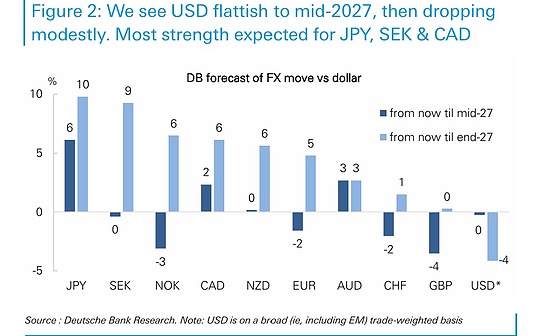
Deutsche Bank raises its dollar forecast for 2027, supported by AI capital expenditures lifting the 'AI Dollar,' but the dual deficits and the 'Chip Dollar' cycle create inherent weaknesses in this strong structure.
Machine translated. Refer to the original for accuracy.
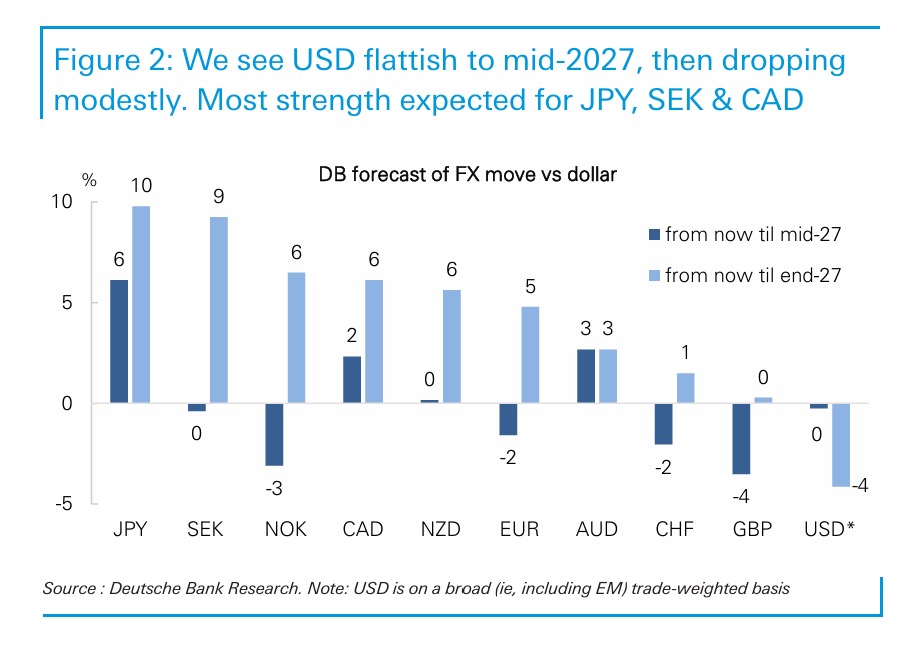
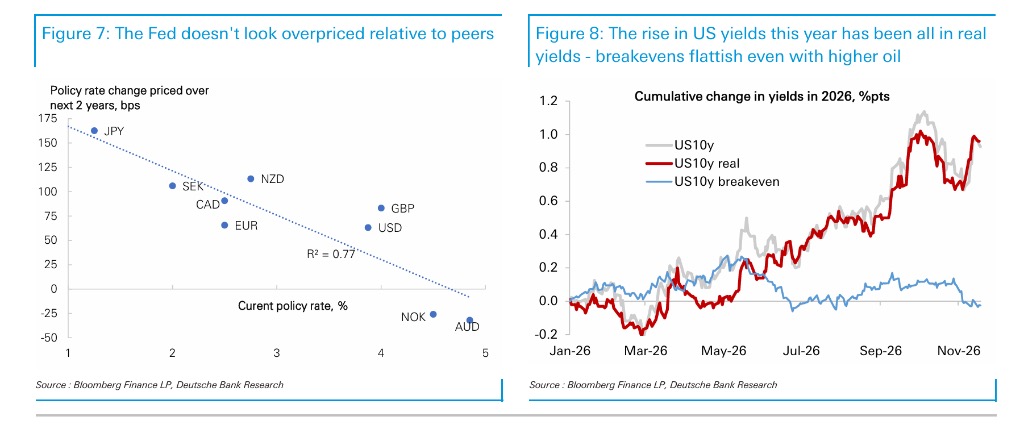
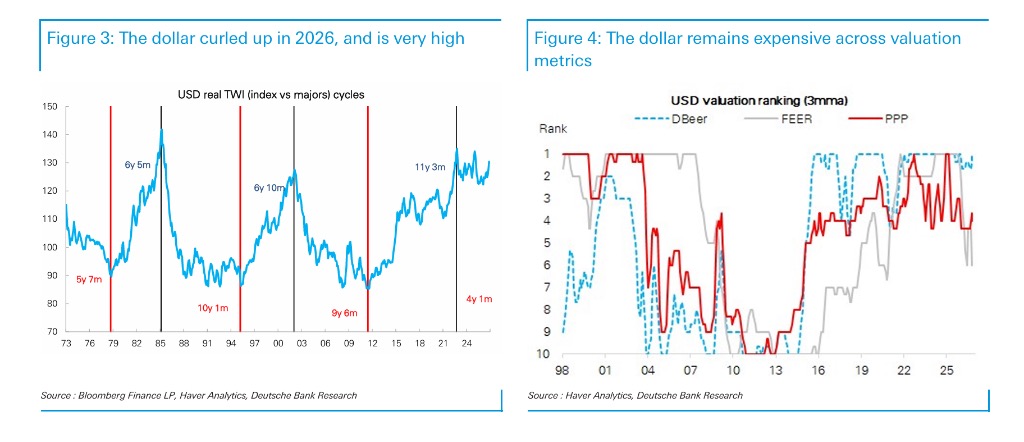
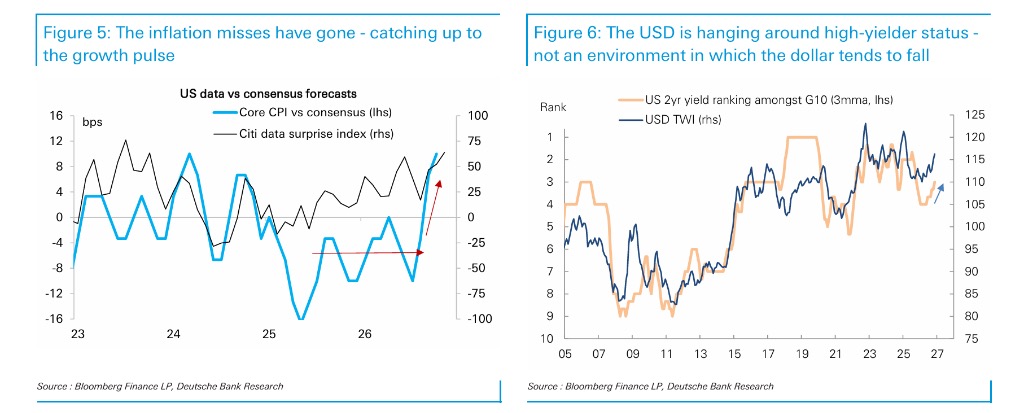
Author: Zhang Yaqi Source: Wall Street Insight The artificial intelligence boom is reshaping global capital flows, keeping the dollar hovering at high levels, but the fragile support structure makes the outlook for a super dollar full of uncertainties. According to Chase Trading Desk, Deutsche Bank has significantly raised its dollar forecast for 2027 in its latest foreign exchange outlook report, admitting that its previous judgment of a weak dollar was wrong. The AI boom has pushed up U.S. real interest rates, attracted massive equity inflows, reignited inflationary pressures, and prompted the Federal Reserve to shift towards a hawkish stance, collectively forming the current 'AI dollar' pattern. The dollar has risen over 20% compared to its four-year average and is among the most expensive currencies in the G10 based on three fundamental valuation indicators. Deutsche Bank expects the dollar to remain strong in the first half of 2027 and to see a moderate decline in the second half, but overall will maintain high levels. The report also warns that the dollar's reliance on the AI capital expenditure cycle is deepening, and if the market makes a significant downward adjustment on AI return expectations, the two pillars supporting the dollar—U.S. real interest rates and equity inflows—will collapse simultaneously, posing substantial downside risks. The AI boom supports the 'dollar exceptionalism' theory. The core driving force behind the dollar's strength comes from within the United States, and there is potential for it to continue or even strengthen in the short term. In recent months, U.S. inflation has accelerated again, with the core PCE deflator expected to exceed 3%, driving the interest rate market to re-price and bringing the dollar back among the top three highest-yielding currencies in the G10—this position was relinquished in late 2025. Deutsche Bank data indicates that historically, when the dollar offers high yield, it seldom enters a downward cycle. The rise in real yields has also boosted expectations for U.S. neutral interest rates, which have increased by approximately 50 basis points this year, while the Eurozone has remained nearly unchanged during the same period. Meanwhile, U.S. GDP growth expectations have returned to the forefront of the G10, with capital expenditure growth about twice that of other economies. The AI-driven capacity expansion cycle lays a foundation for productivity improvement, providing positive incentives for the foreign exchange market. Equity inflows dominate; fixed income funds show signs of diversion. In terms of capital flow, the United States remains the core magnet for global equity investments. Foreign capital inflows into the U.S. stock market have exceeded $1 trillion per year, making it the main source of financing for the U.S. external deficit, and this type of funding typically has a low hedging ratio, providing a more direct support effect for the dollar. However, the flow of fixed income funds is subtly changing. Data from Deutsche Bank shows that the inflow of U.S. bond funds has slowed, while bond inflows into other G10 markets like Canada and Japan have significantly rebounded, shaking the 'there is no alternative' (TINA) market narrative. Foreign exchange reserve management agencies have also continued to increase their allocation to other small currencies over the past year and a half. This trend deserves attention—if the diversification value of dollar assets continues to decrease, the upward pressure on hedge ratios will increase accordingly. High valuations and dual deficits pose medium-term risks. The medium-term outlook for the dollar faces multiple structural pressures. The most concerning is the excessive reliance on the AI capital expenditure cycle—related capital expenditure has grown nearly fivefold over the past three years, but this momentum is expected to gradually fade after 2028. The volatility of tech stocks has yet to transmit to the dollar, but Deutsche Bank believes that if AI capital expenditure expectations undergo a more obvious downward adjustment, the dollar will face substantive impacts. At the same time, the U.S. fiscal deficit remains stable at about 6% of GDP, and the current account deficit is expanding again, approaching 4% of GDP, near the worst level among the G10. From the perspective of trade-weighted real exchange rates, a potential trade deficit has shown a long-term trend of deterioration, obscured only because the U.S. energy balance has shifted from negative to positive in total data. Tariff risks are also hazards—historical experience in recent years shows that tariff threats tend to lower the dollar rather than raise it. Asian currencies: North Asian capital reallocation influences the dollar's fate. The movement of North Asian currencies is becoming an increasingly crucial variable for the dollar's outlook. The combined weight of the yen, won, and new Taiwan dollar in the Federal Reserve's dollar index has exceeded that of the euro, and these economies are accumulating the world's largest trade surplus. How this surplus is managed—whether it returns to the U.S., takes alternative routes, or converts domestically—will have a decisive impact on the dollar's trajectory. Deutsche Bank defines this phenomenon as the 'Chip Dollar' era: chips account for about 50% of the value of every $1 data center investment, and the chip manufacturing industry is concentrated in Asia, with the resulting trade surplus then flowing back through investments into U.S. capital markets, forming a self-reinforcing cycle. However, it also contains systemic vulnerabilities that could collapse if AI re-evaluation occurs. Specifically, Deutsche Bank expects the USD/JPY to move towards the 140 range. The Bank of Japan's rate hikes and the government's push for the localization of savings (including the intention to push GPIF to allocate more assets domestically) may trigger a capital return. Euro: French Political Risk Suppressed, but Improvement Expected The euro will continue to face downward pressure in the short term, with the French presidential election (the first round of voting is expected in April 2027) and the subsequent parliamentary elections posing the main source of uncertainty, likely leading to a risk of EUR/USD falling below 1.10 in the coming months. Current market pricing by the ECB suggests a rate hike of over 60 basis points, far exceeding Deutsche Bank's expectation of 25 basis points, which also adds additional pressure on the euro. However, Deutsche Bank believes that the French elections are more likely to become a market clearing event rather than a risk amplifier. The French political risk premium has been adequately reflected in the market, and the spread of French government bonds relative to fundamentals has shown a significant premium; in addition, with the exception of the far left, all major political forces in France are focused on fiscal consolidation, making it difficult for the level of fragmentation under stable government expectations to exceed the current status. The trend of corporate profits is good, and the inflow of both equity and debt funds has expanded, which forms the basis for the euro's mid-term stabilization. Deutsche Bank's judgment of the EUR/USD range for the year is about 1.07 to 1.15. Emerging Markets: Narrowing Carry Trade Space, Increasing Differentiation After a strong year, the low-hanging fruit of emerging market currencies has dwindled. Deutsche Bank holds a more cautious stance on currencies in the CEEMEA and Latin American regions, mainly due to the narrowing real interest rate differential with the U.S., heavy positioning, and rising supply and fiscal risks. Specifically, the Polish zloty, Czech koruna, and Israeli new shekel face significant pressures from real interest rate compression; the Turkish lira, Egyptian pound, and South African rand are more sensitive to supply shocks. In Latin America, the Brazilian real is still supported by relatively high real interest rates and strong trade conditions, but fiscal risks make the outlook balanced; the Mexican peso continues to be pressured by weak economic growth and the central bank's dovish stance; Andean region currencies are relatively optimistic due to favorable trade conditions, cheap valuations, and potential reform dividends. Border markets remain a bright spot, but Deutsche Bank has tempered its bullish expectations on the Kazakhstani tenge and Uzbek som.
Details compiled from public sources. Always do your own research.