
Understanding the South Korean Digital Asset Bill and Its Impact on Four Major Market Players

This article focuses on the preparation work required by exchanges, South Korean financial institutions and fintech companies, overseas stablecoin issuers, and Web3 foundations involved in the draft Digital Asset Basic Law of South Korea.
Machine translated. Refer to the original for accuracy.
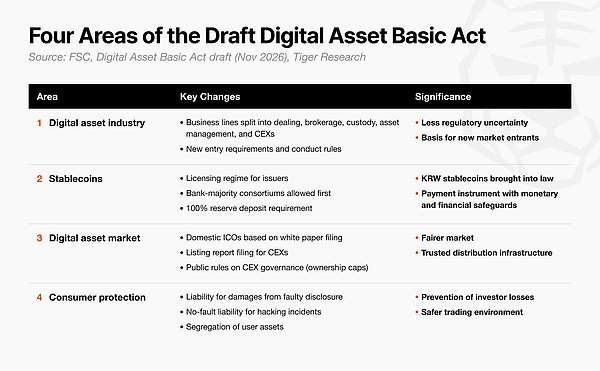
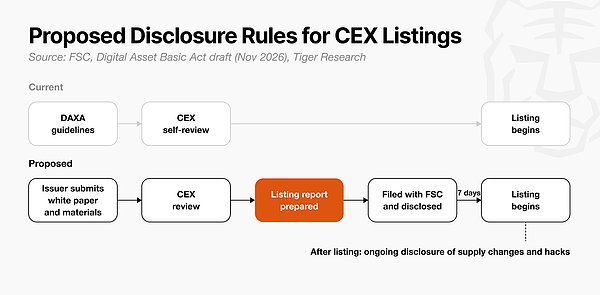
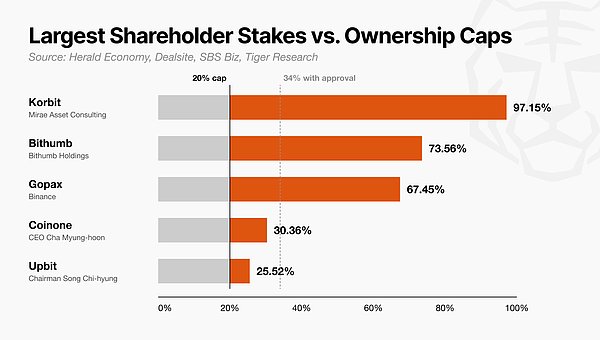
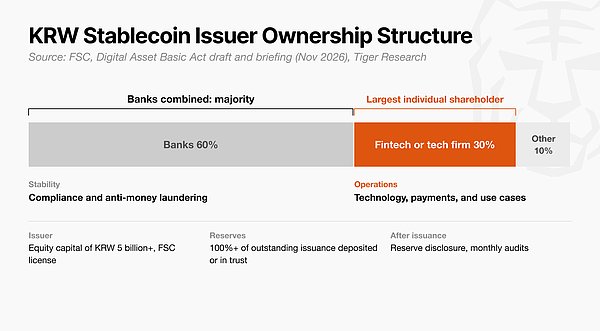
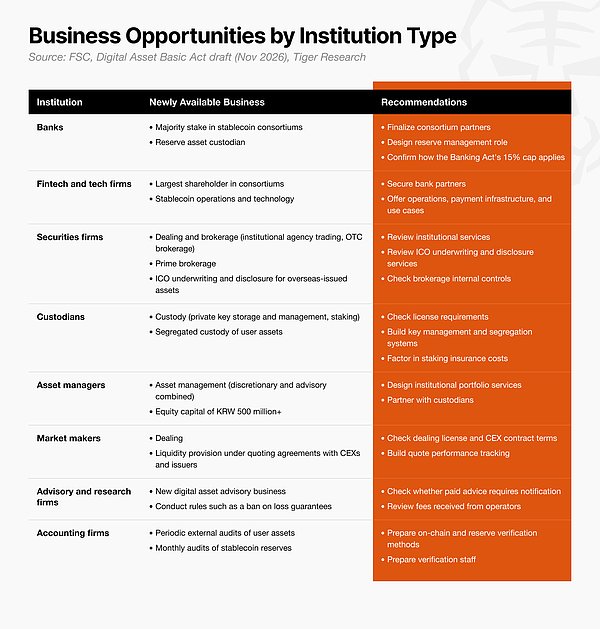
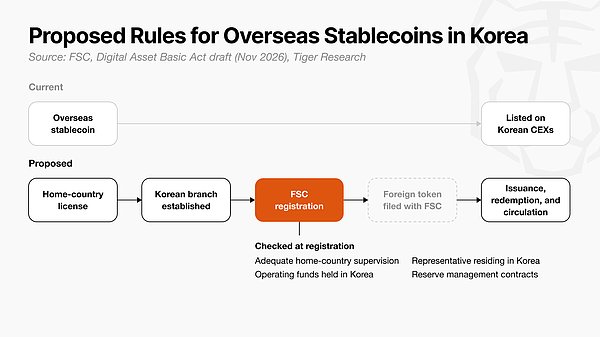
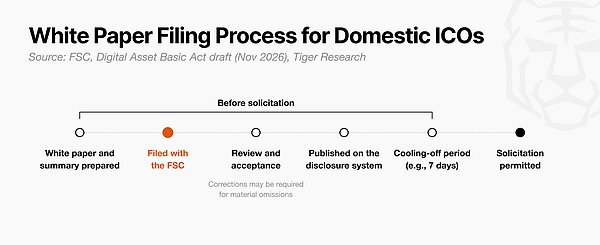
Authors: Ekko An, Ryan Yoon; Source: Tiger Research; Translation: Shaw, Jinse Caijing Key Points The bill will define four types of digital asset businesses and set regulatory rules for the Korean won stablecoin, domestic initial coin offerings (ICOs), and centralized exchanges (CEXs), with specific details to be determined by implementation orders. Centralized Exchange (CEX): Listing reports will become a legal obligation, and major misstatements will incur legal responsibility. Thus, exchanges are likely to conduct stricter due diligence on overseas projects. The equity structure has a 20% shareholding cap (which can be increased to a maximum of 34% upon approval), accompanied by a three-year transition period, with small and medium-sized exchanges possibly having a transition period of up to six years. South Korean Financial Institutions: Initially, only consortiums controlled by banks can issue Korean won stablecoins, but fintech companies can still be the single largest shareholder. If the 15% shareholding limit under the Banking Act applies, at least four banks need to participate; fintech companies must leave room for flexible structural competition, engaging in distribution channels and application scenarios. Custody, brokerage, and asset management businesses will also be opened up simultaneously. Overseas Stablecoin Issuers: Issuers that have obtained a license in their home country must register a branch in Korea with the Financial Services Commission (FSC) or declare offshore tokens to the FSC. Specific declaration details have not yet been finalized, and issuers need to confirm their applicable pathways. Web3 Foundations: Domestic ICOs will be allowed, but the tax advantages of offshore regulatory locations may lead to low willingness for project teams to migrate back to Korea. Foundations planning to list on Korean exchanges need to provide information to centralized exchanges more swiftly and may need to appoint an information disclosure officer or establish a local representative in Korea. Formal Legislation of South Korea's Digital Asset Market Rules After approximately two years of the implementation of the "Virtual Asset User Protection Law" (Phase One) starting from July 2024, the South Korean government announced the draft of the "Digital Asset Basic Law" (Phase Two), which may become a significant turning point for the South Korean crypto ecosystem. Many market participants expressed disappointment with this draft. Nevertheless, the bill will formalize previously unwritten market rules into law, clarifying the business scope that enterprises can engage in, as well as the obligations required for license applications, information disclosure, and the distribution of digital assets. As a result, the four core market players will need to significantly adjust their strategies: 1) centralized exchanges; 2) local financial institutions and fintech companies; 3) overseas stablecoin issuers; 4) Web3 foundations. This report does not analyze the bill clause by clause but focuses on the preparations that need to be made by exchanges, South Korean financial institutions and fintech companies, overseas stablecoin issuers, and Web3 foundations. 1. Centralized Exchanges (CEX): Listing Rules Formalized, Shareholding Cap Set Centralized exchanges will need to submit listing reports to the Financial Services Commission (FSC) and disclose them publicly, while assuming legal responsibility for the contents of the reports. Therefore, exchanges will likely be more prudent when listing overseas projects. The shareholding limit is set at 20% (which can be loosened to 34% upon FSC approval), and after qualification is obtained, there is a three-year grace period, with the maximum grace period for small and medium-sized exchanges reaching six years. This bill will change the listing process for centralized exchanges and the qualification of the entities involved in shareholding. Among these two changes, the listing rules directly affect the daily operations of exchanges and the channels for project listing. In contrast, the adjustments related to shareholding and governance structures set a three-year grace period starting from qualification recognition (with a maximum of six years for small and medium-sized exchanges), allowing exchanges to complete compliance adjustments step by step. 1.1 Mandatory Disclosure of Listing Reports Prior to this, the project listings of South Korean centralized exchanges followed the guidelines of the Digital Asset Exchange Alliance (DAXA) and the individual review rules of each exchange. According to this bill, centralized exchanges must prepare listing reports based on project due diligence and basic materials submitted by the project parties, referred to in the draft as "Transaction Support Reports." Listing reports must be submitted to the Financial Services Commission (FSC) before listing (e.g., 7 days in advance) and publicly disclosed on a platform tentatively named the Digital Asset Comprehensive Disclosure System. This obligation applies not only to newly listed tokens but also covers assets already being traded. The report must specify the issuer, total issuance, project overview, and relevant risks. If the report contains false statements or omits significant facts, the relevant parties required to disclose (including executives) must bear liability for damages. In practice, exchanges prepare this report to compensate for the difficulties in project due diligence; now this report will carry legal responsibilities. However, the vast majority of leading blockchain projects are located overseas, making it difficult for centralized exchanges in South Korea to completely verify information and due diligence materials provided by foreign foundations, leading to practical limitations. After verification and disclosure requirements have tightened, exchanges will be more cautious and have higher screening standards when listing overseas projects, except for a few large projects with established credibility. This accountability mechanism may also drive exchanges to introduce external verification processes in their listing reviews. The listing process in traditional finance goes through external audits and checks, and reports issued by exchanges now carry legal binding force. Therefore, exchanges are likely to independently introduce external audits or third-party verifications. False statements in white papers or significant omissions of information will also trigger accountability, which means that exchanges and project parties will pay more attention to the writing of white papers. In summary, exchanges not only need to prepare listing reports for new projects but also prioritize completing related reports for already listed assets; simultaneously, they need to set up due diligence processes that include external audits and third-party verifications in advance. 1.2 Qualification Recognition for Centralized Exchanges and 20% Shareholding Limit Centralized exchanges were initially private institutions, but as they grew, the South Korean government has viewed them as public infrastructure. To ensure their public nature and neutrality, the government has proposed shareholding limit requirements, referencing the regulatory rules for alternative trading systems (ATS) in traditional financial markets. Previously, there were no restrictions on shareholding ratios for centralized exchanges. To obtain qualification as a centralized exchange, a company must simultaneously obtain licenses for trading, brokerage, and custody; it then needs to prove that it has sufficient capital and operational capability for a trading platform to gain recognition from the Financial Supervisory Service (FSC) of South Korea. For recognized centralized exchanges, the single stakeholder shareholding limit is set at 20%. The subsequent implementation order is expected to stipulate that financial institutions and specific parties, upon obtaining approval from the FSC, can hold up to 34%; shares exceeding this limit will not have voting rights. Both existing and newly established exchanges can enjoy a grace period of three years from the time they acquire qualification recognition; those classified as small and medium-sized exchanges based on market share can have an additional extension of three years. This reduces the pressure to complete equity structure adjustments at once. However, before the method of calculating shareholding ratios and the scope of eligible financial institutions are clarified, exchanges will find it challenging to estimate the extent of necessary adjustments. Therefore, exchanges whose largest shareholder holds more than 20% should plan ahead: during the three-year grace period following qualification recognition (with a maximum of six years for small and medium-sized exchanges), they need to reduce excess shares and bring in new investors. Accounting rules and lists of eligible financial institutions for exemptions will be determined by the implementation order, and exchanges will need to revise their plans after the finalization of the order. 2. South Korean Local Financial Institutions: A New Business Track Beyond Stablecoins The impact of this legislation on local financial institutions is not limited to stablecoin issuance. The legislation divides digital asset business into four main sectors: proprietary trading, brokerage, custody, and asset management, with each category requiring a license or registration. Besides participating in the stablecoin issuance consortium, financial institutions also need to plan which businesses they will enter and how to implement them. The press release did not clarify whether financial institutions can independently carry out the aforementioned businesses or can only operate alongside existing ones. This needs to await further clarification in the text of the legislation and implementation order. 2.1 Stablecoins: Bank-led Consortium, Fintech Opportunities The debate surrounding the issuance rights of the Korean won stablecoin has been long-standing, with core disagreements over whether it should be led by commercial banks or by non-bank technology companies like fintech. Even before the draft was announced, large financial institutions and related companies had already spontaneously formed a consortium. To ensure financial stability, the draft requires that banks must hold a majority stake while allowing fintech or tech companies to be the largest single shareholder. The minimum capital requirement for issuers is 5 billion won (approximately 3.4 million USD), and they need to obtain a license from the Financial Supervisory Service (FSC) of South Korea. Initially, only consortia with a majority stake held by banks are allowed to issue won stablecoins; within that consortium, fintech or technology companies can be the largest single shareholder. The draft does not set shareholding limits specifically for tech companies. An example structure given by the South Korean Financial Supervisory Service: four banks each hold 15%, totaling 60%; a fintech company holds 30%; and other entities hold a total of 10%. This example illustrates that fintech companies can be the largest single shareholders, but the precondition is that the consortium overall is controlled by banks. The 15% shareholding limit in the Banking Act is the key variable here. The current Banking Act stipulates that banks' shareholding in non-financial enterprises cannot exceed 15%. If this rule is directly applied, to achieve the overall control of the banks, at least four banks need to participate. However, this draft does not clarify how this shareholding limit applies to a consortium structure. Reports indicate that financial regulators are considering revising regulatory rules to include stablecoin issuance as part of the business operations that can be conducted by bank subsidiaries. If the existing 15% limit is strictly enforced without adjustment, multiple banks must simultaneously join, significantly limiting the space for consortium formation. Therefore, setting up a feasible banking consortium is the core of the Korean won stablecoin business. Shareholder-related requirements and the applicable details of the 15% limit in the Banking Act will be clarified in the implementing order. Fintech and tech companies should proactively explore various equity structure proposals with banks, including the "overall bank control, with tech companies as the single largest shareholder" model, in order to respond swiftly once the implementing order is issued. The competition for discourse power between fintech companies and banks regarding consortiums is likely to intensify. Fintech companies can lock in channel partners in advance and build real landing scenarios to gain discourse power. For this business, the importance of such channel relationships is likely to outweigh the scale of stablecoin issuance. Thus, fintech companies should not focus solely on technology output but should emphasize expanding daily payment and distribution networks. An effective differentiated approach is to build infrastructure and circulation channels in areas where banks remain cautious due to regulatory and stability concerns (e.g., agency payments). 2.2 A Brand New Business Track Opened After the Split of Digital Asset Business The bill categorizes digital asset businesses into proprietary trading, brokerage, custody, and asset management. The first three require licenses, while asset management business only needs to be registered. Existing institutions must also apply for licenses within the stipulated time frame, according to the types of business they plan to carry out. No institutions are compelled to engage in the above businesses, but entities intending to lay out in related tracks should closely monitor this new business classification. The boundaries of financial institutions participating in the market cannot solely rely on this bill but also depend on subsequent supporting rules. Financial institutions should focus on the following matters: Partners and Business Lines: Plan partners and target business lines in advance. Implementing Order: Continuously follow up on the final versions of consortium shareholder requirements and license requirements for each business line. Compliance Costs: During the business feasibility assessment phase, three costs must be included: no-fault liability for losses caused by hacker attacks, administrative penalties for violating information technology security requirements of up to 10% of revenue, and monthly audits of reserve assets. Cooperation Framework Design: Before applying for a license, establish cross-business cooperation models, such as forming a stablecoin consortium between banks and fintech companies or partnering asset management business with custody partners. This bill still needs to undergo deliberation by the National Assembly of Korea and is expected to officially take effect one year after its announcement, giving companies a certain preparation period. However, before the implementing order is issued, it is advisable not to lock in partners and business structures too early, and to maintain flexibility in plans while continuously assessing. 2.3 Outstanding Issues Not Clearly Addressed in the Draft The draft does not directly address two major issues: whether financial institutions need to isolate from cryptocurrency businesses; whether corporate accounts can trade in crypto assets. Regarding the principle of business isolation, the Financial Services Commission of Korea stated that it would continuously evaluate the policy direction following the National Assembly's debate process. As for corporate accounts engaging in cryptocurrency trading, it is likely that regulations will not be included in the main text of the bill but will be issued through administrative guidance, with regulators evaluating the matter in conjunction with legislative discussions. The bank cooperation mechanism for Korean won real-name inflow and outflow remains subject to the current "Specific Financial Transaction Information Reporting and Usage Act" and is not bound by the new bill. If support for cross-border circulation and overseas issuance of the Korean won stablecoin is required, amendments to the "Foreign Exchange Trading Act" will also be necessary. Such matters need to be negotiated with relevant departments such as the Ministry of Planning and Finance before being determined. The main text of the bill also does not cover decentralized finance (DeFi) or prediction market regulations. Whether and how such businesses are regulated will be determined during the drafting of the implementing order and the regulatory guidelines of the Financial Services Commission. Thus, the boundaries of traditional financial institutions participating in the cryptocurrency market cannot be determined solely by this bill, and will need to gradually take shape through amendments and regulatory guidance. For overseas stablecoins to circulate in South Korea, there are two compliance paths: Issuers that have obtained licenses in their home countries can establish branches in South Korea and register with the Financial Services Commission (FSC) to conduct issuance and redemption business in South Korea; overseas tokens can also circulate in South Korea if they meet specific conditions and report to the Financial Services Commission. Centralized exchanges can only list tokens for which the issuance plan has been approved. However, the "specific conditions" required for reporting and the complete approval process are still to be specified by the implementation order, and there remains uncertainty regarding regulatory details. As a result, overseas digital asset companies and project teams looking at South Korea as a target market need to prepare their market entry plans and compliance systems more thoroughly than before. 4. Web3 Foundation: Domestic ICOs will be opened up, but the scale of implementation may be limited, and disclosure responsibilities remain In South Korea, raising funds through the issuance of crypto assets had been completely banned until now. On September 29, 2017, the South Korean government announced a complete ban on all forms of ICOs, including both security-type and token-type issuances. Since then, leading Korean projects have moved their issuance entities overseas to circumvent this regulatory restriction. A survey by the Financial Services Commission in 2019 also found that many Korean companies had set up shell companies in jurisdictions like Singapore to conduct ICOs that were formally classified as overseas. To prevent the model of projects issuing coins overseas and then listing on South Korean exchanges, this bill allows for domestic ICOs. However, relying solely on this policy makes it difficult to attract issuers to relocate their operations back to South Korea. Crypto hubs like Singapore have already formed mature ecosystems with supporting tax incentives and various favorable conditions for issuing coins; opening up domestic ICOs is unlikely to replace the advantages of these overseas locations. The bill extends the disclosure responsibility from the issuer to network development teams, project teams, outsourced operators, and other entities deeply involved in the issuance process. According to the bill's requirements, issuers must submit a white paper to the Financial Services Commission (FSC) before public fundraising. Relevant parties with disclosure obligations (including senior executives) must bear compensation responsibilities if the white paper or report contains false statements or significant information omissions that result in losses. For assets issued overseas, local digital asset operating institutions in South Korea will be responsible for fulfilling disclosure obligations. As the scope of accountable parties is expanded, the review standards for centralized exchanges and regulatory bodies are likely to tighten. Therefore, both domestic and overseas Web3 foundations need to provide exchanges with the required information more timely and comprehensively than before. As a preparatory response, foundations may appoint dedicated disclosure personnel in South Korea or entrust local agencies to handle disclosure-related matters on their behalf. Digital Assets: A Step Towards a Regulated Financial System In addition to investor protection, this draft aims to establish a legal foundation to promote the development of the digital asset industry and nurture the market. There are still many unresolved issues regarding the complete regulatory framework: shareholder rules for stablecoin consortiums, conditions for the exemption of the 34% shareholding limit for exchanges, declaration requirements for overseas tokens, and other core details are to be specified separately by the implementation order; the bill itself must still be reviewed by the National Assembly of South Korea. The bill does not contain provisions specifically addressing decentralized finance (DeFi) and other future forms of on-chain finance. The rules ultimately implemented will determine the compliance burdens for businesses and the digital asset businesses they can conduct in South Korea. Despite these limitations, the draft signifies South Korea's formal initiation of related work: while balancing market regulation and industry development, it aims to incorporate digital assets into a compliant financial system.
Details compiled from public sources. Always do your own research.