
Trump Discusses Insider Details of Jensen Huang's Return in One-Hour Interview
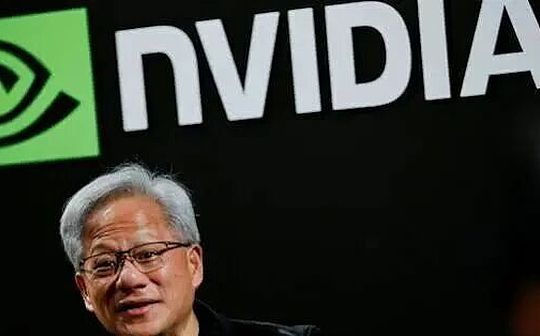
Shortly after NVIDIA announced Jensen Huang's return, Trump called into CNBC's 'Squawk on the Street' for nearly an hour-long interview, revealing many previously unknown details.
Machine translated. Refer to the original for accuracy.
On the morning of November 23, shortly after NVIDIA announced the return of Jensen Huang, Trump called into CNBC's 'Squawk on the Street' program for nearly an hour-long interview. This interview revealed many details that the outside world did not know before, including how Trump persuaded NVIDIA's board, why he insisted on Huang's return, how he discussed Huang with Chinese leaders during his visit to China, and what he thinks about the export controls and espionage controversies involving Huang. 1. How did Trump get Huang reinstated? CNBC reporter asked Trump what happened over the weekend, and why the NVIDIA board's attitude suddenly changed so drastically? Trump said he has always firmly believed that Huang should return, and as NVIDIA's situation worsened, he became more convinced of this idea. He has been communicating directly or indirectly with NVIDIA's board during this time and has also communicated with many business figures. Many people within the government have also been involved in this matter; Trump specifically praised Vice President Pence, Secretary of the Treasury Mnuchin, and Secretary of Commerce Ross. One of the main concerns for NVIDIA's board was whether Huang's return would pose a national security risk. Trump mentioned that the U.S. government had investigated for several weeks, not just starting recently. After a thorough investigation, the government's response to the board was that there was no such issue. The board ultimately made a decision in line with the wishes of the Trump administration. CNBC host David Faber revealed that until the latter half of last week, he had communicated with some people close to the NVIDIA board, who firmly told him that Huang was absolutely not coming back, even using profanity to emphasize that point. So, what exactly did Trump say to the board to make them change their minds? Trump responded directly: "I talked to them, I persuaded them." Trump also stated that persuading the board yesterday was much easier than a week and a half ago. A week and a half ago, the company's stock price was still high, and some people felt they were about to take over this amazing company, so they were, of course, very pleased. But when the stock price started to drop by 40% or even 50%, they would realize that this job didn’t seem so pleasant anymore. Therefore, persuading them again yesterday was much easier. Previously, he mainly communicated with the board through representatives and did not intervene directly as he did yesterday. When asked if he directly called into the NVIDIA board meeting, Trump did not answer directly, only saying that he had representatives on the board and was unwilling to disclose specific individuals he spoke with. When asked if Huang could have been reinstated without his intervention, Trump replied clearly: "No." He believes his intervention was very important. However, Trump does not agree with the idea of holding the NVIDIA board accountable or even calling for their replacement. He stated that the board was initially placed in a very difficult position and did not have as much information as the government does now. Perhaps a better approach at that time would have been to give Huang a leave of absence rather than forcing him to resign. But it also requires courage for the board to change their decision. If the board continued to oppose the government, it would, in his view, be a disaster. Trump also revealed that after all was settled last night, he called Huang. He did not discuss company governance with Huang or propose other specific demands, but only asked Huang to promise him one thing: to work hard. Trump told him, you have this mind and possess all the conditions; as long as you work hard, no one can defeat you. Huang replied that he would work harder than ever before. Trump stated that Huang was very excited at that moment. 2. Why does Trump insist on Huang's return? CNBC asked Trump whether the sharp decline in tech stocks last week influenced his decision to reinstate Huang. Trump admitted that it might indeed be a factor, but he values the long-term impact more. Trump stated that Huang has many chip designs that others do not know or cannot understand, including even himself. Huang is now considering future generations of chips, while others have not yet reached that point. Blackwell will eventually become outdated, but Huang already has much more advanced ideas than Blackwell in his mind. Trump spent a long time explaining why chips are different from other products. He said he has a friend who makes car mats, and once the product is released, it will quickly be copied by other companies; he also has friends who make movies, and within 24 hours of release, millions of pirated copies appear worldwide. But the most advanced chips are different; even if others obtain the product, they don't have the capability to replicate it because they lack the technology and intelligence needed. He once asked Jensen Huang directly why others couldn't replicate his chips like they do with other products. Huang told him it was because others simply can’t. Trump believes that NVIDIA is now at a very high technological starting point, able to continuously advance from the Blackwell foundation. Huang is the person who understands this technological foundation best and knows where to go next. CNBC's Jim Cramer referred to Huang as America's "national treasure." Trump loved this phrase, even joking that he would use it himself in the future without crediting Cramer. Trump emphasized that the U.S. does not have many geniuses and must protect these individuals. He also mentioned that during his first term, he protected Musk, suggesting that without his help, Musk might not have achieved his current success. Of course, Trump's focus is also on the stock market. During the interview, he continually watched the stock price movements on the CNBC screen. He said that previously, NVIDIA's stock was like a rocket flying in the wrong direction, but now the rocket has finally launched correctly, lifting the entire market. Trump compared the U.S. AI industry to a baseball team with ten star players. However, if one superstar suddenly gets ejected, the entire team's performance will be affected. Huang's departure impacted not only the stock market but also the way the world views the United States. When CNBC asked if he was worried about an AI bubble, Trump said he no longer is because one of the most important star players in America has returned to the field. Furthermore, during Trump's visit to China, he discussed Huang with the Chinese side. This aspect of the interview is particularly noteworthy. Trump repeatedly mentioned that his recent trip to China was a factor in his firm support for Huang's reinstatement. Trump revealed that he spent a considerable amount of time discussing Huang with the Chinese side. He was surprised by how highly they rated Huang's technical abilities, calling him a very intelligent person and showing more respect for him than for most people. This led Trump to worry: if the U.S. no longer wants Huang, might China try to poach him? Trump said that after returning from China, he thought it was entirely possible for China to spend a hefty sum to bring Huang over to manage a company. If Huang felt angered by his treatment in the U.S., would he just go to China? The Blackwell technology is in his mind; it's his own creation, and no one understands it better than he does. Trump even mentioned Huawei directly, envisioning that China could ask Huang if he would be willing to come lead Huawei or another company. If Huang really felt disappointed with the unfair treatment in the U.S., who could guarantee that such a scenario would never happen? CNBC reporters immediately probed whether Trump received any indications during his visit to China that there were real plans to do so. Trump clearly replied no, stating that there were not even hints of such intentions. He just connected these thoughts from the high regard the Chinese had for Huang. Huang himself had never expressed a desire to go to China. However, Trump said that if he were in China’s position, he might consider doing this. He mentioned that he had told several people that he understood how China might think because if he were in their shoes, he might wonder: why not just make a deal directly with Huang? This way, there wouldn't even be a need for spies; they could just invite Huang over. Trump humorously remarked that if he were Chinese, he would quickly invite Huang to China, giving him whatever he wanted, even the whole of Beijing. Regarding whether Huang himself violated the U.S. chip export controls, Trump stated that the judicial department had conducted a rather thorough investigation and that the investigators believe Huang could be excluded from related suspicions. Trump's basic logic is that Huang has always been in the chip business. If Nvidia sells chips to a company, and this company later resells the chips to China, then the first responsibility should rest with that company, and it cannot be automatically assumed that Huang also bears responsibility. If someone sells chips that shouldn't be sold to China to China, he would certainly be unhappy as president, but the strong judgment formed by the government right now is that Huang himself did not know about these matters. Why would Huang put himself at such great risk? However, Trump also admitted during the interview that he is not even clear about whether the relevant transactions have occurred, nor what chips were sold, and which type of chips sold is a very important issue. Regarding the allegations that Alice Huang had contact with personnel from Chinese intelligence, CNBC journalist cited a report from the New York Times and asked Trump if this wouldn't raise his concerns about national security risks? Trump's first reaction was: "Who hasn't had contact? I just returned from China, and had meetings with the Chinese side. The Chinese have contact with many people, including me, and that doesn't mean anything. The journalist followed up, asking whether Trump believes there is no issue with Alice Huang having contact with personnel from Chinese national security? Trump jokingly used his own meeting with the Chinese side as an example, saying that if we follow this logic, wouldn't I also be implicated? Now every time a beautiful Chinese woman appears, someone says she is a spy. But regarding Huang, I don't believe this is the case. CNBC host Sara Eisen specifically asked Trump if he directly asked the Chinese side whether Alice Huang is indeed a spy during his visit to China? Trump answered, no, he did not discuss this issue with the Chinese side and did not talk about such specific details. Sara Eisen then pressed: Do you think that Huang poses no danger to national security and does not constitute a national security threat, is that your own judgment or the judgment of the U.S. national security team and intelligence community? Trump replied, both. Relevant personnel provided me with judgments; they surely have more information than I do. But from day one, I've thought Huang is innocent. If I thought Huang had really done something illegal, I would not recommend him for reinstatement to the board. The journalist attempted several times to inquire what information the CIA provided to Trump, but Trump did not disclose specifics, only saying he had received necessary confirmation, which he would not have facilitated Huang's reinstatement without. The journalist also asked if Trump had guaranteed to Nvidia’s board that Huang would not face criminal charges due to export control issues? Trump did not make such a clear commitment, just emphasized again that the government believes Huang has no issues and that he indeed provided assurance to the board. But he also acknowledged that such assurances can only be based on the information currently held by the government. Five, how does Trump view the U.S. export controls on chips to China now? The CNBC journalist presented two perspectives regarding export controls on chips to Trump. One is Huang’s view, believing that the U.S. should continue selling chips to China to make them reliant on American chips and technology ecosystem, rather than forcing China to build its own chip industry; the other is the hawkish view on China, believing the U.S. should not enhance China's AI capabilities by selling advanced chips. Which viewpoint does Trump currently identify with more? Trump's answer was that he understands Huang's logic. If the U.S. doesn't sell, China will build its own. China already has some outstanding companies, and in many chip technologies, China is not that far behind the U.S. For those technologies that are already relatively lagging, and that China can produce itself, there is no need to overly concern whether to sell to China. Trump mentioned the H200 in the interview, saying that these types of chips are already somewhat outdated, and China has its own similar products. But the Blackwell and other most advanced chips are another story, as these chips cannot currently be replicated by other countries. Chip technology iterates very quickly; today’s most advanced chips may be outdated in a year or two. When the Blackwell becomes outdated, he does not oppose selling it on the market because by then, China may also have its own similar products. Six, why does the U.S. president intervene in the internal governance of a public company? Are there boundaries to this intervention? CNBC host Sara Eisen asked Trump a pointed question: Why does the President of the United States intervene in the internal governance of a publicly traded company and decide who should manage it? Where is the boundary of such intervention? Trump acknowledged it was a good question, but his answer was that he was doing it for the national interest. Watching the U.S. stock market lose $5 trillion in market value after the midterm elections, he felt it necessary to intervene. If he did not, NVIDIA could fall into difficulty for a long time or even slowly decline. He had seen many such companies before and had noted some very talented CEOs being ousted due to personal scandals, followed by boards replacing them with far less capable individuals, resulting in the companies taking ten to fifteen years to recover. However, Huang's situation was more unique than a typical corporate executive scandal, as the knowledge in his head was extraordinarily important. CNBC followed up, asking if, since NVIDIA could be seen as a national strategic enterprise, what about Microsoft? What about Google? OpenAI and Anthropic? If these companies faced similar issues in the future, would Trump intervene directly as well? Trump replied that there was no fixed formula for such situations; it needed to rely on feeling and judgment, much like a top golfer hitting shots around the greens. Some people know how to hit the ball just right, while others do not. Each specific case must be judged individually. He certainly hoped for a formula, but in reality, there was none. Huang’s case was one he felt very strongly about; he believed the United States could not lose this person. He had previously assisted Musk and other entrepreneurs; these matters required specific analysis of each issue. He later stated, "I manage the United States, not NVIDIA. But NVIDIA is a very important part of the United States." 7. How does Trump view Huang’s personal issues and whether company governance needs to change upon his return? CNBC reporter asked Trump, Huang had lost a considerable portion of his credibility due to this incident, including media reports of his inappropriate relationships with subordinates. Upon regaining control of NVIDIA, he would likely need to exert significant effort to re-establish his authority. What does Trump think? Trump’s judgment was quite the opposite. He believed that Huang might be even more motivated upon his return, and his personal status might not be diminished. Huang indeed made a significant judgment error regarding personal matters, but that mainly concerned issues outside the business. Huang had already apologized to the company, the country, and his family. Trump also repeatedly mentioned Huang’s wife, praising her support throughout the process. Trump even believed that this incident might ultimately produce some positive effects. Although NVIDIA was placed under a very unfavorable spotlight, it was this incident that made many people recognize how advanced NVIDIA’s technology really was, and how important Huang himself was to the company. Jim Cramer then asked Trump if NVIDIA's corporate governance should also change, such as whether there were too many people reporting directly to Huang. Did Trump request Huang to correct certain practices or to provide guarantees to the board? Trump said he did not discuss these issues when he called Huang last night. He believed Huang knew what he should and should not do, even better than they did. His only requirement was for Huang to work hard. When asked if this meant Huang was now too big to fail, Trump did not accept the notion, simply stating that Huang was a very smart person and the United States wanted him on its side. CNBC host noted that just a few weeks ago, Trump had publicly suggested Apple CEO Tim Cook take over NVIDIA. What was that about? Trump explained that at the time, NVIDIA's board was very clear that Jensen Huang would not be returning, which surprised him given the board's resolute attitude. Since Huang's return seemed impossible, he thought of Tim Cook. Trump likes Cook very much, believes he has done an outstanding job at Apple, and trusts Cook has the capability to manage NVIDIA. However, he noted that NVIDIA's situation is quite different from Apple's. Chips are extremely complex technical products that involve the future direction of technology. On this level, he believes no one can do what Huang has done. Trump also believes that if Cook takes over NVIDIA, he could help the company's stock price recover, but he fears that no one could replicate the significant rebound in NVIDIA's stock price in such a short time like Huang did. Question eight: Did Trump consider letting the U.S. government take shares in NVIDIA? CNBC host Carl Quintanilla asked Trump if he considered letting the U.S. government take shares in NVIDIA throughout the process, or whether he still holds such an idea now. Trump joked that he would certainly love to, but does not want to be prosecuted for insider trading. It would be an interesting case for the U.S. Justice Department to prosecute the U.S. government for insider trading. Trump also stated that when he facilitated Huang's return, he was unaware of how the market would react. While he believed the likelihood of a stock price drop was low, strange things could happen in the market, and he did not expect the market's reaction to be so strong. He emphasized that at the time, he was not considering profiting through government stock acquisition, but was mainly focused on the importance of this matter to the U.S. Towards the end of the interview, CNBC also asked that NVIDIA supported a large number of AI companies through various investment and financing arrangements. If these financings encounter problems in the future, will the U.S. government step in to support NVIDIA? Trump stated that he thinks this situation will not occur. The demand for NVIDIA's chips is very strong, not only for current chips but also for a large number of orders for chips that have yet to be released. The company's strength is very robust. Question nine: What does Trump think of the Republicans opposing Huang's return? CNBC reporters asked Trump that many Republican congress members, including some national security and China hawkish individuals within the government, are worried about Huang's return. What does Trump want to say to these individuals? Trump appeared unconcerned. He said that after he talks with these people, things will improve, as they are all decent individuals. However, Trump also took this opportunity to criticize three or four Republican congress members whom he believes previously obstructed legislation, claiming their actions were also one of the reasons for the poor performance of the Republican Party in the midterm elections. But he did not name them or specify how he planned to persuade the Republican members opposing Huang's return. The reporter confirmed once more whether Trump believes Republicans will eventually accept this decision. Trump replied that they will. Question ten: Other issues Regarding OpenAI, Anthropic, and AI safety. CNBC asked Trump if he thinks that some individuals within OpenAI and Anthropic are concerned that AI technology is developing too quickly and could pose serious safety risks to humanity. If Trump believes these companies are advancing too quickly, would he intervene in them just like he intervened in NVIDIA? Trump replied that the Justice Department would intervene. He then spoke about Anthropic CEO Dario Amodei, saying he did not know Dario before, and based on others’ descriptions, thought he was Darth Vader from "Star Wars." But upon meeting, he found Dario to be a very decent and intelligent person. Trump believes that dealing with such geniuses sometimes requires patience, just as the best Broadway actors are often harder to get along with than regular actors. Regarding TSMC and U.S. chip manufacturing. Trump also mentioned TSMC Chairman Wei Zhejia, praising him as a remarkable genius. Trump said it is due to his tariff policies that TSMC is willing to spend hundreds of billions of dollars to build factories in the U.S. He also spoke about a new project potentially being built in Texas, claiming that two years from now, import chips could face a 200% tariff, which is why these companies are now flocking to establish factories in the U.S. If he were to announce a cancellation of tariffs today, these businesses might halt construction tomorrow. Regarding China-U.S. trade negotiations. Trump revealed that he reached a yet-to-be-announced trade agreement during his trip to China, in which China would buy more American agricultural products than originally planned, including soybeans. Trump said he even asked if the purchase quantity could be doubled, with the current issue being whether American farmers can produce that much agricultural product. He also claimed he sold 250 Boeing airplanes to China, and believes China may buy another 250. According to media reports, last week, Trump was determined to help Huang regain the CEO position as much as possible. The specific coordination work was then handed over to Vice President Vance. From November 21 to 22, Vance reached out to Huang privately and communicated with NVIDIA's board. Trump told Vance that he had not seen evidence that Huang violated any laws or posed a national security risk, asking Vance to gather more information. After consulting Attorney General Todd Blanche and others, Vance conveyed the White House's opinion to NVIDIA's board last Saturday and Sunday: the U.S. government does not consider Huang a national security risk, and the board should let him return. The Associated Press cited informed sources explaining why the White House chose Vance for this task: on one hand, Vance carries the weight of the Vice President; on the other hand, he had previously worked in Silicon Valley, building a significant network in the business community, making him suitable for this coordination task. Attorney General Todd Blanche also discussed Huang's matter with Trump over the weekend, telling the President that the Justice Department had no evidence of wrongdoing by Huang or NVIDIA. Trump himself revealed in an interview with The New York Times that he had consulted the heads of the Justice and Intelligence departments beforehand, stating he could not just recommend Huang's reinstatement only to have him indicted thereafter. Clearly, Trump was aware that stepping in to vouch for Huang meant shifting a portion of the political risk onto himself. As for why they were so determined to bring Huang back, media reports revealed two main considerations. One is that Trump and Vance increasingly believe that Huang is an important supporter of the U.S. open weight model and a key force to balance companies like OpenAI and Anthropic that operate closed-source models. The White House does not want the dominance of the U.S. AI industry to become increasingly concentrated in the hands of a few closed-source model companies, and Huang may play an important role in this regard. The other concern is the fear that if Huang leaves NVIDIA, he could be poached by Chinese firms. In Trump and Vance's view, having Huang resume control of NVIDIA would help keep the initiative in advanced chip R&D and exports in the hands of the U.S. Additionally, Axios reported that Huang's allies had been feeding Trump a narrative that Huang was being persecuted by the "deep state" in the U.S. This narrative resonated with Trump. One of the most dramatic details of the entire process was that even NVIDIA's own management only learned at the last moment that the board planned to change its mind. According to Bloomberg, after Trump pressured them, the board made a decision on Sunday afternoon without even consulting the company's executives in advance. Acting CEO Colette Kress was unaware of this for most of Sunday, as the company was preparing for a future without Huang. On Sunday, Trump himself also got directly involved. According to media reports, the President directly called into the NVIDIA board meeting to advocate for Huang's reinstatement. White House Communications Director Steven Cheung also publicly confirmed the President's deep involvement. Trump admitted in a CNBC interview on Monday that he had communicated directly and indirectly with the board, which explicitly requested the U.S. government to provide assurances regarding whether Huang posed a national security risk. By Sunday afternoon, the board had basically reached a decision and formally voted that night, unanimously agreeing to bring Huang back. NVIDIA submitted an 8-K filing to the U.S. Securities and Exchange Commission (SEC) explicitly stating that the board reinstated Jensen Huang as President, CEO, and board member effective November 22, though it was only announced to the public on the morning of the 23rd. The New York Times reported that the board notified the White House that evening, preparing to release news before the stock market opened on Monday. Very few high-level government officials were aware of the entire coordination process, and Trump was even pleased that such significant news did not leak in advance. However, Trump almost revealed the news himself ahead of time. On Monday morning, shortly after 8 AM, before Nvidia had officially announced the news, Trump was speaking with PBS reporter Liz Landers and mentioned that Huang should already be 'back where he belongs.' The reporter immediately pressed him, and Trump then changed his wording to 'I hope it will be soon.' Of course, the board's agreement to bring Huang back does not mean that everything from before is erased. According to Nvidia's reinstatement announcement, the independent board committee's investigation will continue, and the company will maintain its cooperation with the government's inquiries. Additionally, Nvidia will be hiring a Chief Compliance Officer, who will report directly to the relevant board committee. The announcement also emphasized the role of the board's National Security and Export Control Committee. This means that although Huang has regained the CEO position, investigations and oversight related to export controls and national security have not ended.
Read original · 金色财经资讯Details compiled from public sources. Always do your own research.