
"Miner Surrender": After Bitcoin Plummets, Most Miners Are Forced to Shut Down
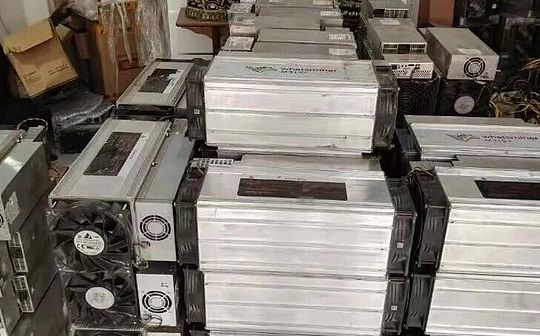
A portion of high-cost hash power is being drawn away by AI demand, and the hash power remaining in the Bitcoin network will passively compromise towards lower electricity prices and newer models.
Machine translated. Refer to the original for accuracy.
Today, Antpool's mining machine revenue data has been released. Under the assumption of an electricity price of $0.06 per kilowatt-hour, the daily net revenue of the Shentu M66 (280T), Antminer S19 XP, and Avalon A1466 has all turned negative, falling below their respective shutdown prices. These three models were the main delivery models during the last cycle from 2021 to 2023. The shutdown coin price for the Antminer S19 XP is $66,089, with a daily net revenue of -$0.36; the shutdown coin price for the Shentu M60 and M66 is about $61,170, with electricity costs representing 101% of revenues. For these machines, mining income can no longer cover electricity costs, and continuing operation is equivalent to subsidizing the grid. After the halving, hash power prices first collapsed. In its Q1 2026 report, CoinShares stated that by Q4 2025, the price of hash power had been compressed to $36 to $38 per PH/s/day, further falling to about $29 in Q1 2026, hitting a five-year low. The same report estimates that around 15% to 20% of old mining machines are operating at a loss at this price level. The halving in April 2024 cut the block reward from 6.25 to 3.125 bitcoins. For a considerable time after the halving, the total network hash power did not drop in sync, and the block production competition on the supply side remained crowded. The halved rewards and unchanged hash power led to a squeeze on production, which was not merely triggered by a singular event of falling coin prices but was a structural result post-halving. Difficulty adjustment isn’t good news. Bitcoin mining difficulty was adjusted down 9.13% from 148.36T to 134.82T, the largest drop since June, estimating the total network hash power decreased to about 965 EH/s. A decrease in mining difficulty is usually interpreted as "relief for miners," but the causal direction is precisely the opposite. The reason for the difficulty decrease is that many hash powers have gone offline, elongating block time to an average of 11 minutes, forcing the system to passively lower difficulty to restore the block generation pace. Tracking data shows that total network hash power has slipped from 1,095 EH/s to 826 EH/s in two weeks, a decrease approaching 25%. After the 9.13% difficulty reduction, the expected income per hash power theoretically increases by about 10%, but whether this easing channel is effective depends on whether the offline hash power will return. If the machines that were shut down were already old capacities forced out by hash power prices, the difficulty reduction will only slightly benefit the efficient machines remaining online and will not pull the S19 XPs back above the breakeven line. Choices faced by old mining machines at this price level. One option is geographical migration. Estimates from Luxor Technology indicate that about 600,000 S19 series mining machines are relocating from the United States to destinations concentrated in Africa and South America, with Ethiopia, Tanzania, Paraguay, and Uruguay being major receiving locations. The logic is straightforward: the same S19 XP has negative daily net revenue at an electricity price of $0.06/kWh, but if it lands at an electricity price reduced to $0.03 or lower, it can turn losses into profits. Another option is switching electricity usage. U.S. listed mining companies are turning their already secured grid connection capacity and data center parks to AI/HPC workloads. By 2026, the total announced AI/HPC contract amounts by listed mining companies are estimated to be between $70 billion to $90 billion, with some companies expecting AI-related income to account for 70% of total revenue by the end of 2026. The total Bitcoin network hash power has declined from its peak by 15% to 21%, mainly because these operators repurposed their equipment from SHA-256 mining to AI hash power hosting. However, for operators holding old air-cooled mining machines, this path is almost impractical. AI customers desire data centers that are high-density, water-cooled, and ready for long-term delivery, rather than a row of S19 XPs. A portion of high-cost hash power being siphoned off by AI demand will compel the remaining hash power in the Bitcoin network to compromise toward lower electricity prices and newer models.
Details compiled from public sources. Always do your own research.