
How to Understand the Current Bipartisan Struggle in the U.S. and Internal Party Games
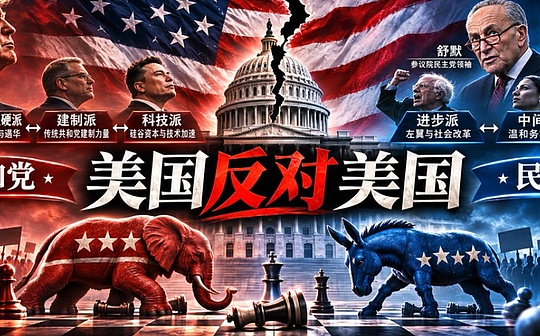
"America Against Itself" reveals the United States is a complex entity filled with internal structural contradictions, negative forces, and self-conflicts. From this perspective, one can understand the current struggles between the two parties and the internal games within them.
Machine translated. Refer to the original for accuracy.
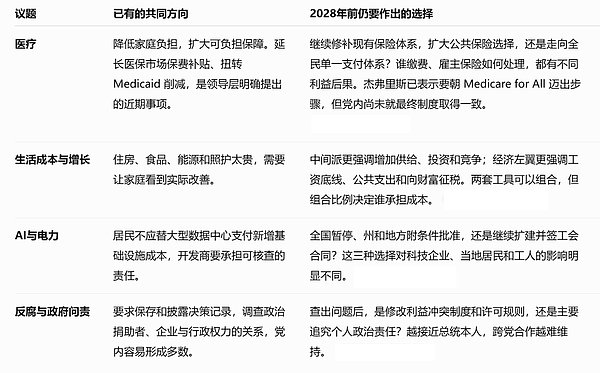
Author: qinbafrank; Source: X, @qinbafrank There is now a divergence within both American political parties that is more challenging to handle than the traditional left-right struggle: both recognize that the U.S. must win the next round of technological competition and contain its main strategic rival, but they have different views on who should benefit, who should pay the costs, and how much power the government can wield to win. Looking at the Republican Party: Bannon can align himself with Rubio on limiting chip exports to China, be closer to Vance in opposing prolonged wars in the Middle East, and can also join extreme leftist Sanders in calling for constraints on AI giants. Looking at the Democratic Party: Schumer can prepare to investigate Trump while being challenged for leadership by fellow party members regarding the Huang Renxun case. Using fixed camps to explain, exceptions will pop up every few days; breaking disputes down into specific policies reveals that many people's seemingly contradictory stances actually have internal logic. Forty years ago, a scholar from Fudan University went to the U.S. for exchange studies and wrote a book now seen as highly valuable, "America Against America." One core point that resonates with the present is: "America Against America" reveals that the U.S. is not a homogeneous whole but a complex entity filled with internal structural contradictions, negative forces, and self-contradictions. From this perspective, one can understand the current struggle between the two American parties and the internal conflict within them. 1. Divisions within the Republican Party; Trump can be categorized separately 1. MAGA economic populists Represented by Bannon and his media and grassroots mobilization network. Bannon influences how supporters understand a policy but does not have administrative authority to sign. They advocate prioritizing American resources to serve American workers. They oppose long-term military and financial commitments in the Middle East, are averse to tech giants reaping profits while workers bear unemployment risks, and advocate strict limits on advanced chip supplies to China. 2. National security and hardliners toward China Not just Rubio, but also Bessent, as well as the Republican chairs of the House committees on China issues, foreign affairs, and intelligence. Their power comes from security assessments by the executive branch, congressional investigations, and export control legislation. Their priority is to prevent American technology from enhancing China's strategic capabilities. They focus on which clients and third countries chips go through, and whether cloud computing power can be remotely used. Whether to engage militarily in the Middle East depends on individual judgments of threats. 3. The faction advocating for expedited AI development and expanding the U.S. technology market Sachs is a representative, Vance overlaps with this faction on open weight models, and Lutnik controls the Commerce Department’s licensing and trade policy tools. They worry that if the U.S. seals off too much, overseas clients will shift to alternative platforms like Huawei. Sachs defends conditional sales of the H200, one reason being to maintain the market position of American platforms. Exporting certain generations of products conditionally is different from opening up cutting-edge products to China. 4. Presidential power centered around Trump Trump controls personnel, negotiation agendas, and the ability to speak directly to supporters, and he must bear the political consequences of the stock market, wars, and prices. He wishes to retain space for case-by-case decisions. At one moment, he may adopt hardliners' export restrictions, and at the next, push for Huang Renxun’s return for industrial competition and market confidence. If Congress codifies restrictions in law, the first space to be constrained will be the president's negotiating room. Each faction here has differences or cooperations in different meanings: 1) For example, Bannon's anti-war stance, opposition to AI's impact on employment, and call to constrain China's computing power are not contradictory Bannon measures policies against a relatively stable standard: does this enhance the status of ordinary American workers or the power of Washington and large companies? In his political narrative, prolonged wars in the Middle East consume U.S. resources, while tech giants driving automation could weaken domestic workers' bargaining power, and selling advanced computing power to China may aid competitors. All three judgments can emerge from economic nationalism. Here, "America First" does not equate to external moderation; it can fully support both military restraint and technological blockade simultaneously. However, Bannon's collaboration with Sanders on AI cannot be generalized to mean they support the same complete set of policies. They indeed called for stronger AI oversight together in September. Sanders and AOC have explicit federal legislative proposals demanding a pause on new AI data centers until related safeguards are in place. The concerns over tech monopolies and employment impacts are intersections for both wings; whether they accept the same suspension conditions, labor systems, and wealth redistribution plans remains another set of issues. 2) Vance is the bridge between MAGA grassroots and tech capital; the Iran war exposes his difficulties the most. “Vance supports AI development but is skeptical about long-term foreign wars.” After the midterm elections, he publicly linked the Republican Party's losses to the war with Iran. On November 20, Trump faced reporters alongside him, and Vance still refused to clarify whether he would order strikes again if it were up to him. His response was that decisions at the time were made by Trump, and the vice president's duty is to support the president. At the same time, he clearly demanded in October that Iran practically reduce its nuclear enrichment capabilities before there could be conditions to end the war. This represents a position sensitive to the costs of war while also willing to pressure negotiation counterparts. Regarding the Huang event, Vance took the initiative to push for reinstatement. According to Reuters, Trump and Vance worry that the U.S. open-weight model will lose a key figure who is both willing to support it and has the computational and industrial resources to back it. Vance wants to place technology investment and economic nationalism within the same political alliance. As long as AI is understood as a tool for U.S.-China competition, these two elements can coexist well; once local voters interpret it as leading to higher electricity bills, job cuts, and subsidies for the wealthy, conflicts will arise. For someone intending to compete for the 2028 presidential nomination, this is a more challenging issue than the question of “how friendly one is with Silicon Valley.” As for entrepreneurs like Musk and Jensen Huang, they should be viewed separately from White House officials. Companies have interests of customers, shareholders, supply chains, and product lines, while Vance is constrained by votes and internal party succession. The Secretary of Commerce also has accountability concerning licensing and enforcement procedures. They can become allies on “reinstate Huang” but do not need to agree on which models can be exported or which customers should be blacklisted. The “tech faction” can explain a joint action but finds it hard to summarize everyone’s complete positions. II. The Huang incident is a concentrated reflection of the different factions in the Republican Party battling for influence. There has been a detailed analysis of actions from various Republican factions during the “Huang Movement,” where the core issue is: the most direct consequence has been the significant weakening of Trump's prestige and influence within the Republican Party. Previously, Trump could rely on his prestige and influence to firmly suppress dissenting opinions within the party, and no other voices could fully emerge. However, this severe loss has considerably diminished Trump's influence, while the negative voices surrounding inflation, livelihood issues, and AI data center development have been amplified, as these have been direct causes of the defeat; since such a significant loss occurred, Trump cannot ignore it. Hence, political figures within the Republican Party who hold differing opinions have started to become more active and assertive. Why could Huang return? The market crash led everyone to recognize Huang's importance, and Trump, riding the aftermath of the market crash, suppressed the party's hardliners and actively pressured to persuade NVIDIA's board. Through this incident, all factions within the Republican Party have achieved certain outcomes: Trump and Vance won personnel decisions, the National Security faction gained some regulatory achievements (remote computational power limitations, documents from the Commerce Department explicitly stating they were drafted with leadership from the Treasury and National Security Council, and the establishment of a National Security Council within NVIDIA’s board, which will likely lead to more stringent compliance requirements for NVIDIA's chip sales thereafter). Meanwhile, the Democrats gained a line of inquiry that could reach the Commerce Department and even the White House. No faction withdrew from this game due to Huang's reinstatement. III. What factions exist within the Democratic Party? “Establishment” and “Moderate” should be understood separately. The Democratic Party is more of a tent collating various interests, with establishment factions describing who holds control over party groups, fundraising, and agenda resources, while moderates describe the kinds of policies and electoral compromises individuals are willing to accept. Thus, Jeffries can be viewed as establishment while also drifting towards the left on health care. A moderate who wins a seat in a red state may also support replacing Schumer. More distinctions worth making within the Democratic Party include the following forces: Congressional leadership and party organization Schumer and Jeffries have the primary responsibility of maintaining a majority across blue states, swing states, and newly won red states while advancing matters that get votes. They tend to prioritize health care subsidies, cost of living, and government accountability. The left hopes to convert victories into structural reforms. Ordinary members and committees may demand that leaders relinquish part of their agenda-setting authority. Moderates, pro-growth factions, and pragmatic governance factions The House has a formal “New Democrat Coalition.” Its agenda covers housing, health care, energy, caregiving, and consumer goods. Pennsylvania Governor Shapiro represents a local governance approach: willing to attract industrial investments while setting hard conditions for developers regarding electricity costs. On issues regarding a complete halt on data center construction, expanding direct government provision, and the extent to which businesses should be constrained, there are clear differences with the left. Economic progressives and democratic socialists. The progressive faction is broad, with AOC and independent senator Bernie Sanders allied with the Democratic Party representing the democratic socialist route. Economic progressives like Ro Khanna emphasize universal healthcare, wealth taxes, and higher minimum wages. Shared concerns include corporate concentration, political donations, and workers' bargaining power. They question whether leadership reform is too slow while also doubting whether centrists can improve distribution solely through investment growth and market competition. The progressive caucus has its own cost-of-living proposals, not just protest agendas. The labor and local industry coalition spans the aforementioned factions. Construction and electrical unions care about whether projects can start and whether contracts provide local union jobs; communities hosting data centers are more concerned with electricity prices, water usage, and developers' promises. Even when both sides claim to represent workers, they might vote against each other on the same project. A specific example is the electrical union joining forces with OpenAI, Blackstone, and others in support of a data center construction coalition. The national security faction also spans within the Democratic Party. Senator Slotkin of Michigan, a former intelligence analyst, criticizes Trump for involving in Nvidia, emphasizing national security and legal oversight. Pennsylvania Governor Shapiro discusses institutional favoritism towards top figures, while Ro Khanna from Silicon Valley emphasizes that stock prices shouldn't exempt companies from accountability over exports. All three support investigations, which explains why 'anti-Trump' allows them to quickly unite, and also why divisions resurface when it comes to what laws to enact next. Why is the Democratic Party beginning to plan for accelerated investigations? First and foremost, there is a desire to use investigations to suppress the Republicans and accumulate advantages for the 2028 election to secure votes. But there's also a more direct motive: Voters have indeed authorized them to strengthen oversight. An AP survey found that about 70% of voters believe Congress is not effectively balancing Trump, including about 40% of Republican voters. Meanwhile, about one-fifth of those voting for Democratic candidates still hold a negative overall view of the Democratic Party. This means a considerable segment of voters has a specific thought: I am willing to let you investigate the White House, but I haven't decided if I'm comfortable letting you run the White House. If the Democrats interpret all investigations as blatant election maneuvers for 2028, they will miss the voices of voters who demand proper procedures and good governance. To cater to voters' demands, the Democratic Party also knows that the core of achieving a sweeping victory in this midterm election is the dissatisfaction voters have with Trump and the Republican policies. Therefore, after gaining a majority in Congress, they actively initiate investigations to expose Trump's and the Republicans' misconduct, corruption, and shady behavior from the past two years, presenting it all to the public, thereby strengthening the public's opposition to Trump. This further consolidates their advantage for upcoming elections. Yesterday, Jeffries' statement as the incoming Speaker in my view serves as the Democratic Party's battle cry, clearly defining the direction for future investigations and negotiations. On November 19, House Democrats already sent a letter to Lutnik, investigating whether Nvidia influenced the Commerce Department's enforcement on Megaspeed. On the 23rd, Jeffries called for investigations and pushed for export legislation following Huang's reinstatement; Schumer pledged to pursue potential misconduct after securing a majority, and Hassan sought information from Vance regarding another case involving Venezuela's oil permits. The Democratic Party is now quite active. The Democrats are publicly demonstrating how they plan to leverage their congressional majority; Internally, Van Hollen used the Nvidia incident on the same day to illustrate why the Senate's agenda-setting should be reformed and challenged Schumer on December 1. The investigations into Trump by the Democratic Party are also becoming material for competition over leadership among Democrats. Thus, the Democratic Party faces a real risk: investigations may easily unify the caucus but cannot complete policy trade-offs for the caucus. A hearing can simultaneously satisfy the national security faction, the anti-corruption faction, and the anti-tech monopoly faction. The next healthcare vote needs to decide who will be covered, how much will be spent; a data center project will have to determine whether to approve or who should pay. If for months the only appearances on TV are of executives and ministers while there are no visible improvements in families' insurance premiums, electricity costs, and housing burdens, the Republicans will have the opportunity to throw the question back: what have you accomplished for your voters after getting both chambers? On November 22, CBS host directly asked Jeffries what bill he plans to push through first after taking charge of the House. He did not provide a specific piece of legislation with confirmed votes and a set number but listed five early tasks: promoting the end of the Iran War, reversing Medicaid cuts, restoring SNAP food assistance, addressing Trump’s tariffs, and extending premium tax credits for the Affordable Care Act. The first two types of reasons correspond to oil prices and living costs, as well as medical and food expenditures for low-income families. The Democratic leadership has made it clear which policies they intend to change. As for whether the president will sign off, how expenditures will be funded, or which item to prioritize for negotiation, those are secondary questions. In terms of timing, these policies were not pieced together as an afterthought post-election. The centrist “New Democrat Coalition” proposed a plan to lower costs for five types of families back in February, and released a governing agenda in May. Meanwhile, the House Progressive Caucus also unveiled its own living cost proposal in April. The Democratic Party has the formal foundation of the 2024 national party platform; thus, the current situation is that various factions within the Democratic Party have submitted their answers, but an overall consensus has yet to be finalized. One point that is easily overlooked is that “lowering living costs” can become a common platform because different factions acknowledge the existence of the problem; however, it is still insufficient to become a complete economic governance framework because the factions have different diagnoses of why prices are high. For example, in response to rising electricity prices, a centrist governor may believe that the issue lies in slow expansion of the power grid and large customers not paying for connection costs; conversely, a leftist lawmaker may contend that the problem stems from tech companies having excessive site selection and bargaining power, and propose pausing new load additions. The former diagnosis would lead to more investment in electricity generation, while the latter would delay some computational capacity development. For residents, both sides promise to protect consumers from higher electricity costs; however, the policies for the industrial chain would differ significantly in direction. 6. The Most Challenging Question from 2026 to 2028 for Both Parties For the Republican Party, the challenge is how to ensure that technology capital and economically populist voters can continue to accept the same growth strategy. Vance can advocate for accelerating AI development in the U.S. while reducing the costs of wars in the Middle East, as these two points are compatible at the national strategic level. The gaps between Bannon and Sachs on these issues are harder to bridge than their consensus that “China is a rival.” For the Democratic Party, the challenge is figuring out how to turn a congressional election that can be won separately by various states into a governance proposal that national voters are willing to trust. In 2026, Democratic candidates in Texas and Kansas could appeal to voters with faith, local identity, and moderate language, while progressives could win in other places with more distinct economic demands. However, by 2028, there will only be one slate of presidential and vice-presidential candidates. Further complicating matters, a model estimate by The Washington Post regarding voting districts in 13 states shows that about 70% of the Democrats' relative gain compared to 2024 comes from changes in voter demographics, while roughly 20% comes from inter-party voter shifts. Therefore, the Democratic Party cannot treat this year’s mobilization advantage as a solidified national majority. The Democratic Party already has a shared agenda sufficient to kickstart the next Congress, along with several relatively concrete construction plans. It has yet to decide which of these plans will become the governance route that national candidates must defend in 2028. The distinction here is: Claiming that the Democratic Party is only going to investigate Trump underestimates the policy preparations that have already been made; asserting that this midterm victory has solved the Democratic Party’s strategic issues overestimates what election outcomes can tell us. Thus, while the Democratic Party won big in this midterm election and the Republican Party faced severe losses, it does not mean that the Democratic Party has already become the “incumbent governing party” for 2028. It still depends on which welfare bill it prioritizes, who it is willing to compromise with to pass it, and whether it can transform an investigation into an institution that even a future Democratic administration would be willing to comply with. The first matter tests priority, the second matters whether a majority has been formed within the party, and the third tests whether its accountability commitments can exceed just attacking opponents.
Details compiled from public sources. Always do your own research.