
The Next Stop for RWA: Financing Might Be More Profitable than Tokenization

The value of RWA goes beyond putting assets on-chain; the financing stage after asset creation may hold greater revenue.
Machine translated. Refer to the original for accuracy.
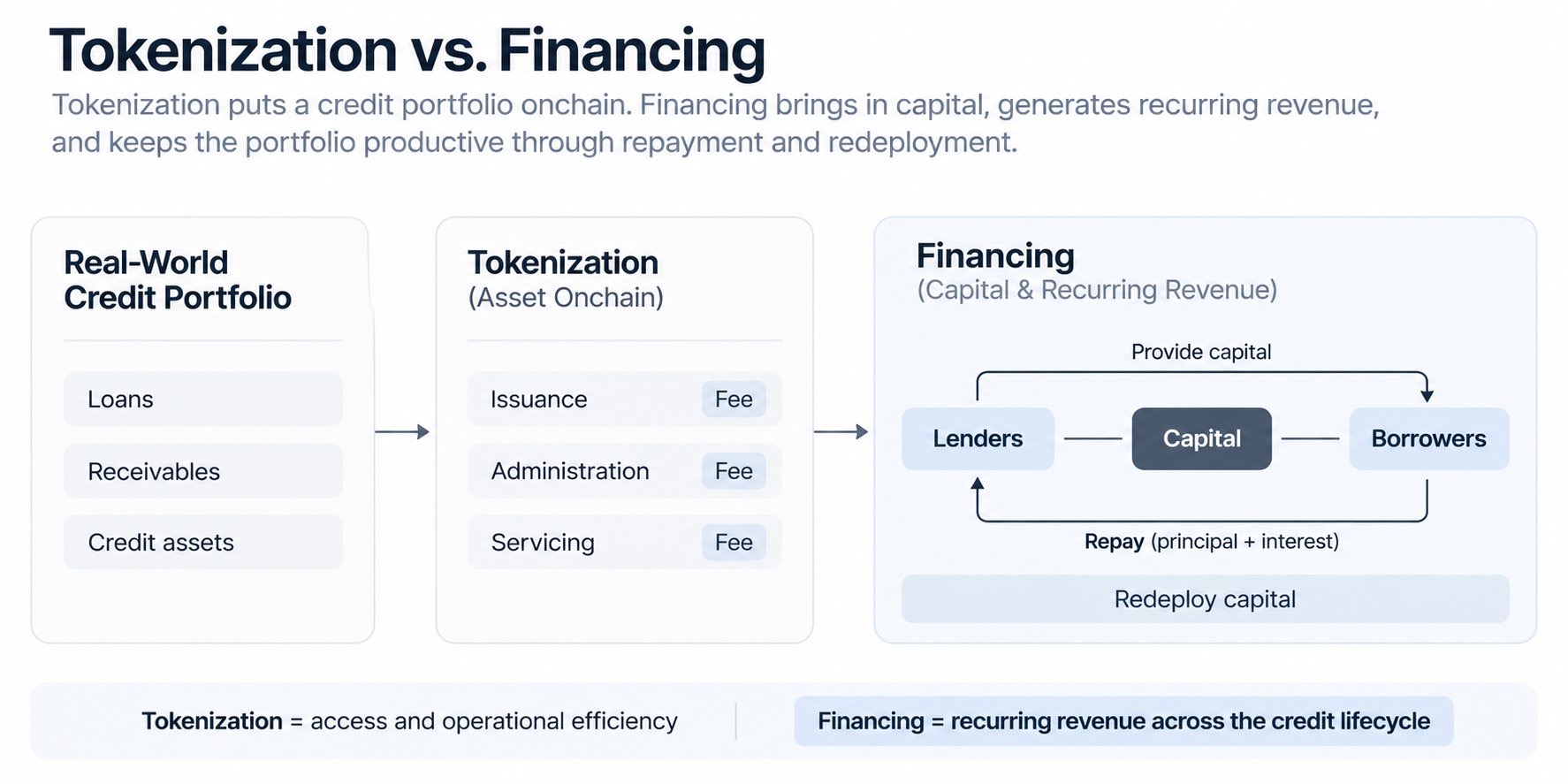
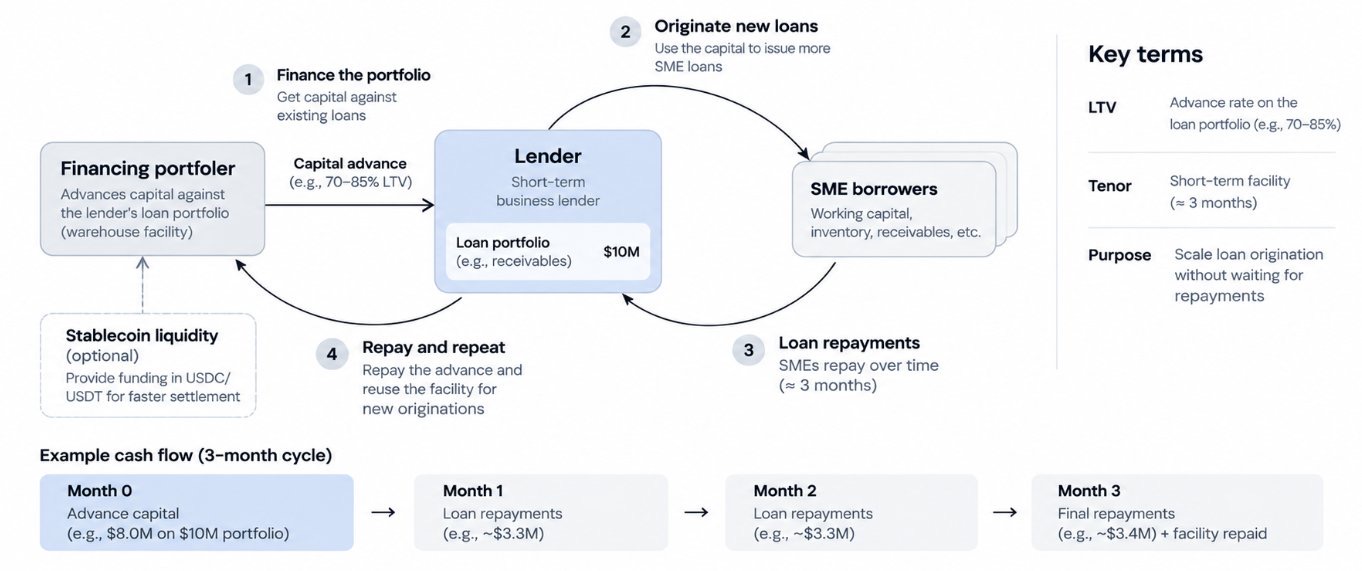
Author: Yaroslav Writtle Source: X, @yaroslavwr_ Translation: Shan Ouba, Golden Finance For years, the RWA industry has focused on moving assets on-chain. Government bonds, private credit, real estate, corporate bonds. The main goal is to achieve tokenization for more assets. But another opportunity is emerging. What if the bigger business is to provide financing for assets after they are created? 1. Tokenization is just part of the business When a company tokenizes a credit portfolio, the infrastructure provider earns issuance, management, and service fees. Some of these fees are recurring but are often tied to the scale of assets managed or services provided. The logic of financing is different. Lenders earn interest and fees by providing funds. As loans are repaid, those funds can be reallocated. For a platform that can continuously originate and finance quality assets, this creates opportunities to earn revenue throughout the entire life cycle of credit. 2. Real-world lenders always need more funds Imagine a company providing short-term financing to small businesses. It disburses loans today but may only recover payments three months later. During this time, the funds are tied up. To issue more loans, it needs additional funds. Warehouse financing was born for this reason. Financing providers advance loans secured by an existing pool of qualified loans or receivables. Lenders use this money to originate more loans while existing borrowers continue to make repayments. Financing providers earn interest and fees by offering this portion of liquidity. This is already a common structure in traditional credit markets. 3. Stablecoins bring another source of funds On-chain investors hold large amounts of stablecoin funds, many of which are seeking returns. At the same time, companies need funds to support loans, inventory, invoices, and other assets. Connecting these two markets creates potential opportunities. Companies can use their loan portfolios as collateral to obtain stablecoin funding. Investors receive returns from the underlying credits, and borrowers do not have to wait for existing loans to mature to access funds. Tokenization can help manage collateral records, reporting, and settlement. But the main economic value comes from connecting borrowers and funds. 4. The industry is already moving in this direction In November, Securitize completed the acquisition of River One, which focuses on warehouse financing and credit underwriting. The significance of this goes beyond just an acquisition. A company built around tokenization infrastructure is expanding into credit origination, financing, and loan management. Other platforms have already integrated tokenized credit into lending markets through protocols like Morpho and Kamino. These developments indicate that the next stage of RWA infrastructure may involve more financing processes. 5. Financing brings more income opportunities, but also more risks There’s a reason that lending can generate higher returns than providing issuance infrastructure. Someone must take responsibility for credit quality. Financing businesses need to evaluate borrowers, monitor collateral, manage liquidity, and handle defaults. The interest they receive is not pure profit. Costs of funds, operational expenses, and credit losses all need to be deducted from this return. Moreover, tokenization does not make a weak borrower more creditworthy. Thus, financing may bring better economic benefits but is only suitable for companies that can manage underlying risks. Where all this is headed I expect to see more RWA platforms expand from issuance and management outward. Some will connect asset originators with stablecoin liquidity; others may directly provide financing or manage credit portfolios for investors. The interesting question is: How many financial processes can these platforms handle? Putting a loan on-chain creates a digital asset; providing financing for that loan creates a lasting financial relationship. The latter business may ultimately hold a larger share of revenue.
Details compiled from public sources. Always do your own research.