
What did Jensen Huang say at the all-hands meeting the day after his return?
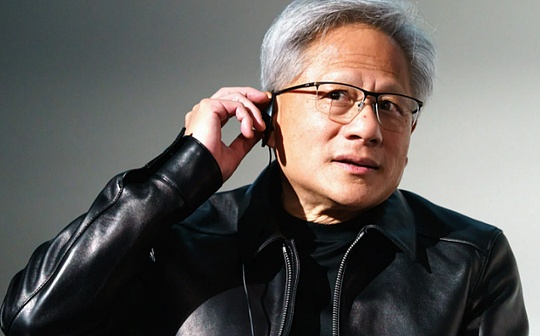
Internally, he apologized with a low profile to rebuild employee trust. Externally, he denied "political maneuvering" and framed his return as an independent judgment by the board.
Machine translated. Refer to the original for accuracy.
Written by: Shannon The first all-hands meeting after Jensen Huang's return to NVIDIA was held on November 24 (Tuesday) Eastern Time. This was his first address to all employees since his return, conducted via an online live stream, which was reviewed by The New York Times. Additionally, Bloomberg and Wired reported based on insider sources and the content of his speech. This article summarizes the main points of Jensen Huang’s speech. 1. Begin with an apology, and say it straightforwardly The tone of the entire speech was one of acknowledging mistakes. He admitted to making a serious error, being unfaithful to his wife, hurting his children, and also hurting every employee present. He emphasized issues regarding the code of conduct: he said that violating company codes of conduct was unacceptable, and some of the clauses were written by him; it was his behavior that forced the board to evaluate his future prospects, leading to his previous resignation. There were several personal details shared in his speech: He revealed that he undergoes 90 minutes of therapy every day. He described this as the most challenging meeting he has ever experienced, and the hardest conversation was with his wife. He promised employees that he would perform better in his second tenure at NVIDIA and would listen more to their feedback. 2. Thank Colette Kress, affirming the interim team At the beginning of the meeting, he specifically thanked CFO Colette Kress for overseeing the company during his nearly two-week absence. This not only affirmed the remaining team's efforts but also sent a signal internally that the stability during this "vacant period" was upheld by someone. 3. Deny the "Trump pressure" narrative This was the most newsworthy part of the speech. It is widely believed that Trump’s public support was a key driving force behind his return, but Huang explicitly denied this assertion. He stated that his return was not because he was a "tech bro" who could transcend laws and company conduct rules. He called the pressure narrative completely unfounded and claimed that the board thoroughly assessed the entire situation and clarified the facts. He explained that the Trump administration did have contact with the board, but his return was only agreed upon after the board independently confirmed that his return would not jeopardize U.S. national security. It should be noted that there is a contradiction here. On the day of the announcement of his return, Trump publicly stated that he was the one who pushed for this matter. Reports indicated that when asked by the host if Huang could return without his intervention, Trump's response was no. The two statements do not necessarily contradict one another: the board may be able to make "independent decisions" while also potentially making judgments under assurances from the White House. However, Huang chose to publicly sever ties during the internal meeting to clearly avoid external interpretations of his return as political sanctuary. 4. Emphasize that "no one is above the rules" He stressed that this return does not mean he can bypass the company's code of conduct, and the board will continue to supervise and hold him accountable. This statement was directed at two audiences. To employees, it was a commitment that there would be no privileges; To the upcoming congressional hearing and independent investigation, it was a posture of acceptance of oversight. 5. No traditional succession plan, defending the founder model On governance issues, he did not concede. In response to external doubts about succession arrangements, he still rejected a traditional succession plan and defended the founder-centric management model he advocates. His reasoning is that there are multiple mature business leaders in the company, and there is no need for a conventional successor mechanism. This contrasts with the board’s previous thinking. Chairman Harvey Jones said at last week’s employee meeting that the successor would be selected from both internal and external candidates, and specified criteria such as technical experience and strategic thinking. After Huang's return, the selection criteria were naturally shelved, but the old issue of "key person risk" was not addressed. 6. Background of the meeting: a stark contrast to the previous all-hands meeting One week prior, on November 18, NVIDIA held an all-hands meeting without Huang. At that time, interim CEO Kress mentioned the "farewell to the Huang era," urging everyone to move forward and promising increased pay and equity incentives in December. She also stated that among the approximately 700 questions collected before the meeting, the most common was about compensation, followed by calls for the board to enhance transparency. In just six days, the tone of the all-hands meeting at the same company shifted from "farewell" to "welcome back." The prevailing sentiment among those present was a hope for his return. Conclusion The strategy of this speech is very clear. Internally, it was an apology to restore employee trust. Externally, it was a denial of "political maneuvering," framing the return as an independent judgment of the board. On governance, he maintains a founder-led management approach, rejecting any institutional weakening. However, several more critical issues remain outside of the speech. He is expected to travel to Washington next week to attend multiple congressional hearings and face inquiries, and the investigations related to export controls and Megaspeed have not yet concluded. This all-hands meeting addressed internal trust, but external challenges are just beginning.
Read original · 金色财经资讯Details compiled from public sources. Always do your own research.