
Hayes Dissects the Fed's Rate Hikes: Reverse Liquidity Injection Boosts Bitcoin
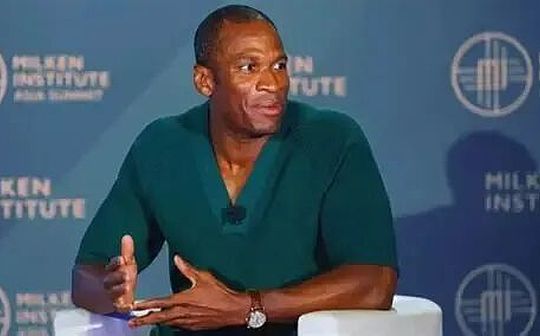
With each 25 basis point rate hike, the Fed effectively injects approximately $22.5 billion in interest into the financial system annually, which ultimately flows into hard assets like Bitcoin. Arthur Hayes claims the essence of rate hikes is reverse liquidity injection.
Machine translated. Refer to the original for accuracy.
Arthur Hayes provides a deep analysis of the essence of interest rate hikes: the Federal Reserve injects $22.5 billion in interest with each rate hike, creating a liquidity undercurrent that drives Bitcoin's surge. In the context of escalating macro-financial competition, Arthur Hayes, co-founder of BitMEX and CIO of Maelstrom, guest on The Rollup podcast, engaged in an in-depth conversation with hosts Rob & Andy. In response to recent market anxieties stemming from 10-year and 30-year US Treasury yields surpassing 5% and the Fed's ongoing rate hikes, Hayes proposed a highly disruptive macro analysis framework, asserting that "nominal Treasury yields are entirely reasonable, and rate hikes fundamentally represent a large-scale reverse liquidity injection." Hayes meticulously dissected how rate hikes, through the Fed's $3 trillion in excess reserves and $7 trillion in short-term Treasury bonds, inject approximately $22.5 billion in interest income into the financial system and among high-net-worth individuals with each 25 basis point hike. This risk-free income ultimately does not stabilize prices; rather, it surges into Bitcoin, core real estate, and other hard assets that resist inflation. Drawing on empirical evidence from Brazil in the 1980s, Hayes revealed the underlying logic of an over-leveraged economy where "the more rates rise, the more money there is, and the more asset prices soar." Guests: Arthur Hayes (Co-founder of BitMEX, CIO of Maelstrom) Hosts: Rob & Andy (Creators of The Rollup) Podcast Source: The Rollup (https://www.youtube.com/watch?v=W1j_1_DjwYw) Original Title: Arthur Hayes: The Fed Just Handed Bitcoin Its Next Leg Up (Rate Hike Trade) Release Date: November 14, 2026 Key Points "The US nominal GDP growth rate is between 5% and 6%, so a 5% to 6% yield on the 10-year Treasury is very reasonable. The US government will borrow every dollar it needs; fears of Treasury defaults or hyperinflation simply won't happen; the US government has no problem at all." "In the 'Hunger Games' for global limited capital, AI stands at the pinnacle. AI companies believe they are creating 'God', and God is infinite; therefore, they don't care how much interest they pay, whether it's 10%, 15%, or 20%, massive computational financing is completely crowding out sovereign debt." "The unluckiest is France. The government overspends extravagantly, relying on funds from Germany and Japan, being held hostage by the Euro system, lacking independent energy, with daily street riots, yet still wanting to sell 10-year Treasuries at 4.5% to 5%—they are the ones truly trapped." "Many people are too concerned about the price of money, fixated on Fed rates and Treasury yields. But for crypto investors and holders of scarce assets, what's truly important is the change in the total amount of fiat currency worldwide." "Each 25 basis point rate hike by the Fed injects roughly $22.5 billion in liquidity into the financial system. This money isn’t given to the working class but is directly provided to banks and billionaires holding large amounts of short-term Treasuries." "I hold a huge amount of short-term Treasuries; when the Fed raises rates, it's like a substantial pay raise for me. I don’t need to buy more meals; what do I do with that extra interest? Of course, it’s to buy Bitcoin, luxury homes, luxury watches, and fine wine—anything that maintains value." "History has long provided evidence: in short-term high-debt economies, you think rate hikes are combating inflation; in reality, you're just printing more money through enormous interest payments. That's why the Fed's rate hikes lead to Bitcoin surging against the trend." 'The Hunger Games' of Capital Markets: Reasonable Pricing of Treasury Yields, AI Competing for Limited Liquidity Rob & Andy: You are still heavily invested in Bitcoin, clearly leaning towards the side of hard assets and scarce assets in the barbell strategy. Last year, you mentioned something on our podcast that left a deep impression on me: the one choice for politicians is to spend money. They can choose not to spend, but that means they will be immediately voted out by their constituents. Therefore, in reality, their only choice is to keep spending heavily. Looking at the current macro bond market, both the 10-year and 30-year U.S. Treasury yields have risen above 5% and even 5.5%. In your view, does this mean certain aspects of the financial system have developed cracks that need to be repaired? And does repairing the system inevitably mean accelerating money printing? Arthur Hayes: First, we must clarify the concept: nominal Treasury yield is a combination of actual economic growth and inflation expectations. When bond yields rise, you must first investigate what the underlying cause is, and what the current nominal GDP of the country is. Taking the U.S. as an example, the current nominal GDP growth rate is about 5% to 6%. In this context, a 10-year Treasury yield reaching 5% to 6% is actually very reasonable and healthy; it is in line with the nominal growth level of the U.S. economy. The core issue is: how much of this nominal growth is actual growth and how much is pure inflation? Arthur Hayes: To understand the current bond yield, it must be viewed from the larger perspective of macro capital competition. My fund investor and derivatives trading veteran David Dredge once coined a very accurate term: the "Hunger Games" of capital. The pool of capital in the market is finite, and all governments, sovereign entities, and large corporations worldwide are battling fiercely for borrowing capital. At the pinnacle of this capital grab is the rapidly advancing AI industry. AI companies firmly believe they are creating an all-knowing "tech god," and the business returns contained in this god are infinite. Therefore, whether borrowing rates are 10%, 15%, or 20%, AI giants do not care at all, and even if a bubble forms later, there are expectations of a bailout. They are aggressively squeezing out sovereign debt with extreme capital expenditures. In the next tier is the U.S. government. The U.S. government can absolutely borrow every dollar it needs without question. Therefore, the collective anxiety in the market about no one being willing to buy U.S. Treasuries or fears of runaway inflation will not materialize. Anyone willing to buy a 10-year Treasury with a 10% coupon will ultimately receive their due principal and interest back; the U.S. government itself is as solid as a rock. The real crisis lies with other sovereign countries, with France being the most typical example. Today’s France is the most fragile sovereign link in the world; what reason do you have to buy French government bonds? The French government is overspending, relying on German and Japanese savings to cover its deficits, trapped in an euro system that it cannot independently regulate its currency, lacks independent energy supplies, and experiences constant street protests while attempting to sell 10-year bonds at a low yield of 4.5% to 5%. They are the ones truly trapped, while the U.S. government has nothing to worry about. Rate hikes = liquidity: How the Fed injects massive liquidity into the financial system through interest subsidies Rob & Andy: Recently, Federal Reserve officials announced a rate hike, but bond yields not only did not fall, but instead continued to soar, with the cryptocurrency market also rising sharply, humorously referred to by many institutions as "bullish rate hikes." In the eyes of many mainstream investors, the failure of rate hikes to suppress yields but instead trigger asset rebounds seems to indicate that the entire financial system has completely spiraled out of control. From your investment perspective, what is the fundamental driving force behind this? Arthur Hayes: I believe the vast majority of people are making a fundamental cognitive error: they mistakenly think that the "price of money" is more important than the "quantity of money." Bond yields merely reflect the price of money, that is, the cost of borrowed funds. The public and media always focus excessively on what the Federal Funds rate is and what the 10-year yield has reached. Certainly, borrowing rates do influence the discount rate model in asset pricing, but as a long-term investor in cryptocurrencies and scarce assets, the real core factor that determines bull and bear markets for assets is: how much fiat currency was newly created in the world? How is the total liquidity expanding? Let’s carefully calculate the real arithmetic of a rate hike. Suppose the Federal Reserve announces a 25 basis point increase, which is 0.25%. Does this actually withdraw liquidity or inject more into the financial system? First, let's look at reserve interest. Commercial banks have up to $3 trillion in excess reserves sitting idle within the Federal Reserve system. To anchor the policy rate within the target range, the Federal Reserve must pay the reserve interest on these excess reserves. Each time the Federal Reserve raises the rate by 25 basis points, it effectively grants Wall Street banks $7.5 billion in interest income each year. Next, consider short-term Treasury securities. Approximately $7 trillion in short-term Treasury bills (T-bills) circulate throughout the financial markets, with yields directly linked to the federal funds rate, essentially producing interest-bearing fiat cash. When rates rise by 25 basis points, these $7 trillion in short-term Treasury securities will generate an additional $17.5 billion in interest income for holders each year. In total, every time the Federal Reserve seemingly tightens with a 25 basis point hike, it actually injects about $22.5 billion in new liquidity into the entire financial system each year. The inflation paradox and Bitcoin surge: The backlash of raising rates in a heavily indebted economy and the truth of monetary quantity. Arthur Hayes: The key point is that this new liquidity, amounting to hundreds of billions of dollars each year, does not flow to ordinary people struggling to maintain basic living standards. Instead, it targets commercial banks, high-frequency financial institutions, and high-net-worth individuals precisely. Commercial banks receive this huge interest income, which they can use to expand their balance sheets to buy more financial assets or distribute as high dividends to wealthy shareholders. For people like me, who hold large amounts of short-term Treasury securities and enjoy substantial risk-free returns, a rate hike from the Federal Reserve effectively serves as a significant pay raise. Upon receiving this new interest income, we clearly do not need to buy a few more loaves of bread or drink a few more cups of milk; our consumption is already saturated. So where does this large amount of fiat money flow to? We will undoubtedly invest it entirely into scarce financial assets, such as Bitcoin, high-quality real estate, luxury watches, and rare wines—anything that can outperform the devaluation of fiat purchasing power becomes a black hole for capital. This is the inflation paradox of a heavily indebted economy. When a government has an extraordinarily massive amount of debt, and most borrowing needs are highly concentrated in the short term, decision-makers intend to reduce inflation by raising rates, but the reality is: due to the enormous interest expenses on short-term debt, each rate hike sprays new currency into the market exponentially, thus accelerating inflation and skyrocketing asset prices. Some economists have conducted in-depth empirical studies on Brazil in the 1980s. Brazil was similarly mired in massive sovereign debt, with debt duration highly concentrated in the short term. To tame inflation, the Brazilian central bank continuously raised rates, but historical data clearly show that as rates continued to rise, the country’s inflation levels also soared. This is because excess reserves and short-term debt interest create an enormous supply of fiat currency, which is precisely the core truth behind the immediate surge of Bitcoin any time the Federal Reserve acts during a rate hike cycle. Rob & Andy: According to this logic, do the Federal Reserve and other central banks, which govern the global financial centers, not realize that they are essentially using monetary quantity to combat monetary price? Everyone is shouting about bond yields, but what is the ultimate lever for central banks to truly influence the economy? Arthur Hayes: This entirely depends on the monetary philosophy of the decision-makers. Reflecting back to the Paul Volcker era from 1979 to 1982, the Federal Reserve's strategy was very aggressive and visionary: Paul Volcker clearly abandoned rigid intervention in "monetary prices" (discount rates), opting instead to directly and drastically control credit total and money supply at the root. By directly restricting the total liquidity, he ultimately succeeded in taming runaway interest rates and inflation. However, today’s Federal Reserve is completely mired in an obsession with "monetary prices." Officials spend their days fiddling with a few policy benchmark rates, attempting to precisely control the vast and complex modern economy. Although they will initiate quantitative easing during a crisis to discuss monetary quantity, they completely overlook how much incremental fiat money will flow back into the market through the massive interest when making regular rate hike decisions. To me, the actual quantity of money is the only truth that governs the fate of global assets.

Details compiled from public sources. Always do your own research.