
Galaxy: How to View the Impact of Anthropic's IPO on Market Liquidity
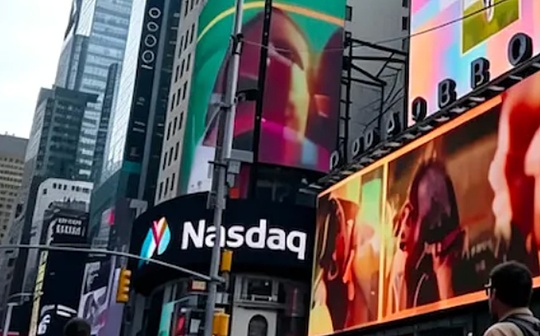
This weekend's positive sentiment peaked as Anthropic went public on Nasdaq in the same week.
Machine translated. Refer to the original for accuracy.
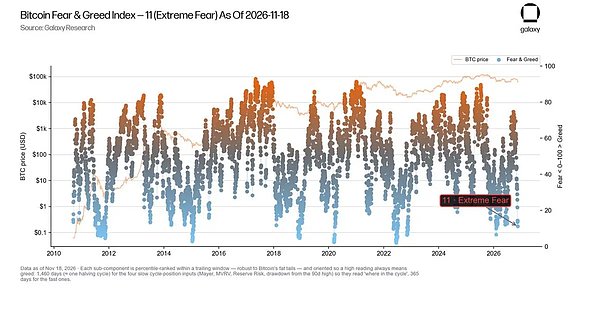
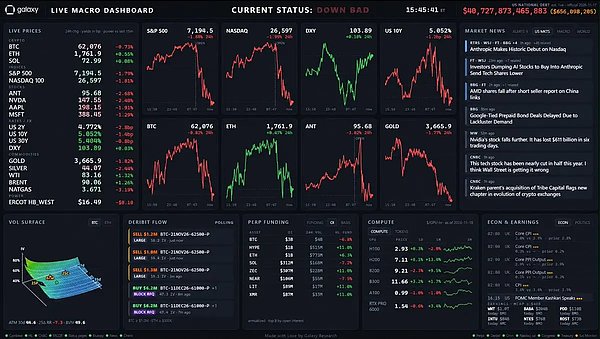
Author: Alex Thorn, Head of Research at Galaxy; Translated by: Gu Yu, ChainCatcher This weekend's positive sentiment peaked as Anthropic went public on Nasdaq in the same week. Anthropic completed the largest IPO in history on Wednesday evening, with an issue price of $83 per share. The company updated its prospectus last week, expecting a price range of $70 to $78. Strong demand led the AI company, known for its Claude chatbot, to increase its offering size, selling approximately 980 million shares and raising $81.3 billion, exceeding the initially planned 825 million shares. This figure surpasses the $75 billion raised by Musk's SpaceX during its IPO in June, and the IPO pricing implies a valuation of about $1.5 trillion for the barely six-year-old company. Goldman Sachs and Morgan Stanley led this deal, just as they did for SpaceX previously. Before the opening, Cboe's JJ Kinahan stated that demand was almost seven times the offering size, and sources from CNBC indicated that retail demand was the largest ever. The stock began trading on Thursday at 11:48 AM Eastern Time on Nasdaq under the symbol ANT. The first transaction price was $111.50, 34% higher than the IPO price, briefly pushing the company's market value to $2 trillion. The stock reached an intraday high of $114.99 within a minute of the first transaction, before steadily declining during the remaining trading session. As of 2:18 PM Eastern Time, the stock was trading in the mid-$90s at $94.67, up about 14% from the issue price. The drop from the opening price was unusually steep. According to Yahoo Finance, only Coupang has performed worse at the same point on the first day among the 20 large U.S. IPOs since 2008; this group averaged an increase of about 3.5%. The broader market also faced selling pressure right after the stock opened. When Anthropic began trading, the market dropped to its low of the day, erasing gains in chip stocks including Nvidia and Broadcom. The listed ANT options are set to begin trading on Monday. On-chain, Hyperliquid once again demonstrated the success of its perpetual futures market leading up to the IPO. Its market accurately predicted the trading price: the trading price of perpetual futures had been well above the $70 to $78 range for weeks, indicating demand was stronger than the underwriters' initial targets. The perpetual futures ultimately opened about 7% lower, with the contract price at about $103.67 at 8:40 AM Eastern Time, approximately 25% higher than the issue price of $83 per share. The perpetual futures price on Thursday morning broadly aligned with market consensus (Kinahan from Cboe indicated that the first trade should fall around $103 or $104), but ultimately both the perpetual futures and market professionals misjudged, with the first trade executing at $111.50. However, the perpetual futures accurately captured the eventual trading position of the stock. For most of the time leading up to the IPO, the perpetual futures were in the high $90s range. As of November 17, they were approximately $96.93, with a chart the night before pricing showing $98.83, and had briefly fallen below $94 during earlier tech stock sell-offs. After spiking and then retracing at the open, the stock returned to this range, trading in approximately $94 to $97 in the afternoon. It can be said that the balanced price of the perpetual futures over the week provided a better estimate of the "fair" value on the first day than the opening transaction price, which appeared to be a brief spike in demand. Our Perspective Watching Anthropic employees applauding in the Nasdaq trading hall, completing an IPO for a company that is a major media narrative that AI could kill us all, feels strangely surreal. This week is the week with the strongest apocalyptic sentiment in recent memory, set against the backdrop of Microsoft's O365 outage on Thursday, the nationwide FAA ground shutdown on Friday, and a banking system disruption on Monday. There are even reports that the NSA's internal communication system was also disrupted (twice?). Costco reported a surge in panic buying, people withdrawing cash from banks, and doomsday preparation content trending on social media. Discussions among traders have included which solar batteries to buy, how to store large amounts of non-perishables in New York City apartments, and the best escape routes from the city in case of a grid collapse. Thus, it is perhaps fitting that the S-1 risk factors of this sensational IPO included 'the end of humanity.' (Though we are not stock analysts, we agree that the end of humanity could have a material impact on Anthropic's profitability.) Since October 1, the S&P 500 has dropped by 7%, gold has declined by 12.2%, and BTC is down by 25%. U.S. Treasury bonds have devalued, inflation remains high, interest rates are expected to rise, and commodities are on a downward trend. Democrats have primarily won power by advocating for solutions to the 'affordability crisis.' Our own Bitcoin fear and greed index is near historical lows (indicating 'extreme fear'), and the trading levels of VIX are comparable to those at the outbreak of the Iranian War in March, though not yet reaching the levels seen during the April 2025 'tariff debacle.' Stanley Druckenmiller stated that he is 'more uncertain now than ever after a 50-year investment career,' with his firm's equity position being 'essentially flat.' Another Wall Street personality, Howard Marks, believed in a memo dated November 11 titled 'An Outsider's Thoughts on AI,' that the astonishing pace of AI development poses a significant risk, even for Anthropic. Paul Tudor Jones indicated in mid-October that '2027 will be a very difficult year for the stock market.' Thus, it can be said that the stock market intellectuals are feeling uneasy. There are speculations that the recent headwinds faced by risk assets have been exacerbated by allocators pulling back assets to buy into the Anthropic IPO, causing liquidity to drain. This intuitively makes sense, though there is not much evidence to directly support this claim. Bitcoin's price behaved similarly when trading was weak ahead of the June SpaceX IPO, and it set a low point for this bear market on July 1 (at $57,717 on Coinbase). Whether BTC and other risk assets will get some relief post-ANT's listing remains to be seen. The reality is that Americans feel fearful and psychologically scarred. Polarization has long characterized the American political landscape, but the overwhelming victory of the Democrats was so pronounced that a significant shift in tax policy, AI policy, legislative priorities, etc., is anticipated. Coupled with the relentless drumbeat of cybersecurity vulnerabilities and the wide spectrum of AI outcomes — from the possibility of a permanent utopia to the imminent destruction of the species — it is not hard to understand why the markets are unstable. There is a sense that one more piece of significant bad news could push the market over the edge — a major cyber attack, escalation of the Iran or Ukraine wars, an outbreak of a pandemic, or a major natural disaster. On the other hand, major peace agreements or initiatives arising from Trump's meetings with Xi Jinping and Putin, cessation of major regional conflicts, or legislative breakthroughs in Congress could alleviate these fears. As the saying goes, if you are going through hell, keep going. The only way out is through. Everything is different now, yes, but everything is still okay. Bitcoin continues to produce blocks without interruption, and I have just written a nifty new dashboard to monitor the situation. — Alex Thorn For other risks related to digital assets, please refer to the risk factors contained in the documents periodically filed by Galaxy Digital Inc. with the U.S. Securities and Exchange Commission ('SEC'), including its Form 10-Q quarterly reports, available at www.sec.gov.
Details compiled from public sources. Always do your own research.