
Trump's Son Invests in Company with Salary Issues, Korean Business Partner Plans to Inject $150 Million

Korean conglomerate Base Group is considering investing $150 million in U.S. military robotic manufacturer Foundation Future Industries (hereinafter referred to as Foundation).
Machine translated. Refer to the original for accuracy.
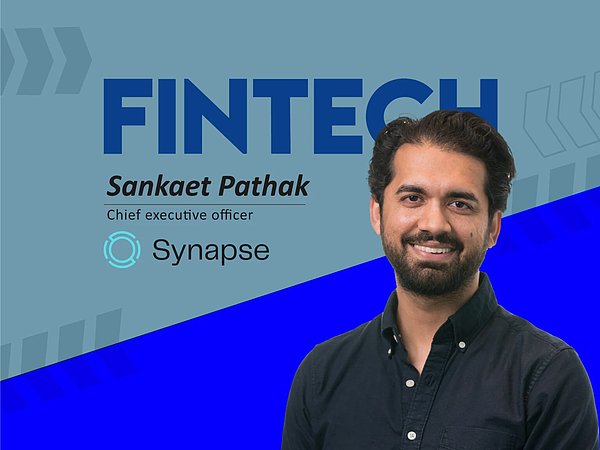
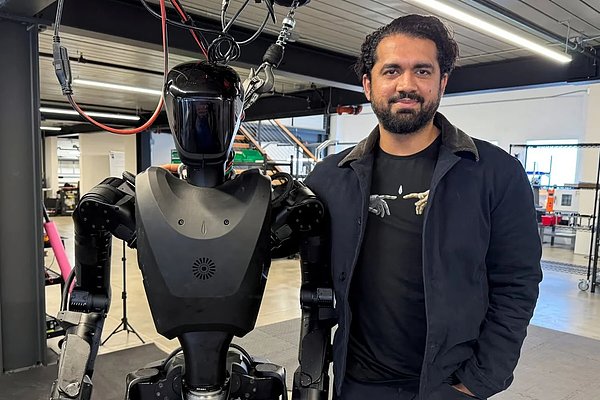
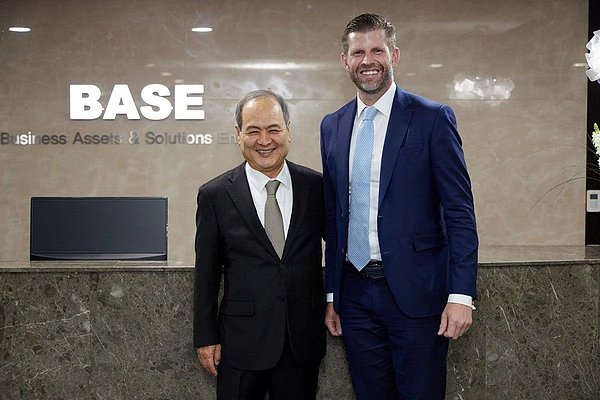
Author: Zen, PANews Korean conglomerate Base Group is considering investing $150 million in U.S. military robotic manufacturer Foundation Future Industries (hereinafter referred to as Foundation). Foundation had previously raised only about $11 million in total funding, making this a quite significant investment for them. Before this potential investment was revealed, Foundation was in the spotlight for failing to pay employee salaries, and the company's founder was reported to have borrowed $4.6 million from the company to purchase a luxury home. Particularly noteworthy is a special investor behind Foundation — Eric Trump, the second son of former U.S. President Donald Trump. He not only invested in this robotics company but also serves as chief strategic advisor. The Korean Base Group, which is preparing to invest $150 million, happens to be a long-time business partner of the Trump family. Given the relationship between the two parties, Eric Trump likely played a bridging role in this potential investment. Base Group has established nearly a decade-long business connection with the Trump family, with collaboration covering wine trade and golf course development. Previously, Base Group paid $2 million to Trump-affiliated businesses, which raised questions from U.S. Democratic senators about potential conflicts of interest. A financially troubled robotics company, a controversial founder, and a Korean capital group closely related to the Trump family together form a more complex story behind this potential investment. From the Bankruptcy of Financial Company Synapse to Foundation's Salary Issues Before founding Foundation, Sankaet Pathak was a well-regarded entrepreneur in the U.S. fintech industry. In 2014, he co-founded Synapse, initially hoping to provide digital banking services to underserved populations lacking traditional bank services, later transforming into a Banking-as-a-Service (BaaS) infrastructure platform. Its business model provides technical interfaces for fintech companies without banking licenses, helping them connect to licensed banks to conduct account management, deposits, payments, and debit card businesses. This model coincided with the rapid development of the U.S. fintech industry. In 2019, Synapse completed a $33 million Series B funding round led by a16z, raising a total of over $50 million. Its clients include well-known fintech companies like digital bank Dave, corporate finance platform Mercury, and savings app Yotta. According to Synapse, in 2022, the platform covered 18 million end-users, processing an annual transaction volume of approximately $76 billion. Pathak became a Silicon Valley fintech star as a result. However, alongside rapid expansion, Pathak's management style also sparked controversy. In April 2020, Forbes published an investigative report interviewing 13 current and former employees and six clients, revealing internal management issues at Synapse. Several former employees accused the company of having unstable technology systems, poor code quality, and harsh management styles. These management problems had not yet evolved into a full-scale operational crisis. However, as the company’s business volume expanded, the weak points in the technology systems and internal management gradually became exposed. In 2023, Synapse's relationships with partner banks broke down, leading to significant client losses and ultimately putting this fintech company into trouble. In 2023, Synapse had a fierce dispute with its main partner, Evolve Bank & Trust. Subsequently, Mercury, an important client that contributed about 60% of Synapse's revenue during peak times, decided to bypass Synapse and establish a direct partnership with Evolve. This led to a rapid deterioration of Synapse's operations, and the company laid off about 40% of its staff in October 2023. Worse still, Synapse and Evolve began to accuse each other of a discrepancy of approximately $13 million in customer funds. As investigations deepened, the related funding gap continued to expand. In April 2024, Synapse filed for bankruptcy protection, after which customer fund issues fully erupted. Due to serious discrepancies between the user accounts maintained by Synapse and the actual funds held by partner banks, a large number of consumers were unable to withdraw deposits, with affected funds exceeding $200 million at one point. The bankruptcy trustee estimates there is a gap of approximately $65 million to $95 million between customer owed balances and actual funds held by the banks. The Synapse bankruptcy case has also attracted the attention of the U.S. Department of Justice. The U.S. Attorney's Office for the Southern District of New York convened a grand jury to investigate potential criminal wrongdoing behind the customer fund gaps, including accounting fraud and telecommunications fraud, and has subpoenaed the company's former finance director. As of now, there has been no public final conclusion regarding this criminal investigation. While the bankruptcy of Synapse and the customer fund issues remain unresolved, Pathak has turned his attention to the field of embodied intelligence, which was being heavily focused on in the capital markets at that time, and started his next venture. In 2024, Pathak founded the robotics company Foundation, dedicated to developing humanoid robots for industrial and military purposes, and quickly secured approximately $11 million in early funding from investors including Tribe Capital. However, the new startup soon faced financial controversies as well. On November 14, 2026, CNBC reported that Foundation had been behind on some employee salaries since October. Meanwhile, Pathak had borrowed $4.6 million from the company in 2025 for purchasing a residence in California. CNBC also noted that Pathak is the sole board member of Foundation, holding highly concentrated governance power of the company. In response to criticism, Pathak stated that this loan agreement was reached in August 2025 and was unrelated to the company's current cash flow difficulties. In an email sent to employees on November 8, Pathak attributed the unpaid salaries to issues with the timing of financing. He indicated that given the investment progress with Korea's Base Group, the issue the company faced was merely when the funds would arrive, not a survival crisis. Four days later, he revealed in another email that both parties planned to establish a long-term partnership, with business also involving supplies of aluminum and lithium for robot batteries. For this robotics startup, which was established only two years ago, the unfunded financing has become a crucial hope for maintaining daily operations. Exaggerated Promotion Under the Military Robot Narrative If one only looks at Foundation's business promotions, it is hard to associate it with a company that cannot even pay employee salaries on time. Compared to humanoid robot firms primarily targeting industrial and household applications, Foundation has gradually shifted its focus towards military uses in recent years and actively promoted the prospects of robots in reconnaissance, logistics, and battlefield operations. In 2024, Foundation acquired humanoid robot company Boardwalk Robotics, gaining related technologies and R&D teams, and subsequently launched the Phantom series of robots. The company aims to utilize the bipedal mobility of humanoid robots, allowing them to enter factories, construction sites, and complex environments where traditional wheeled robots struggle to navigate, including battlefield reconnaissance, inspection of hazardous areas, and military logistics. At the beginning of 2026, Eric Trump became an investor in Foundation and began serving as the company's Chief Strategic Advisor. With Eric Trump's support and endorsement, Foundation's vision for military robots started to gain more attention. In April this year, Eric Trump joined Pathak on Fox Business to publicly promote Foundation's humanoid robot project. Eric Trump stated that his involvement as an investor was to help the U.S. maintain a leading position in the humanoid robot field. During the program, the host also mentioned that Foundation had received a $24 million contract from the Pentagon. However, this claim was later investigated and questioned by multiple media outlets. In July, a Wired investigation found that the government contract information provided by Foundation mainly came from its acquisition of Boardwalk Robotics and the Institute for Human and Machine Cognition (IHMC), which collaborated with the latter. The San Francisco Standard further examined federal procurement records and found that Boardwalk had received four contracts totaling approximately $3.22 million, while another contract from the U.S. Navy amounting to about $24.8 million was actually granted to IHMC. In fact, Foundation's commercial promotion sparked controversy as early as 2024. At that time, the company claimed in its fundraising materials that General Motors could become its first customer, with potential procurement orders scaling up to $300 million. However, General Motors publicly denied any related partnership and accused Foundation of fabricating the claims. Foundation co-founder Mike LeBlanc later admitted that the fundraising materials exaggerated the relationship between the two parties. Similar information gaps also exist in the military application aspect. Foundation had claimed that its robots had already undergone testing in Ukraine and proposed future uses for reconnaissance, mine clearance, and battlefield operations. However, in November of this year, the San Francisco Standard cited sources, including a journalist involved in related travels and Brave1, a Ukrainian defense technology organization, stating that the Foundation team had not entered Ukraine at that time and had not performed the on-site demonstrations previously implied. On November 18, Foundation released its second-generation humanoid robot, Phantom MKII, and the accompanying Cortex II artificial intelligence system. Foundation claimed that Phantom MKII can carry 200 pounds (approximately 91 kilograms) while walking and adapt to complex environments such as rain, snow, and dust, with a maximum battery life of up to 6 hours. The company plans to initiate production in early 2027 and gradually expand its capacity. $150 Million Investment: The Trump Family Connection Compared to the financial disputes of Foundation's founders, the background of the Korean Base Group considering this investment is also noteworthy. Base Group’s businesses cover various industries including construction, aluminum processing, and wine, but they are not known for investments in robotics or AI technology. This South Korean conglomerate's business connections with the Trump family can be traced back to at least 2017. In that year, a subsidiary of Base Group reached an agreement with Trump Winery to import and sell Trump-branded wine in South Korea. Since then, the commercial exchanges between the two parties have gradually increased. In January 2025, Base Group Chairman Kim Seong-jip attended Trump's second presidential inauguration and maintained contact with members of the Trump family. In February 2026, Base Group invited Eric Trump to visit Seoul for discussions on U.S.-Korea business collaboration. By August, the Trump Organization further announced plans to collaborate with Base Group to develop golf courses in South Korea. Eric Trump, the second son of U.S. President Donald Trump (right), with Base Group Chairman Kim Seong-jip. However, their business relationship also attracted the attention of the U.S. Congress that same year. According to Trump's financial disclosure documents for 2025, Base Group had paid $2 million to Trump-affiliated entities. This payment was explained as a non-refundable development fee related to the Korean golf course project. However, the timing of the payment raised suspicions among some U.S. Democratic lawmakers, as a Koryo Aluminium subsidiary of Base Group was previously involved in a U.S. Department of Commerce investigation concerning circumvention of aluminum tariffs. On August 6, 2026, Democratic Senators Elizabeth Warren, Richard Blumenthal, and Andy Kim jointly wrote to Base Group, requesting clarification on the context of the $2 million payment and whether the group had discussed related trade policies with the Trump family. Now, with Base Group preparing to inject another $150 million into Trump-affiliated entities, the commercial relationship between the two parties naturally attracts renewed scrutiny. However, on one hand, Base Group's previous business dealings with the Trump family have already been questioned by Democratic senators in the U.S.; on the other hand, Foundation's involvement in military robotics could potentially trigger national security reviews for foreign investments. For Foundation, which is already struggling with wage issues, the potential investment of $150 million might alleviate its current financial pressure. Yet, the founder's prior operational controversies, the unproven commercialization capability of the robots, and the close business ties with the Trump family also present more uncertainties for this deal.
Details compiled from public sources. Always do your own research.