
The AI Myth Shattered: Global Stock Market Crash Strikes

Anthropic's IPO has become the last straw that broke the AI trading frenzy.
Machine translated. Refer to the original for accuracy.
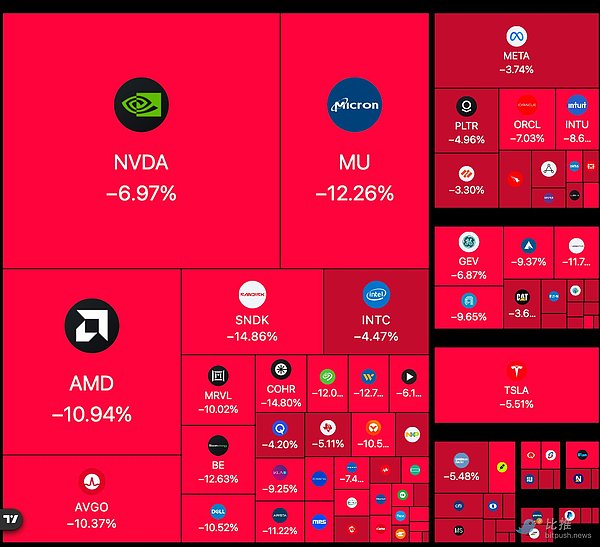
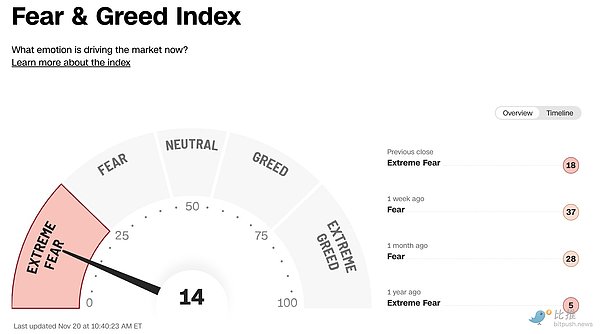
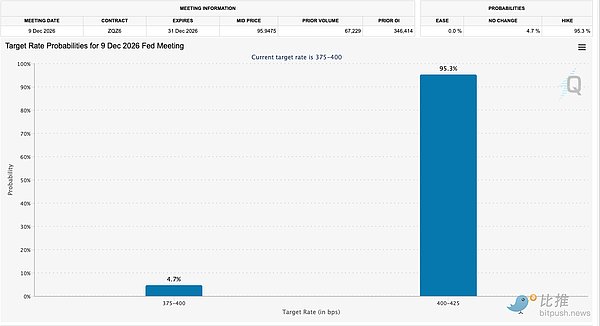
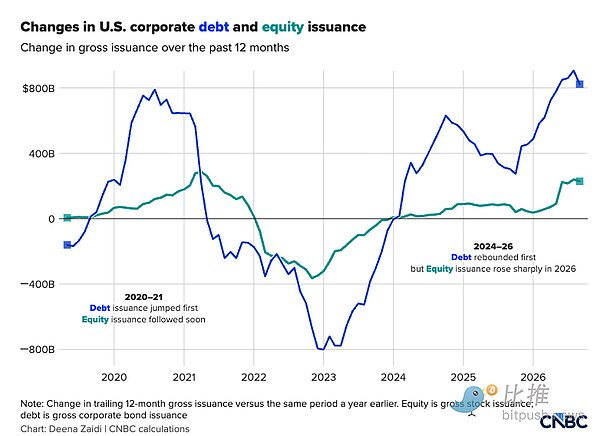
Author: Bootly, BitpushNews Anthropic's IPO has become the last straw that broke the AI trading frenzy. Global financial markets are experiencing a collective sell-off. On November 19, the Nasdaq index fell 2.25%, the S&P 500 index dropped 2.02%, and the Dow Jones index plummeted by more than 1,100 points. On the 20th, Asian markets continued to decline, with the Japanese stock market falling about 5% in a single day and the Taiwanese stock market dipping around 17% over the week. Reuters estimates that the global stock market has shrunk by nearly $9 trillion from its peak in August, facing the longest consecutive decline since 2023. In the crypto market, during Friday's U.S. trading hours, Bitcoin briefly fell below $59,000, wiping out all the gains from its rebound to $83,000 between August and September, while Ethereum dropped to about $1,649. Crypto-related stocks suffered significantly, with Hut 8 (HUT) plunging nearly 15%; Core Scientific (CORZ) and Bitdeer (BTDR) followed closely, with losses exceeding 13%. IREN, CleanSpark, Cipher Mining, and Keel Infrastructure experienced declines in the range of 12% to 13%. Market risk aversion is heating up comprehensively. The VIX fear index has exceeded 30, the dollar index has reached a 19-month high, and gold alongside industrial metals is also declining—investors are not switching from stocks to other assets but are actively reducing risk and hoarding cash. When the AI Myth Meets the Reality of High Interest Rates Why have even safe-haven assets not been spared? Previously, the market believed that AI capital expenditures could grow rapidly and sustainably over the long term while expecting a gradual easing of interest rates. Now, high construction costs, the timing gap in profitability realization, and further rate hike expectations driven by inflation in the U.S. are simultaneously impacting both beliefs. Sadiq Adatia, Chief Investment Officer at BMO Global Asset Management, stated in a report: Investors are concerned whether substantial AI investments are ultimately reliant on cash flow from core businesses or increasingly dependent on debt financing? Goldman Sachs' research has also revealed a significant change: about half of the S&P 500’s earnings per share growth by 2026 is expected to come from AI-related companies. However, as investment growth slows and depreciation costs rise, this contribution is forecasted to weaken by 2027. Moreover, the interest rate expectations have fully reversed. U.S. inflation has remained above the 2% target for five and a half years, and both the October CPI and PPI rebounded beyond expectations, while the Federal Reserve has recently taken a hawkish stance—Governor Cook stated on November 20 that “there is no patience left to wait and further rate hikes are needed.” Wall Street has thus comprehensively shifted to pricing a “second rate hike cycle”: CME Fed funds futures show that the market's bets on a 25-basis-point rate hike in December have exceeded 95%, and even accounted for the possibility of an additional 75 to 100 basis points next year. When the yield on the 10-year U.S. Treasury bond, "the anchor of global asset pricing", breaks 5% again, cheap money retreats completely, and high valuations supported by low-interest narratives and zero-yield assets will inevitably undergo a cruel round of valuation reassessment and liquidity crunch. Supply-side Reversal: From Buybacks to Issuances There are also now more stocks in the market. Analysis from Acadian Asset Management shows that U.S. companies have shifted from net buybacks in 2024 to net issuances. As of last week, the net issuance of stocks equated to 3.1% of total market capitalization—though lower than the peaks during the dot-com and pandemic bubbles, the direction has reversed. Owen Lamont, a portfolio manager at Asset Management, stated in his investors' letter this month: “The real question you should be asking is: Why is smart money selling?” This judgment has academic support: Research by Baker and Wurgler in 2000 found that when companies issue more equity rather than debt, it often accompanies lower market returns. Recently, Oracle filed documents to sell $20 billion in stock through a market price issuance plan, and will issue another $10 billion in common stock in November. In October, Meta priced a $25 billion issuance of common stock and issued $12.5 billion in mandatory convertible preferred stock. Alphabet announced an $84.8 billion equity financing in June to fund its AI infrastructure development. SpaceX raised $85.7 billion in its IPO in June after underwriters exercised their overallotment option. Anthropic raised $81 billion by issuing shares at $83 each, higher than the expected range, initially sparking strong demand, but it turned downward on Friday, dragging down the market — a reflection of the “supply shock.” For years, stock buybacks by listed companies have boosted stock prices by reducing the number of tradable shares and lowering the earnings per share denominator, creating a positive cycle of “more funds chasing fewer stocks.” Now, this mechanism is reversing, with the new supply becoming a headwind for the current market. Discrepancies on Wall Street: Correction or Risk Contagion? Despite the bearish market sentiment, some institutions on Wall Street still believe the bull market is not over. Lisa Shalett, Chief Investment Officer of Morgan Stanley Wealth Management, noted in a report published on November 18 that the U.S. economic growth, employment, and corporate earnings remain resilient, and the recent market adjustments have made valuations more reasonable. Data from the institution shows that the expected P/E ratio of the S&P 500 has dropped from about 22.5 times at the beginning of the year to 17.8 times. Morgan Stanley believes this is more a normalization of valuations rather than a systemic collapse of corporate fundamentals. Goldman Sachs also maintains an optimistic outlook. Its report released on November 19 believes that S&P 500 corporate earnings are expected to grow by 11% by 2027, with a year-end target of 8,700 points. While the driving effect of AI investments on earnings is expected to weaken, corporate profit growth may still support a continued rise in the stock market. The latest global fund manager survey by Bank of America, cited by the IMF, also shows that despite a decline in investor confidence, only 3% of respondents expect the economy to fall into recession. These data support a judgment: the market is currently undergoing a severe valuation adjustment, but corporate earnings and economic fundamentals have not yet shown systemic collapse. However, some institutions believe that the real risk may not yet be fully reflected. Michael Hartnett, Chief Investment Strategist at Bank of America, warns that investors might underestimate the risk of a hard landing for the economy. If both economic growth and corporate earnings expectations are adjusted downward simultaneously, institutions may be forced to reduce their stock allocations, which could create a vicious cycle of sustained selling. Nathan Peterson from Charles Schwab’s research department also points out that the current market shows clear signs of weakness: investors tend to sell during rebounds rather than buy on dips; even favorable news may struggle to support stock prices. Statistics from Charles Schwab show that 58% of the stocks in the Nasdaq 100 index have fallen at least 20% from their respective highs. This indicates that some stocks have actually entered bear markets. Goldman Sachs also admits that the drop in the index may underestimate the damage already occurring within the market. If corporate earnings return to long-term trends while valuations continue to contract, there is a risk that the S&P 500 could decline another 25%. Not everyone agrees with the judgment that "the AI bubble has burst." Research institution Kobeissi Letter indicates that the AI trading boom is indeed facing its toughest test yet, but market pricing is much more pessimistic than the fundamentals actually imply. In their view, this is more like a normal pullback — even if the S&P 500 drops another 10%, it would still be within a healthy correction range; thus, looking ahead to 2027, the potential for positive surprises is even greater. In the coming months, volatility will remain high, liquidity will still be constrained, and further declines are entirely possible — but referring to the model from the sharp drop in April 2025, where buyers quickly returned after the lows, once the dust settles, funds are likely to flow back into high-quality tech companies with strong balance sheets, growth, and solid moats.
Details compiled from public sources. Always do your own research.